

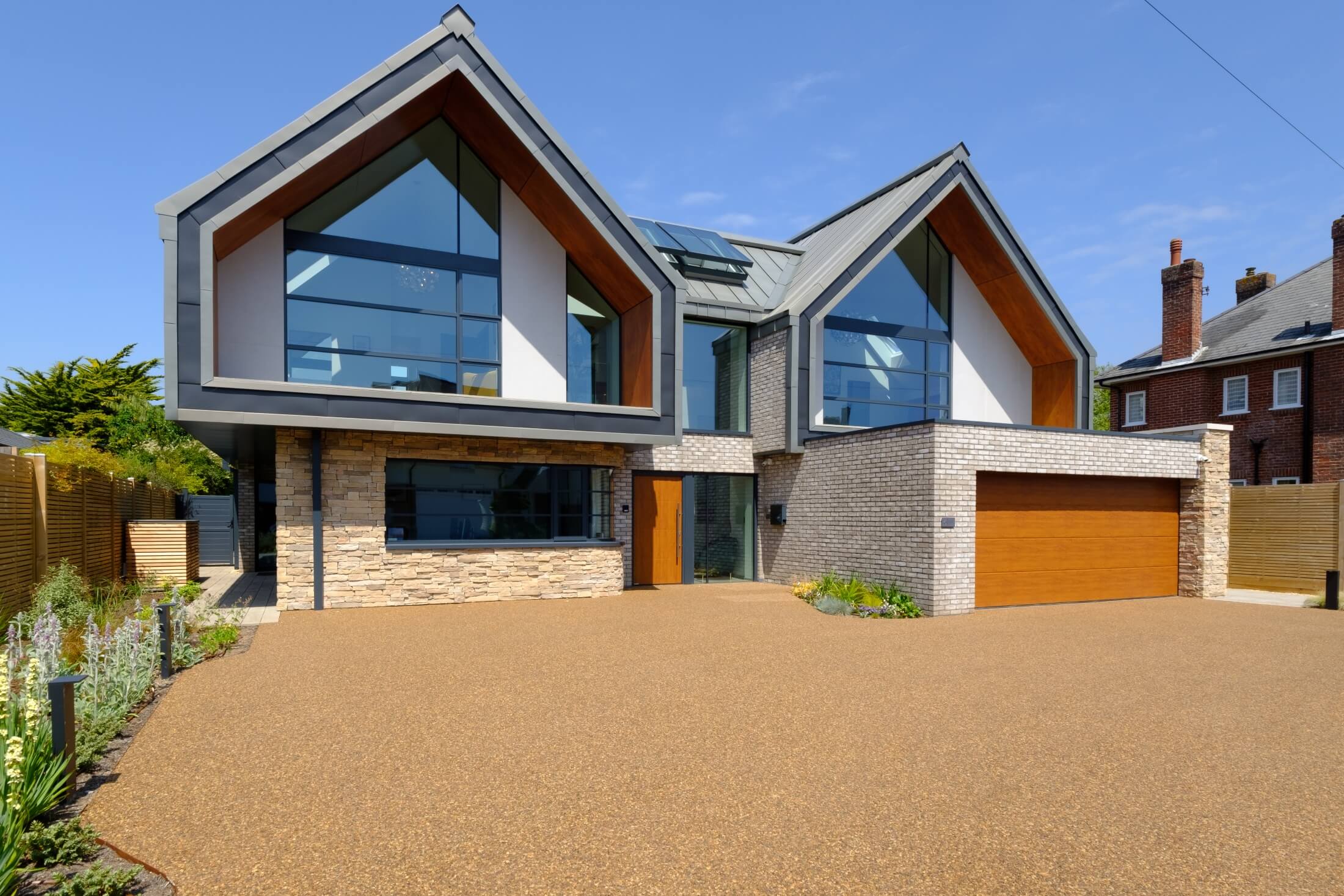
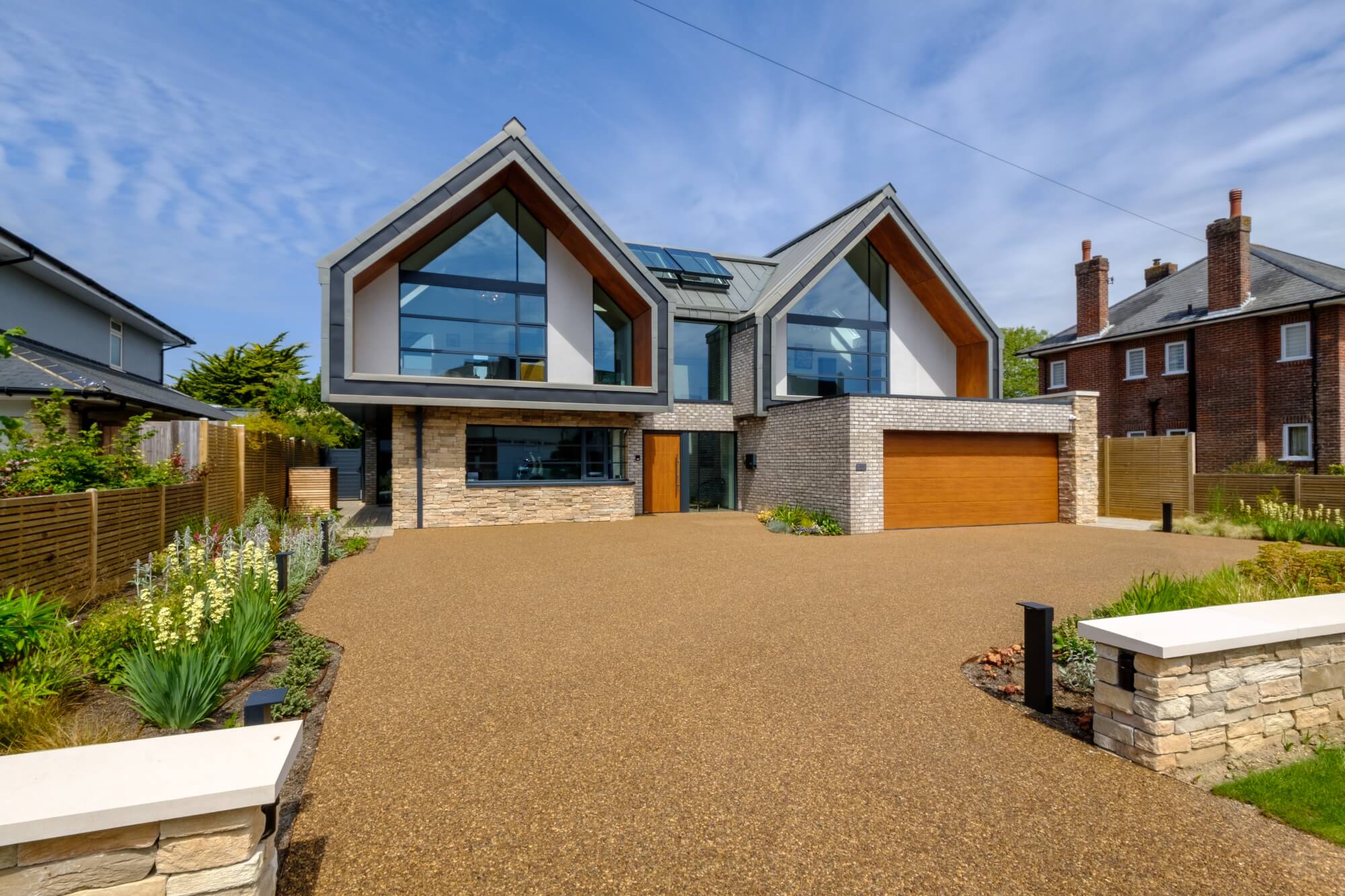
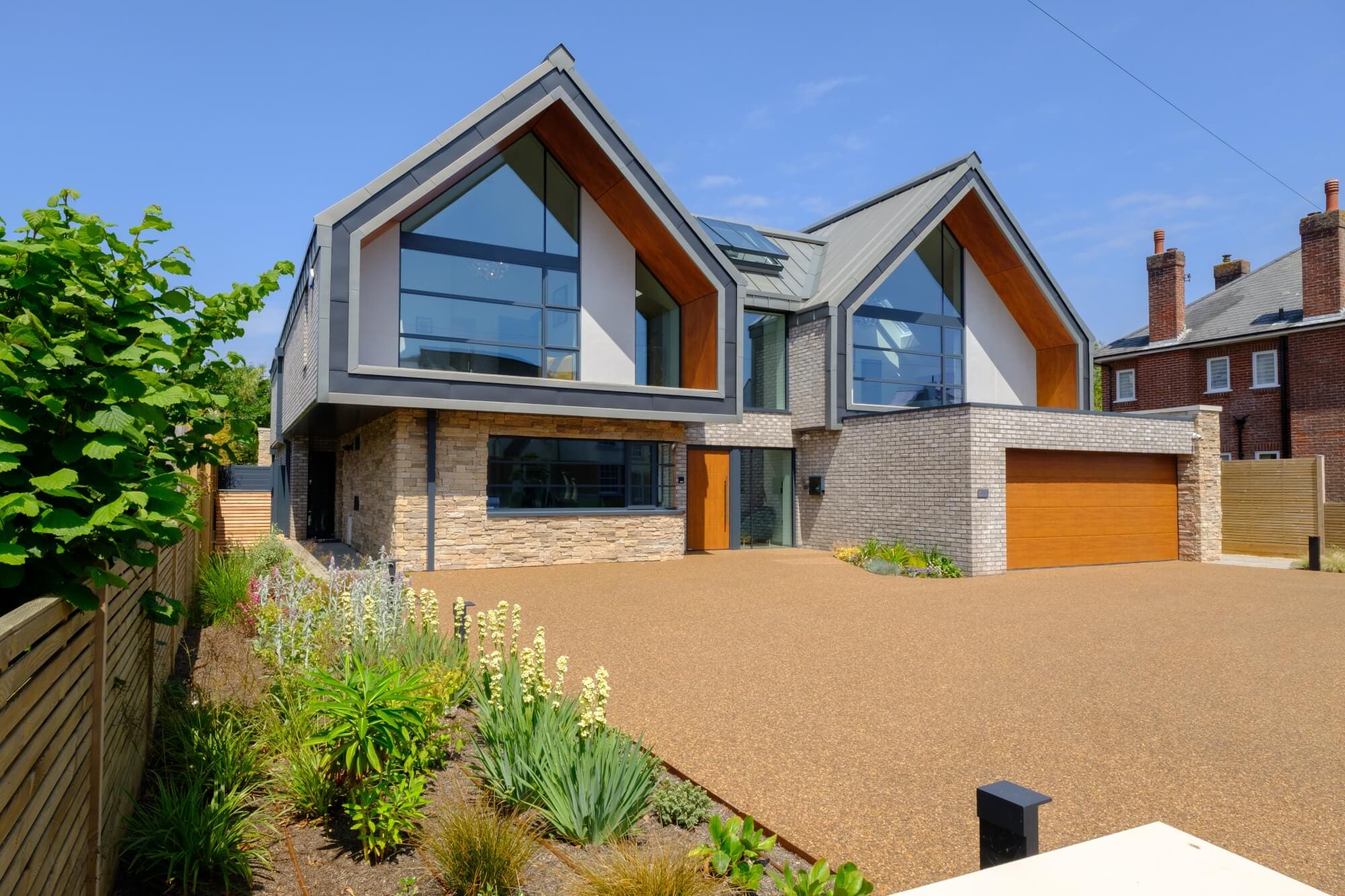
EARLY-STAGE INTERIOR ARCHITECTURE — PLANNED IN PARALLEL WITH THE BUILD
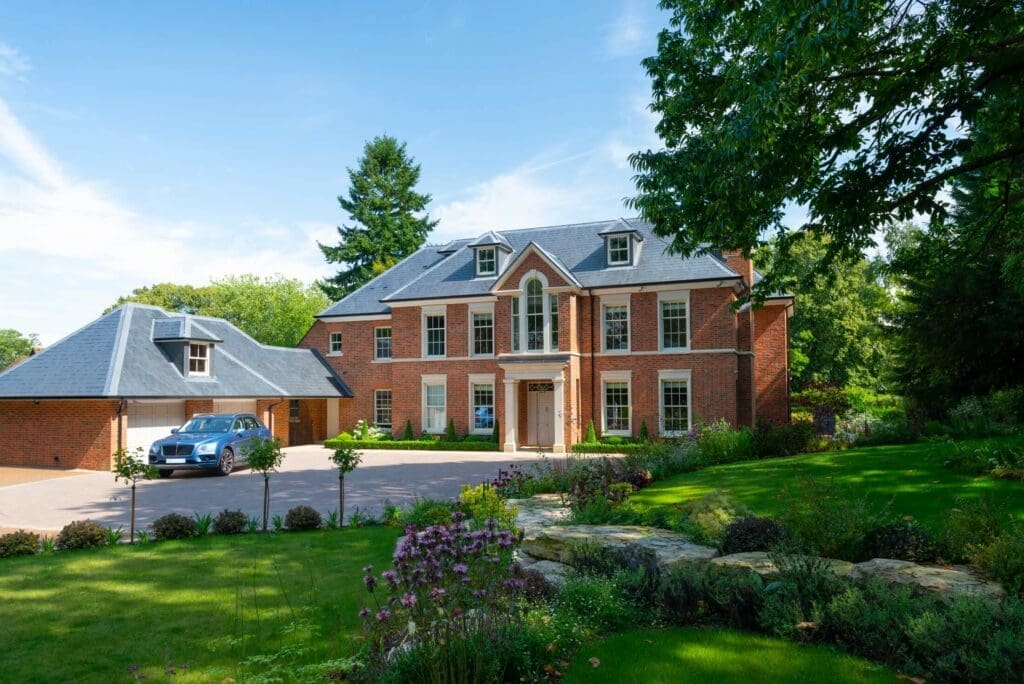
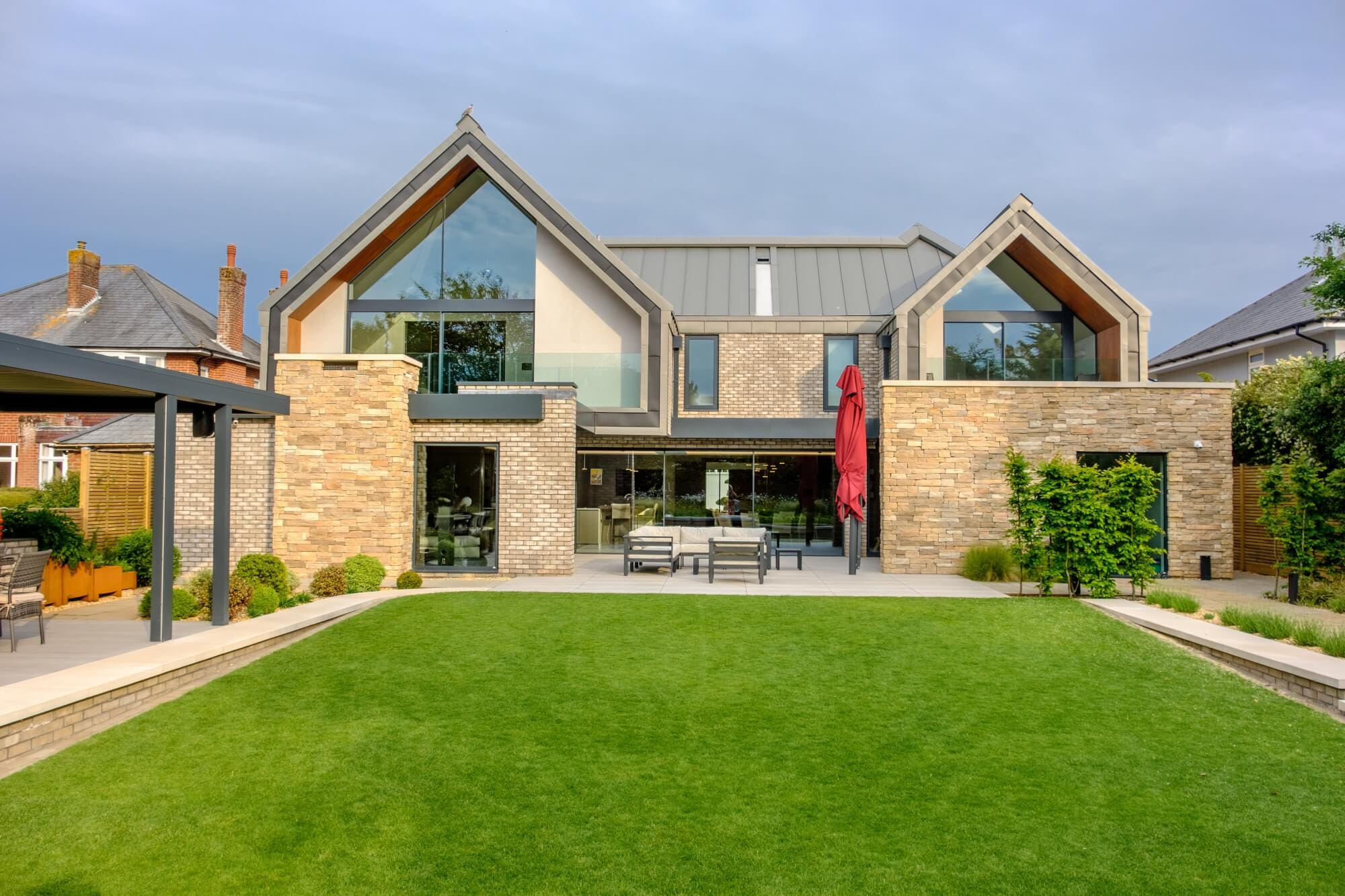
At Friars Cliff Home in Dorset, early collaboration shaped a coherent interior from the outset, with design and function resolved before drawings were locked. Through a series of design meetings ahead of the building regulation package, Dream Design worked closely with the clients, architect, and builder to align spatial planning, technical requirements, and detailing.
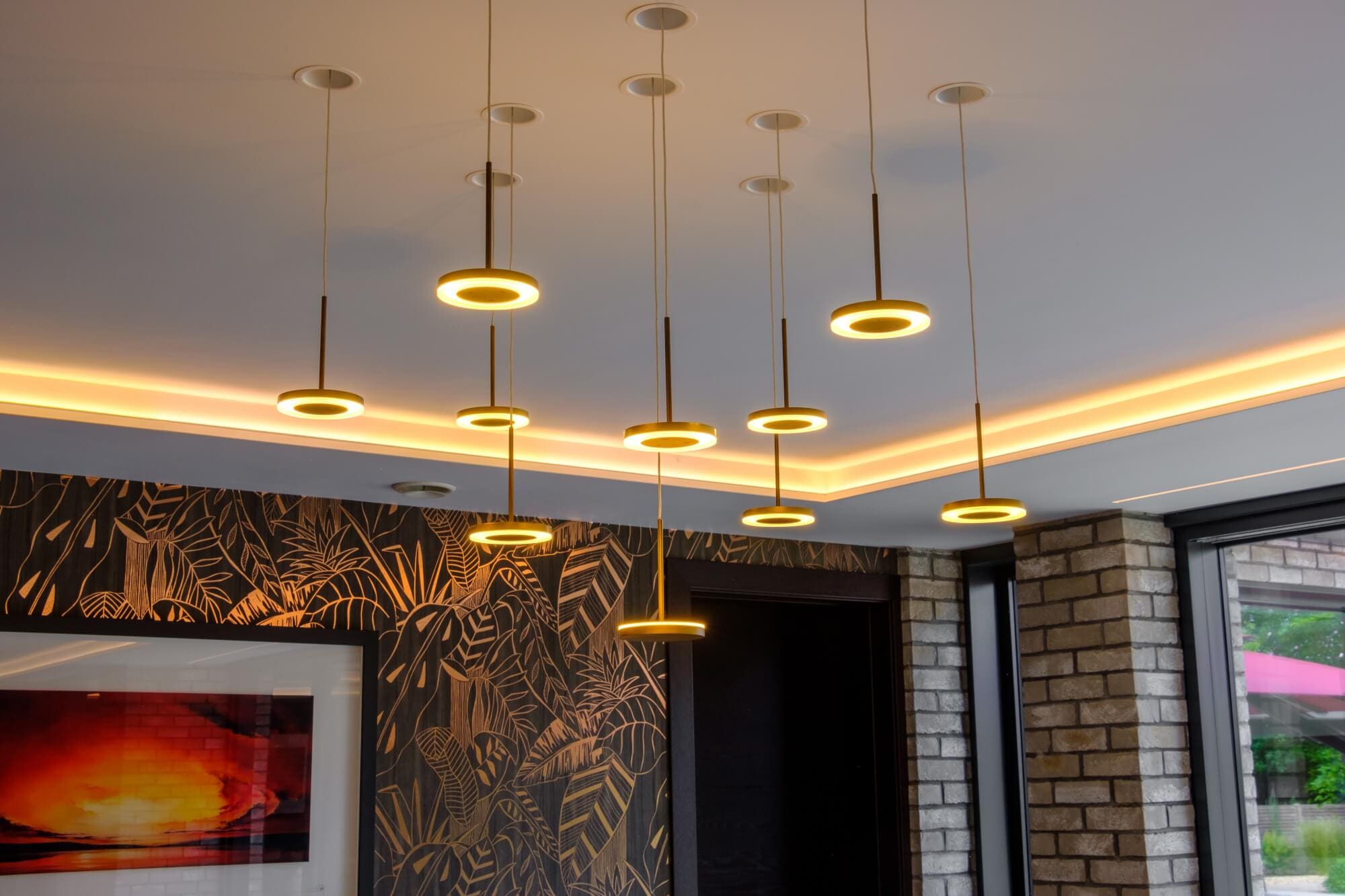
This integrated approach allowed Dream Design to develop the complete home design across kitchen, bedrooms, and bathrooms, with lighting schemes and finishes set out to maintain continuity and calm throughout the house.
PROJECT GALLERY
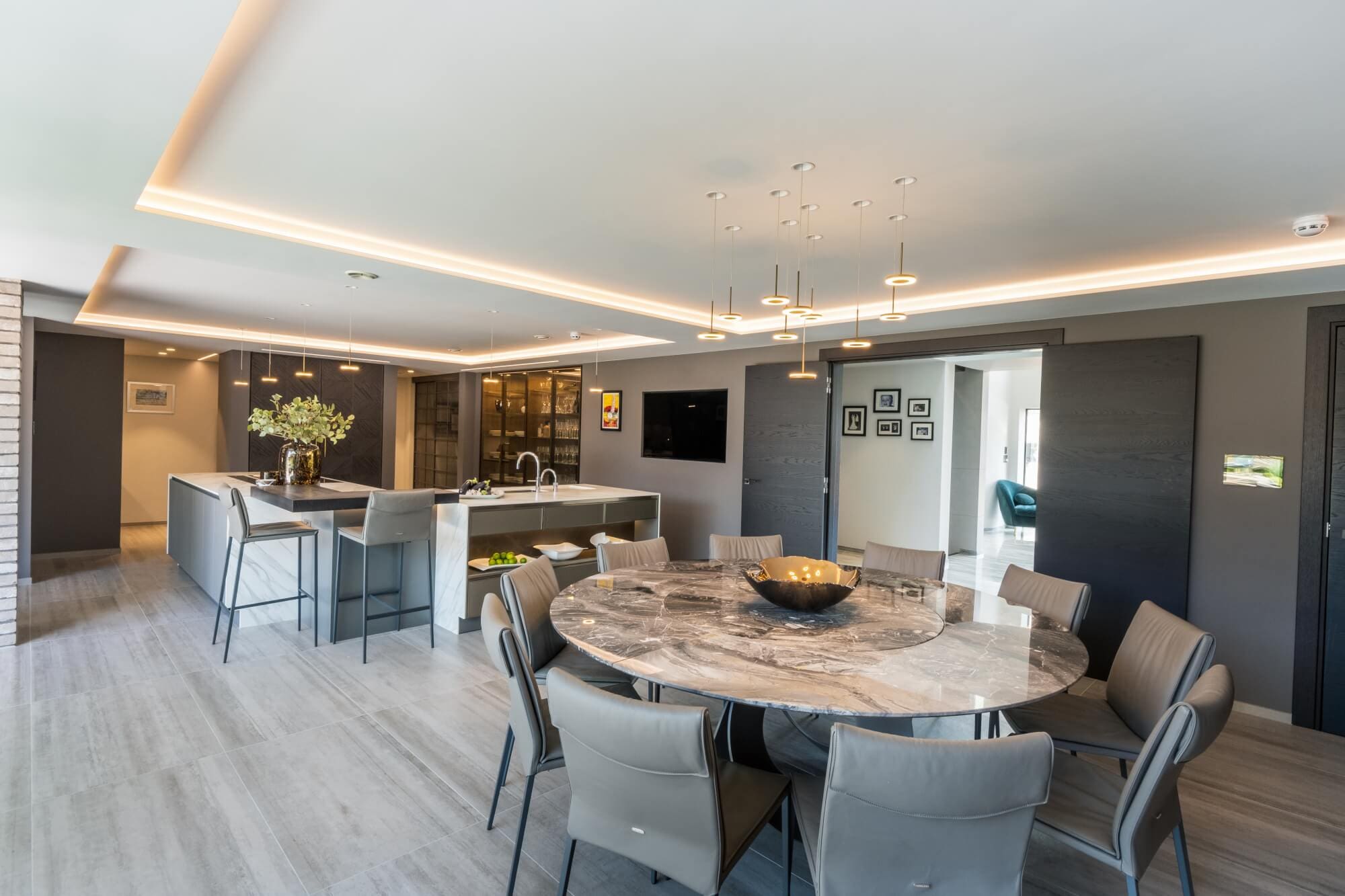
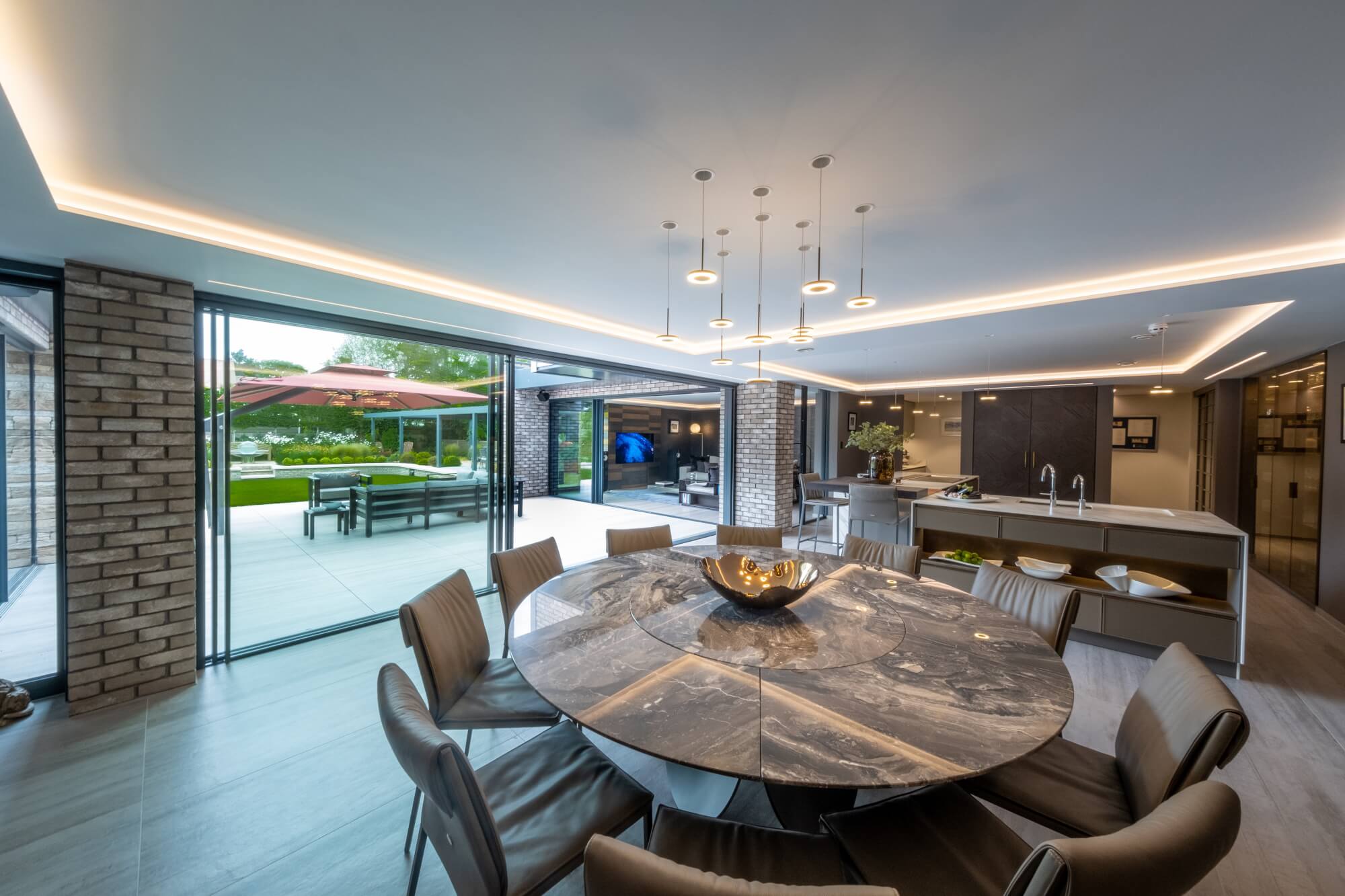
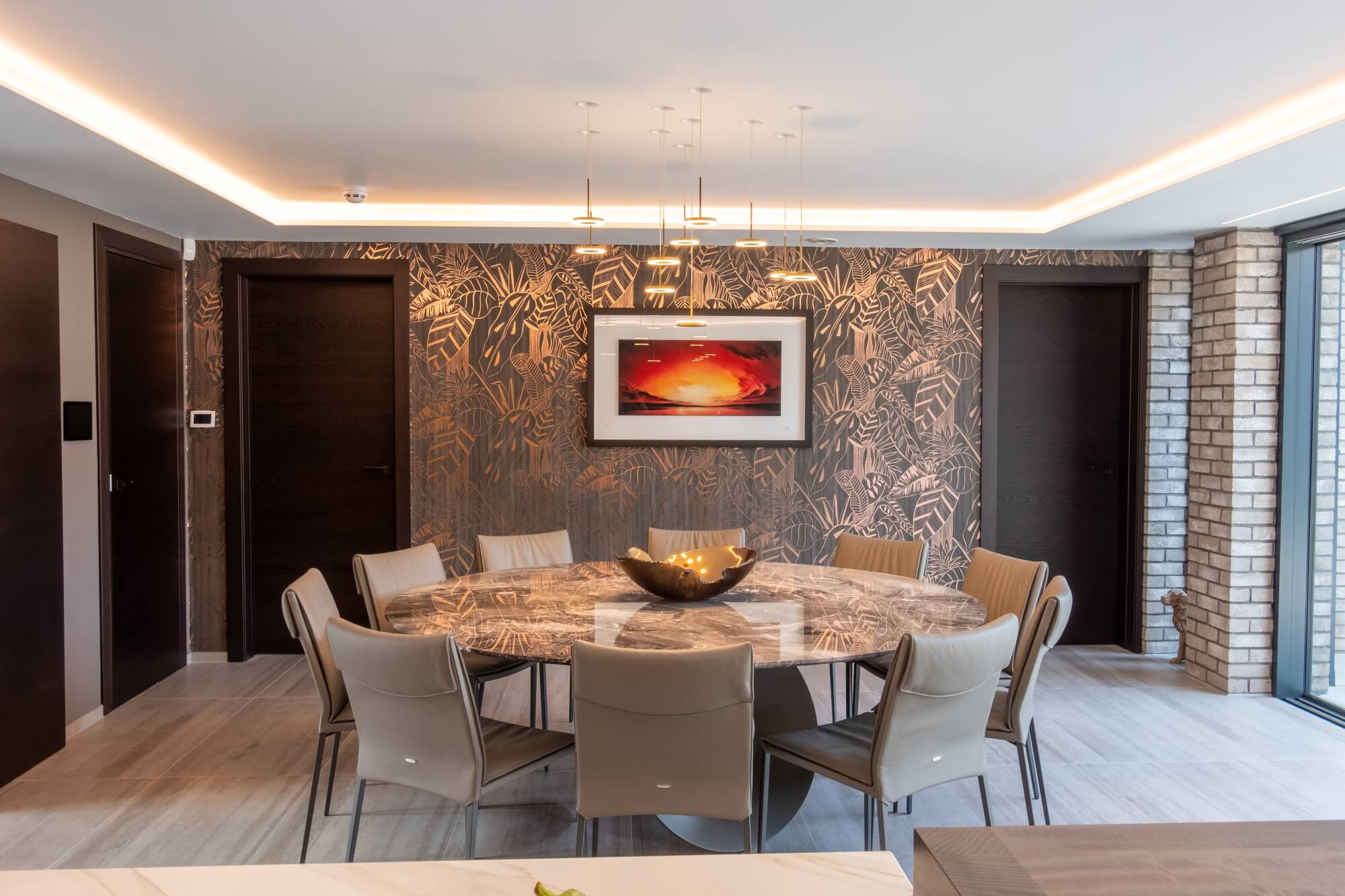
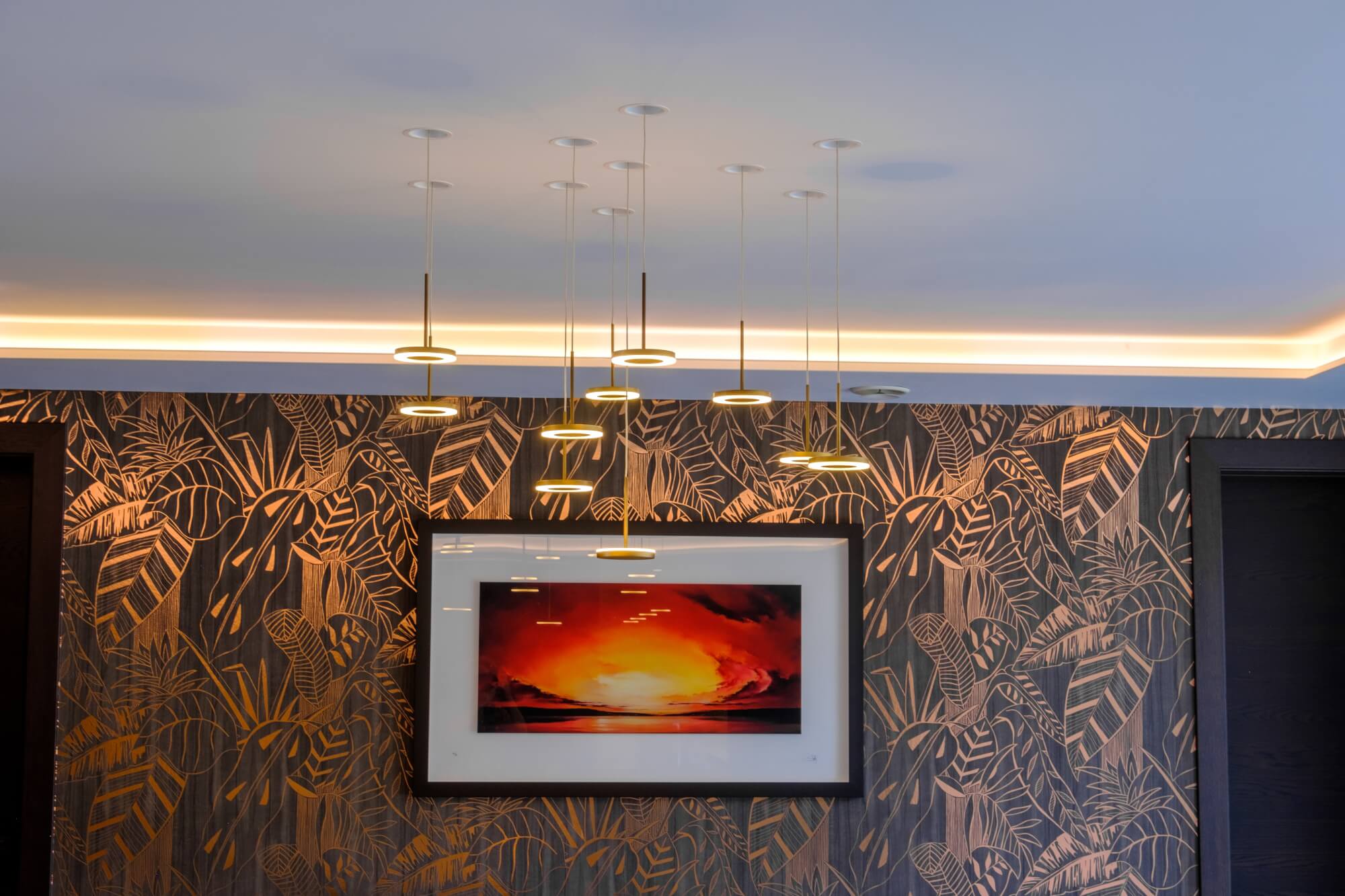
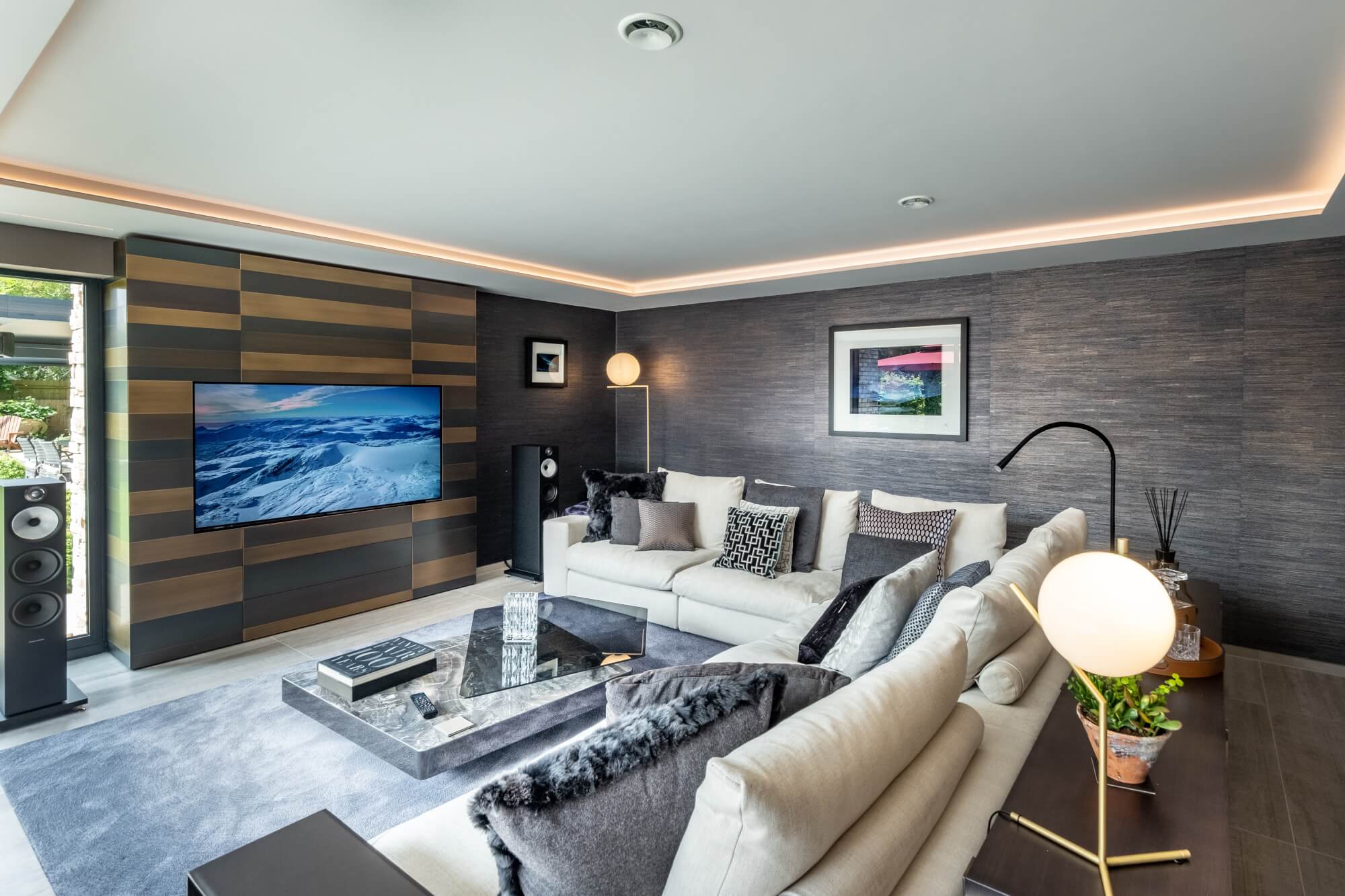
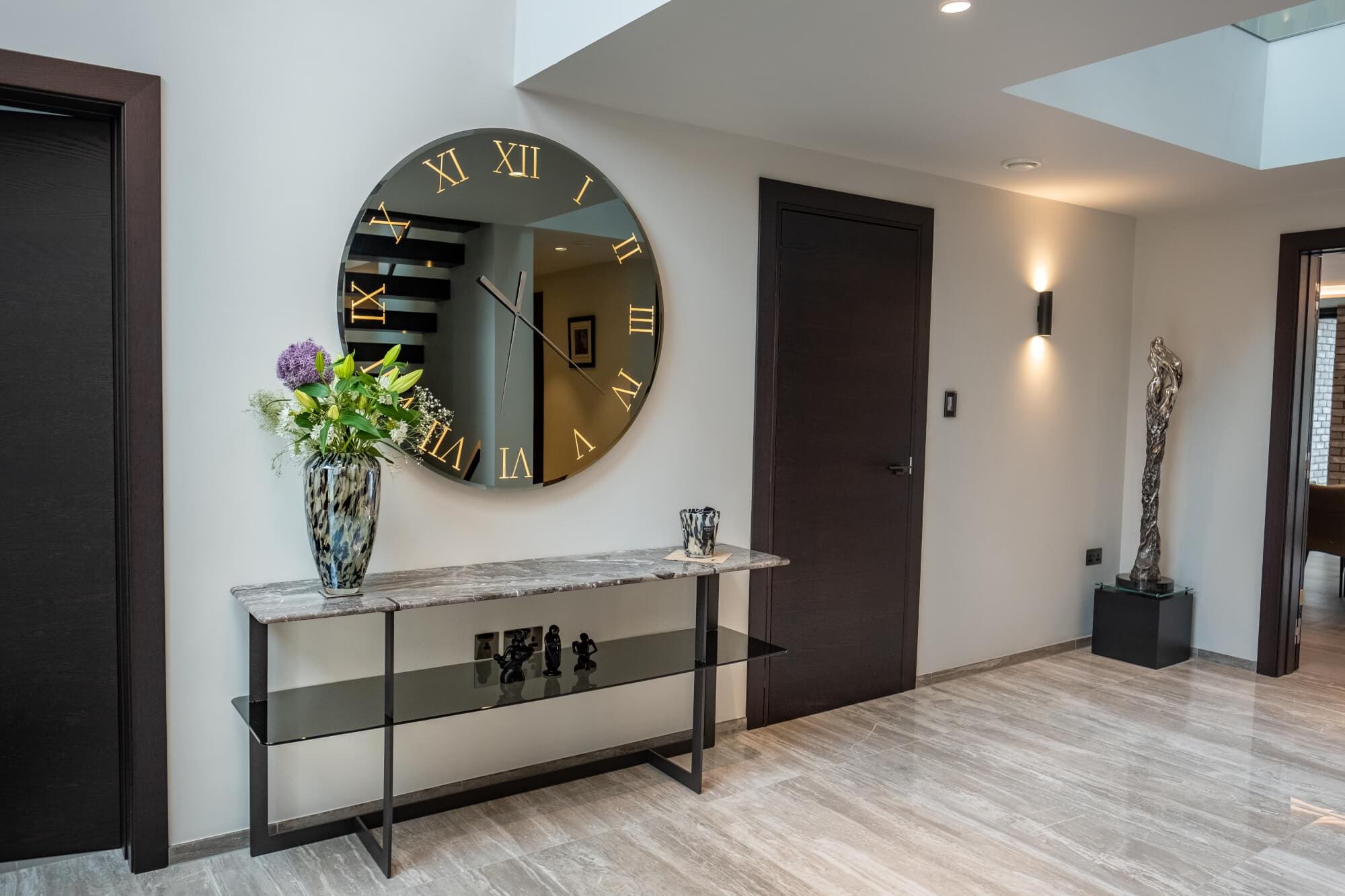
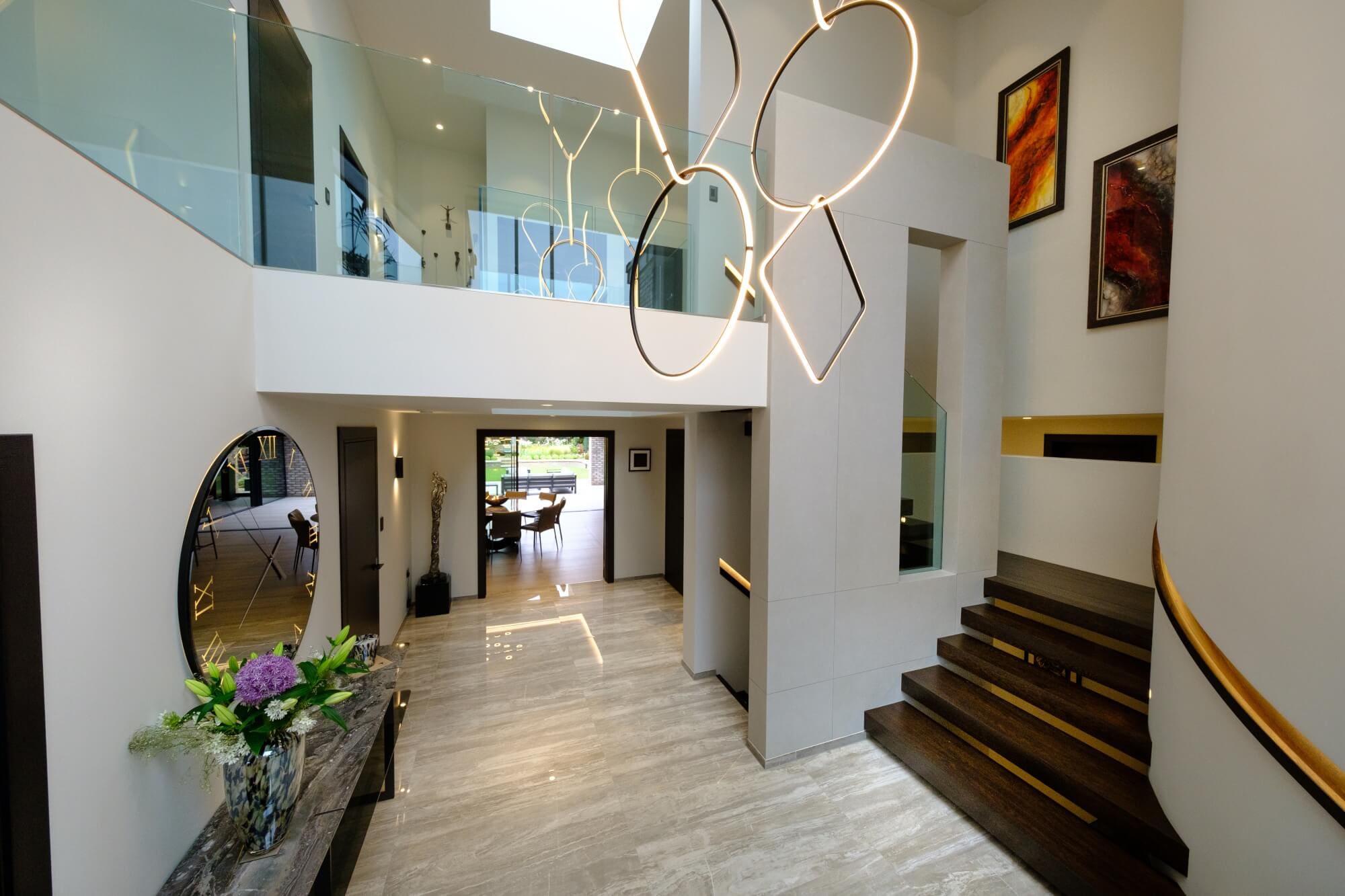
Kitchen and Lounge
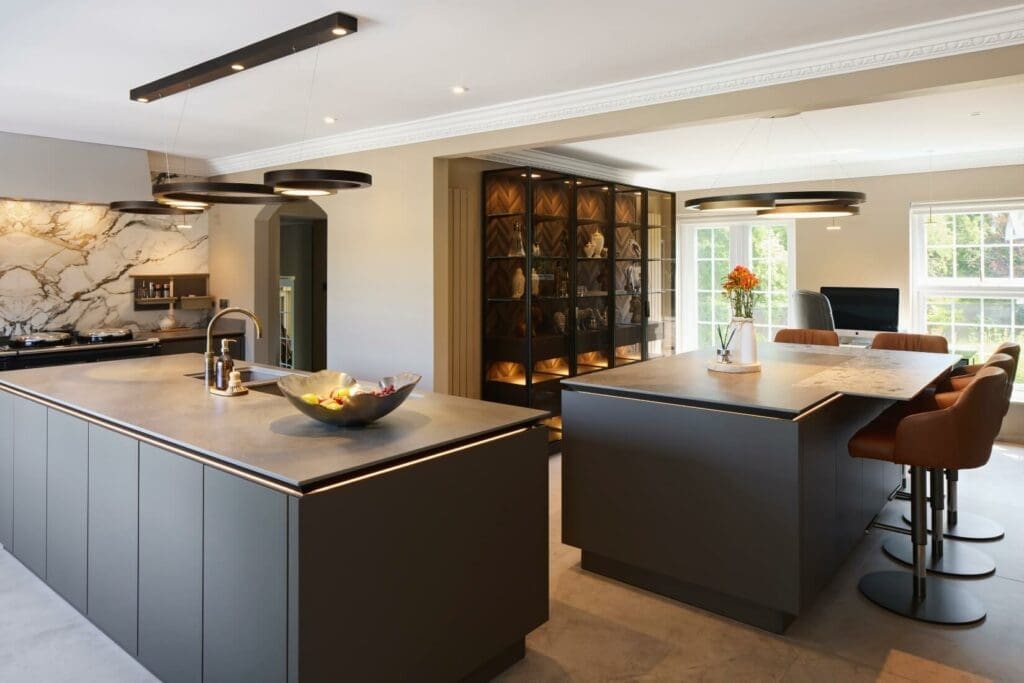
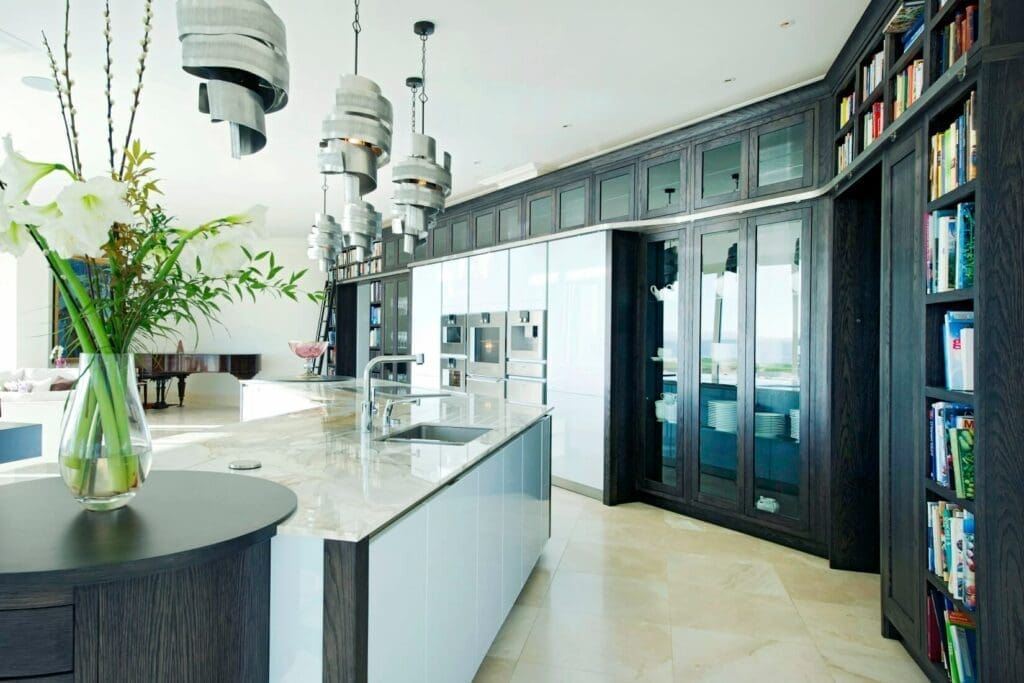
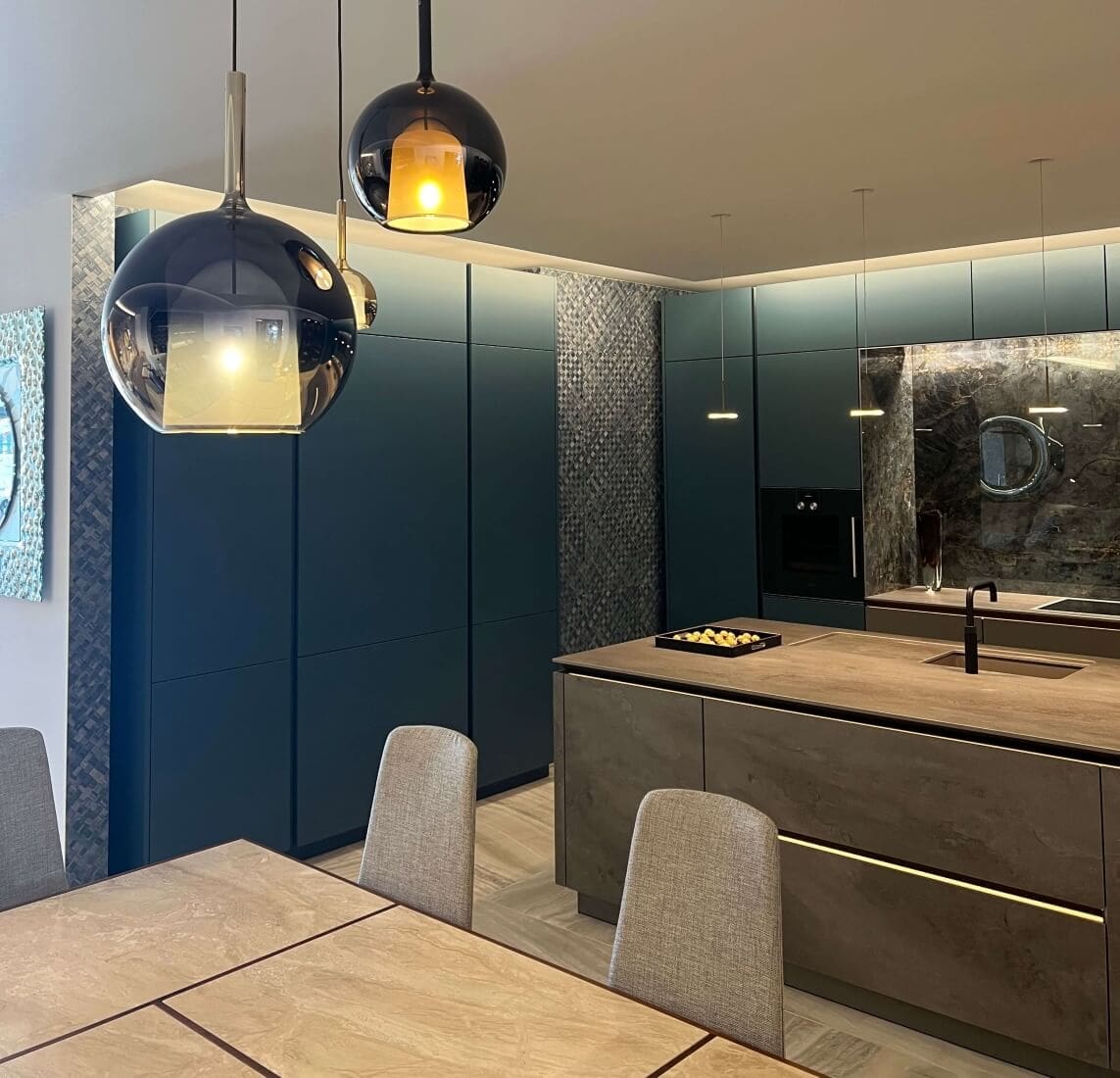
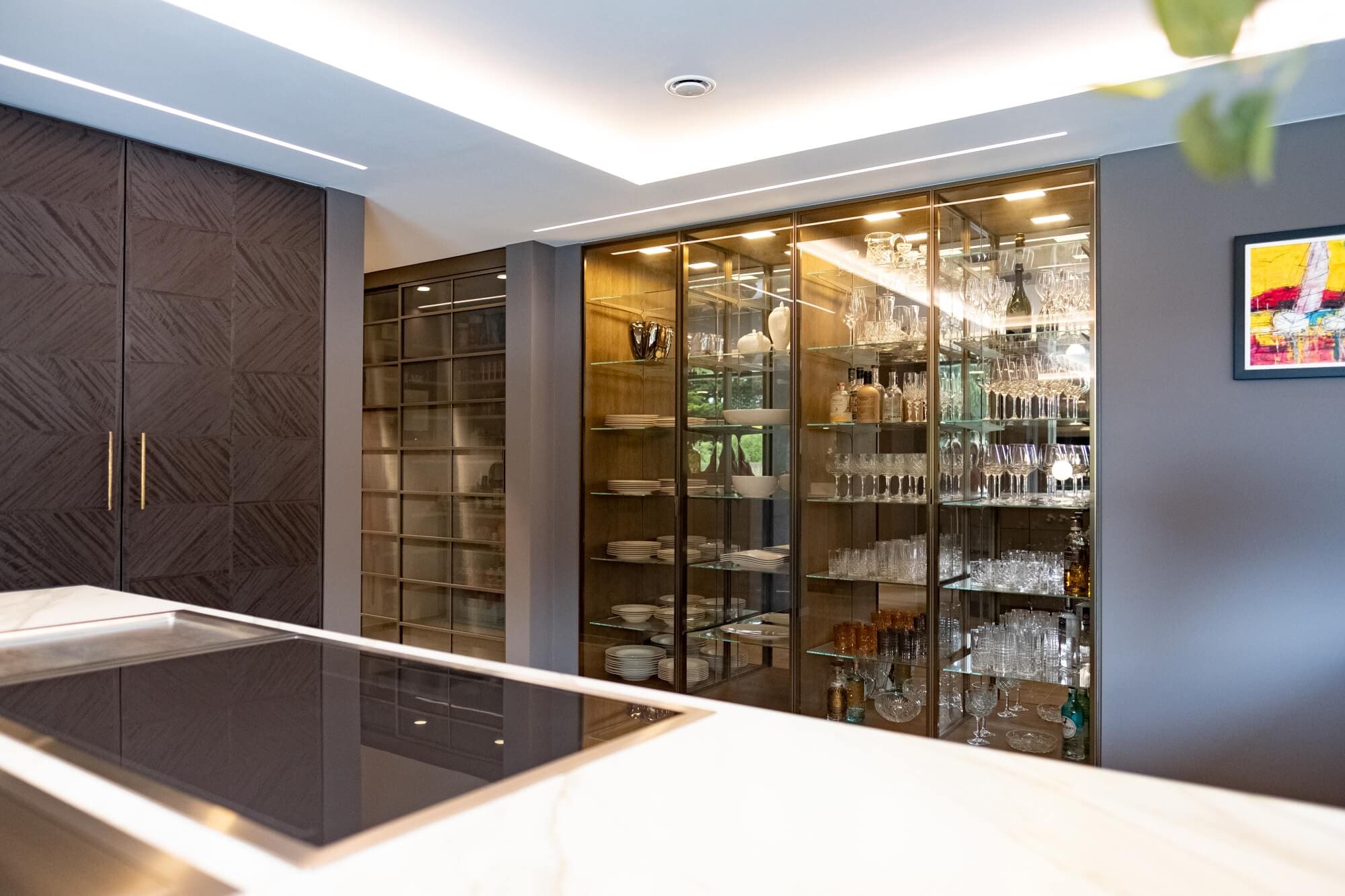
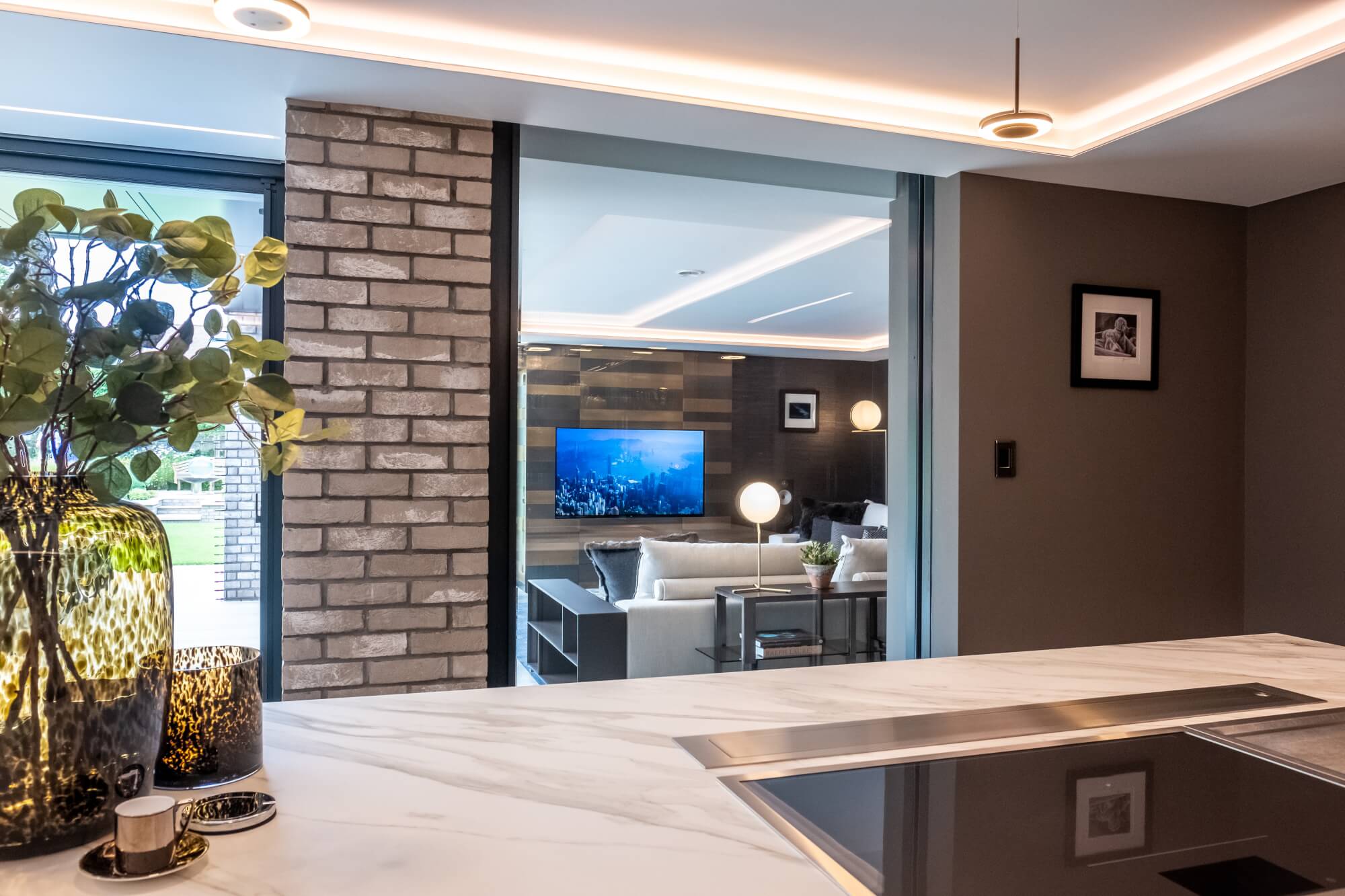
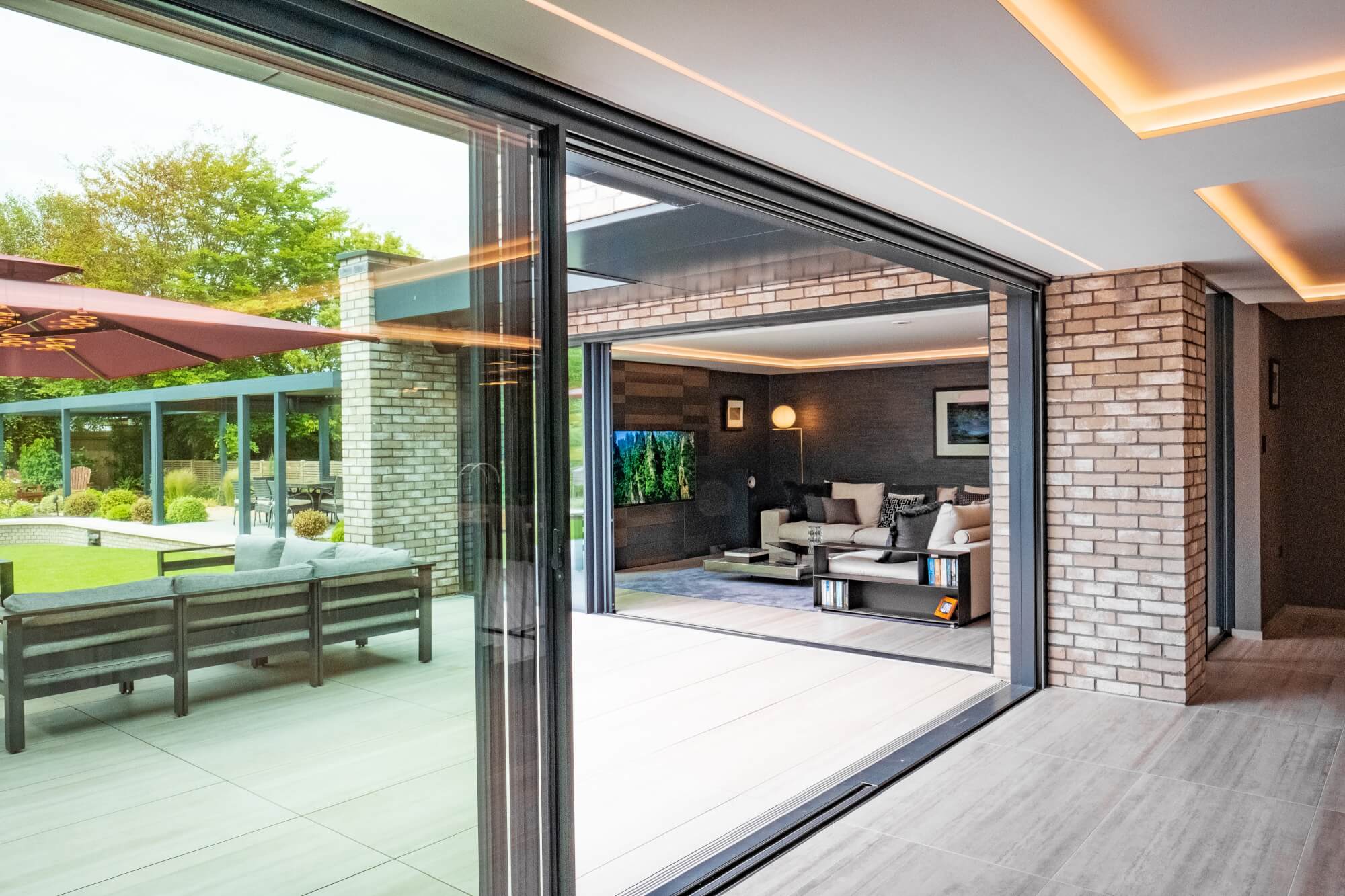
Early involvement enabled the plan to be optimised around daily use, with an inner kitchen to conceal appliances, a walk-in pantry, and a dedicated breakfast station. An L-shaped island anchors the room and connects kitchen, dining, lounge, and terrace, creating an open-plan space shaped for natural circulation and easy hosting.
In the lounge, a corner sofa forms a relaxed centre, while porcelain floor tiles carry from the kitchen through to the terrace for a seamless threshold. Horizontal textured wallpaper and a hand-burnished metal TV surround with concealed storage introduce warmth and depth without visual noise.
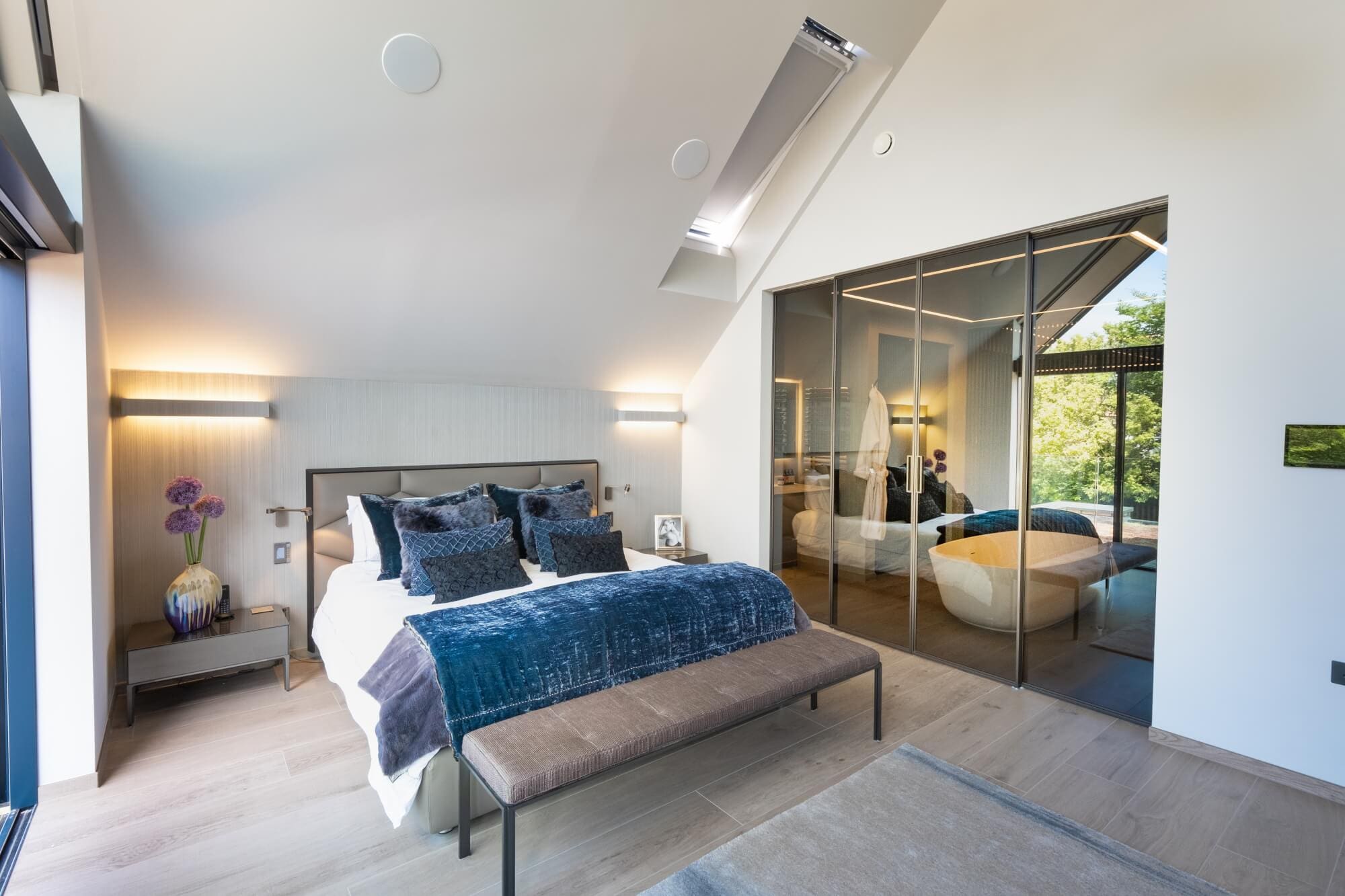
Principal Bedroom and Ensuite
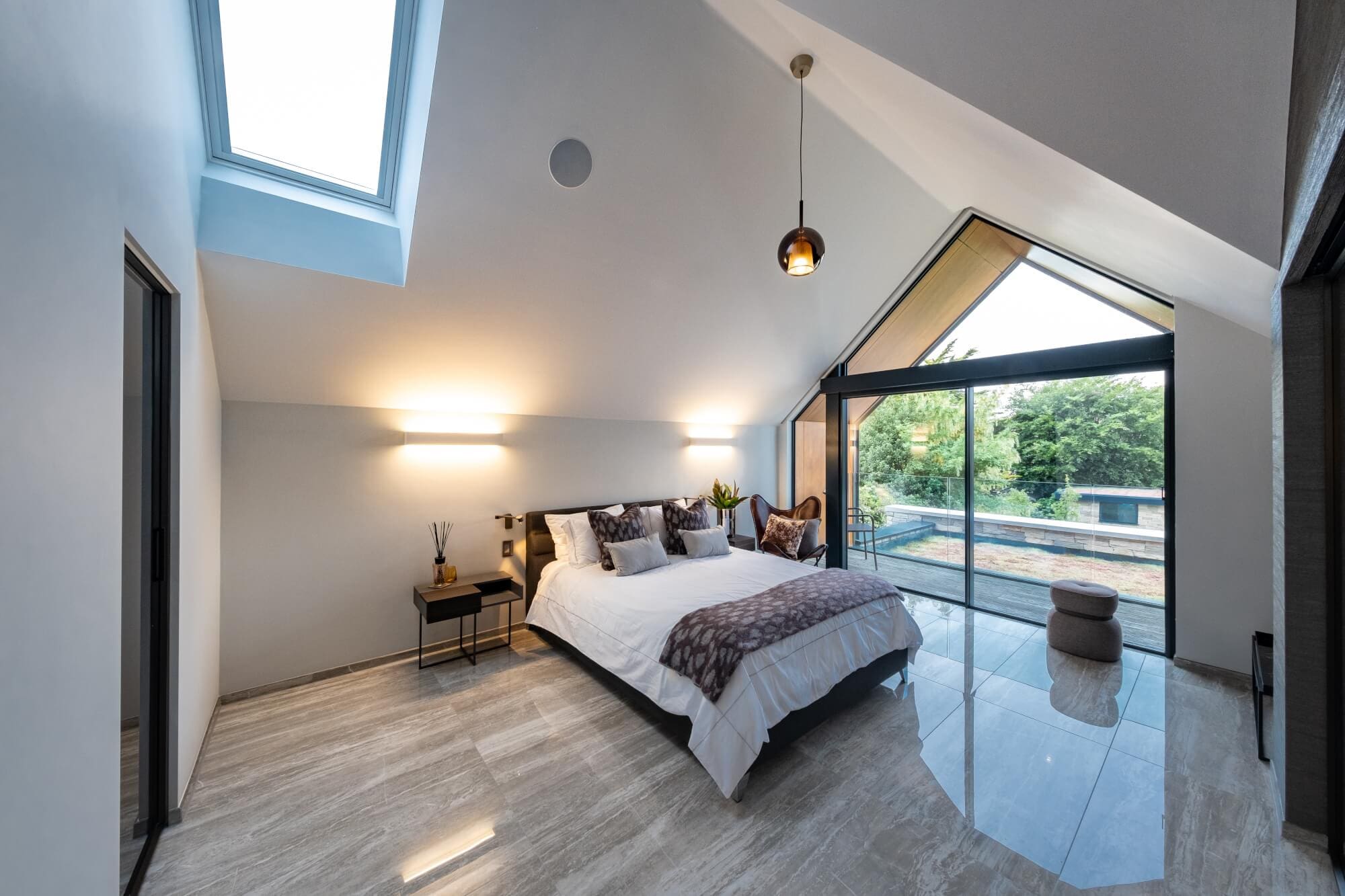
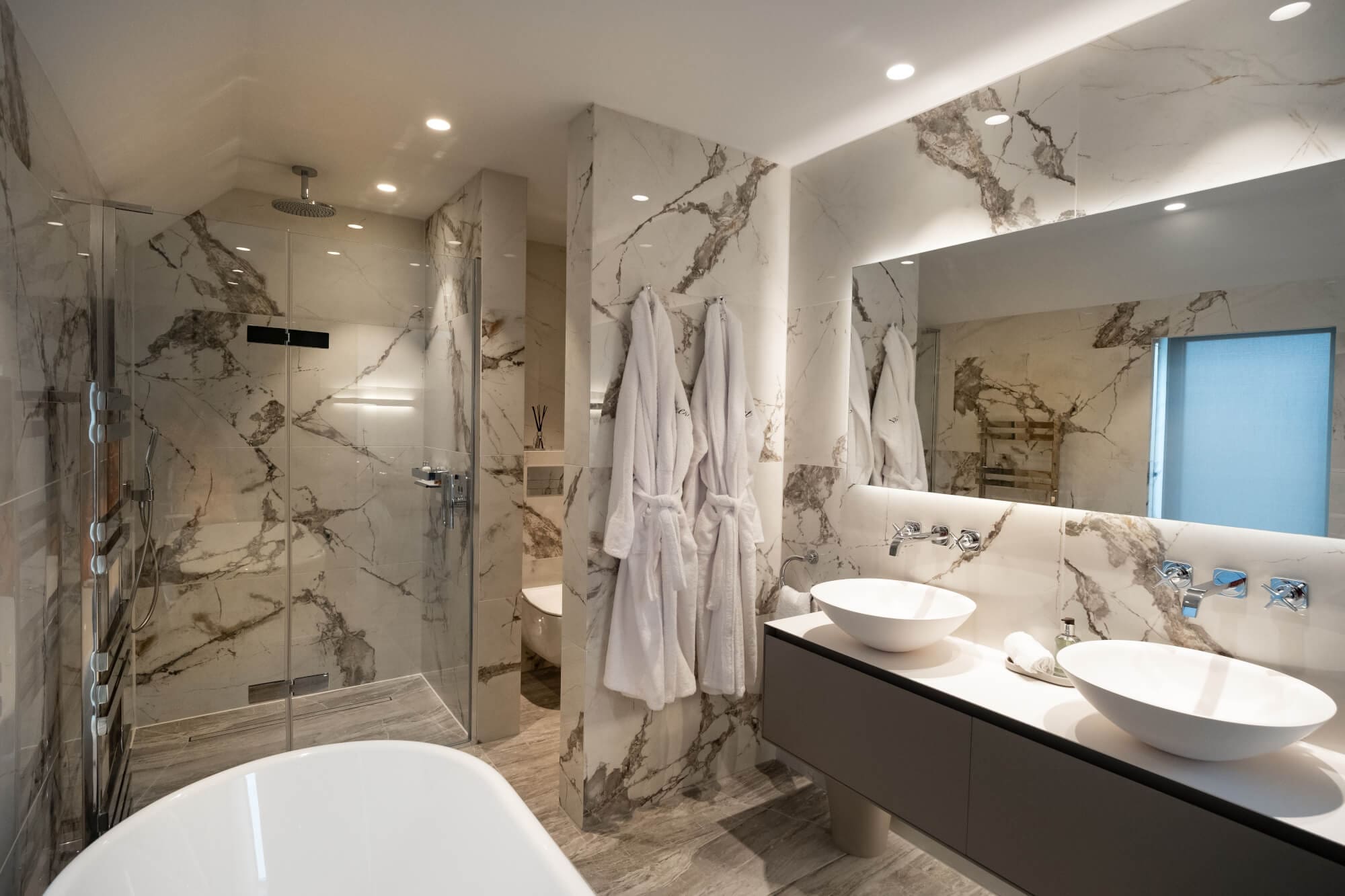
A leather-framed headboard echoes the ottoman and sliding door detailing, maintaining a consistent language across the room. Wallpaper is aligned with the wall lights for a quiet, integrated elevation. Porcelain wood planks flow from the bedroom into the ensuite and rise up the walls to remove skirting lines, strengthening continuity and keeping junctions clean.
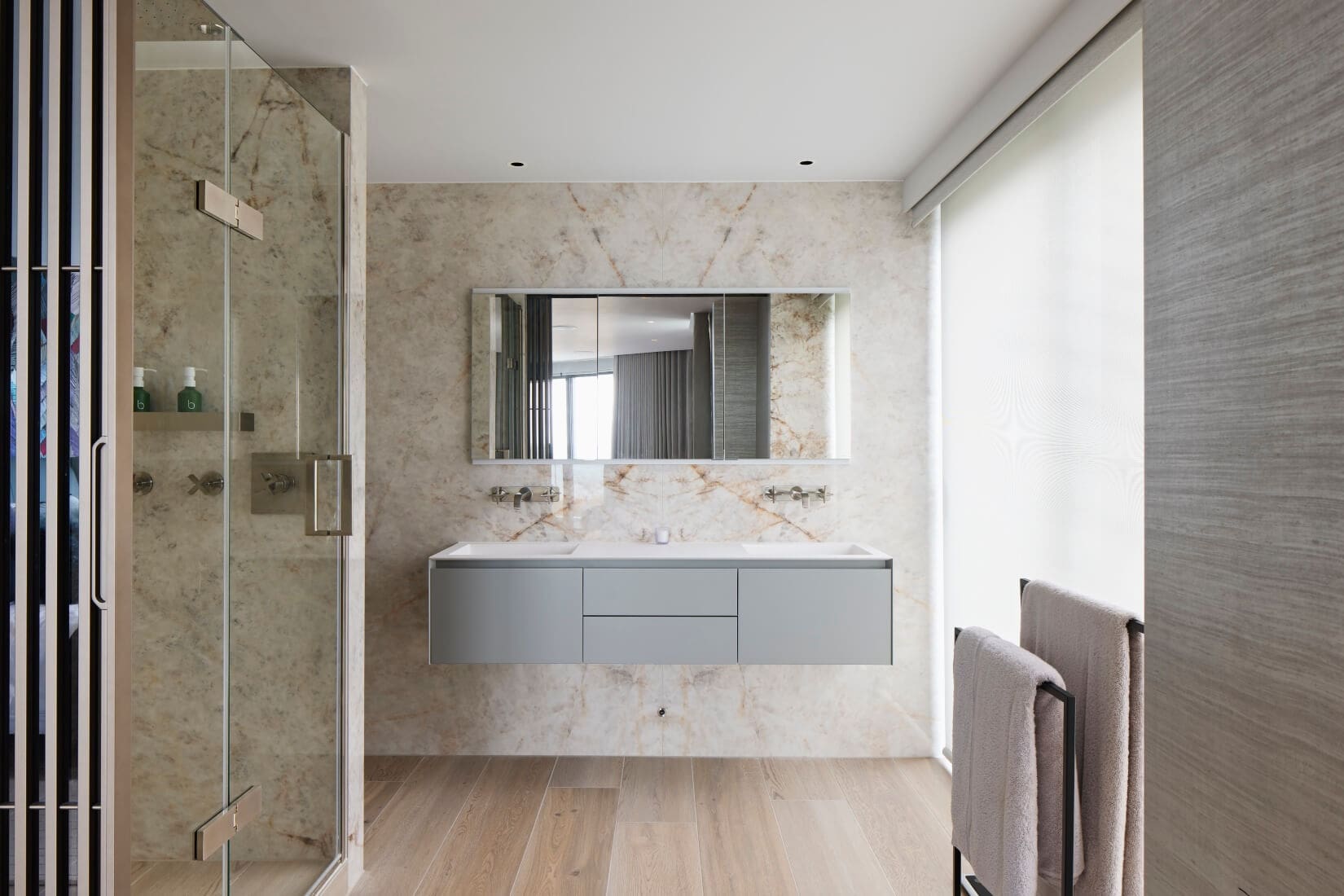
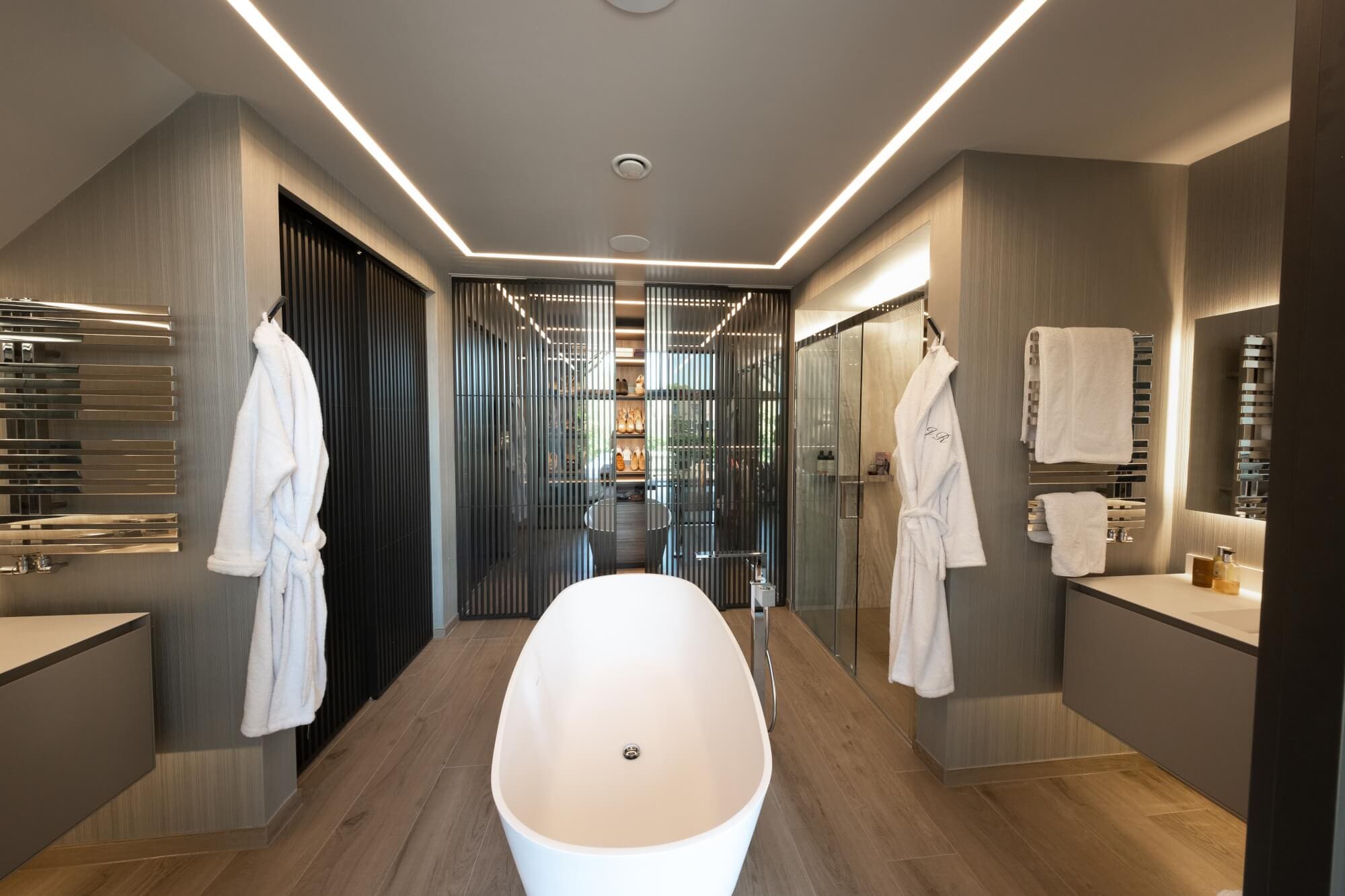
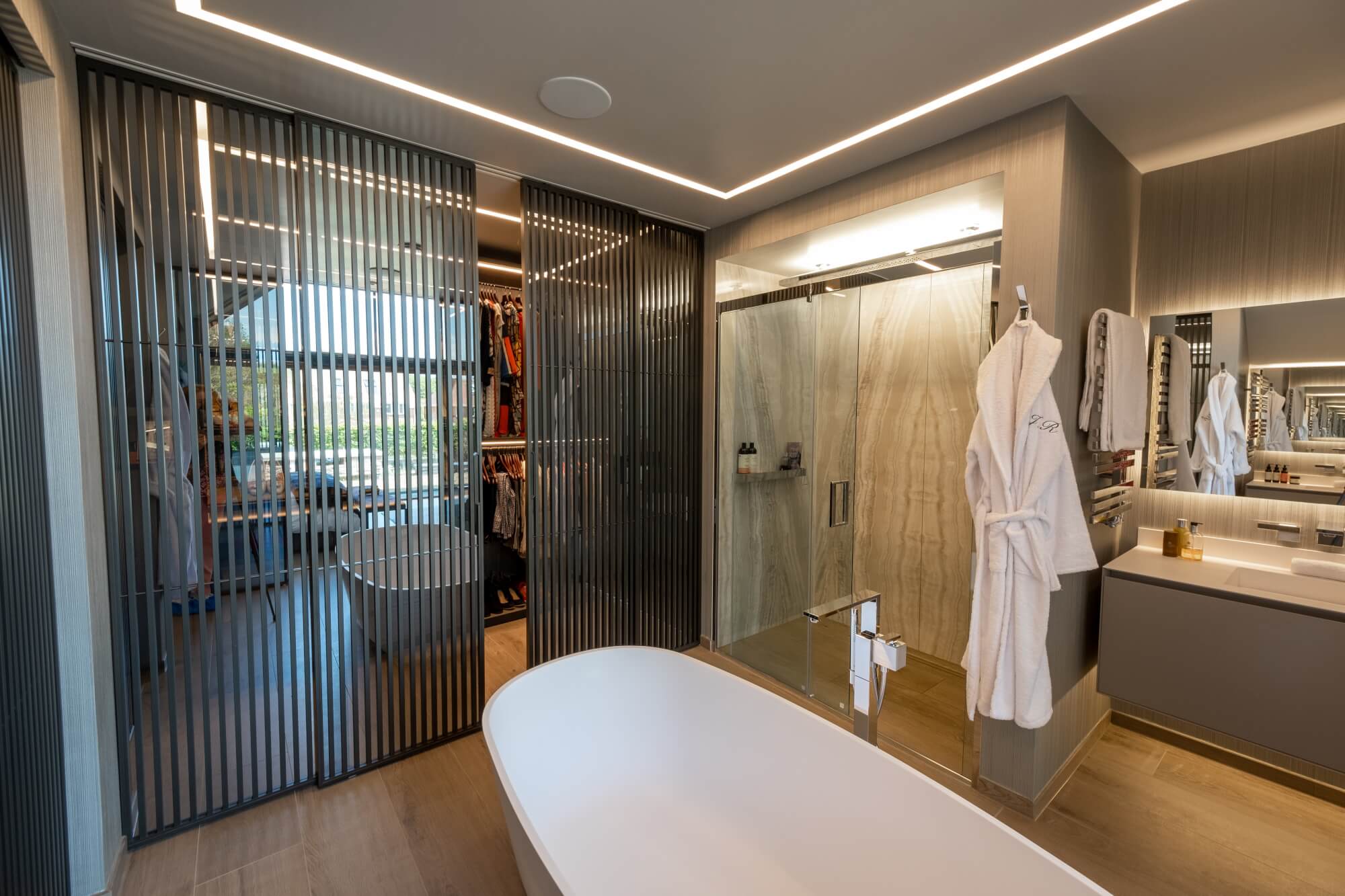
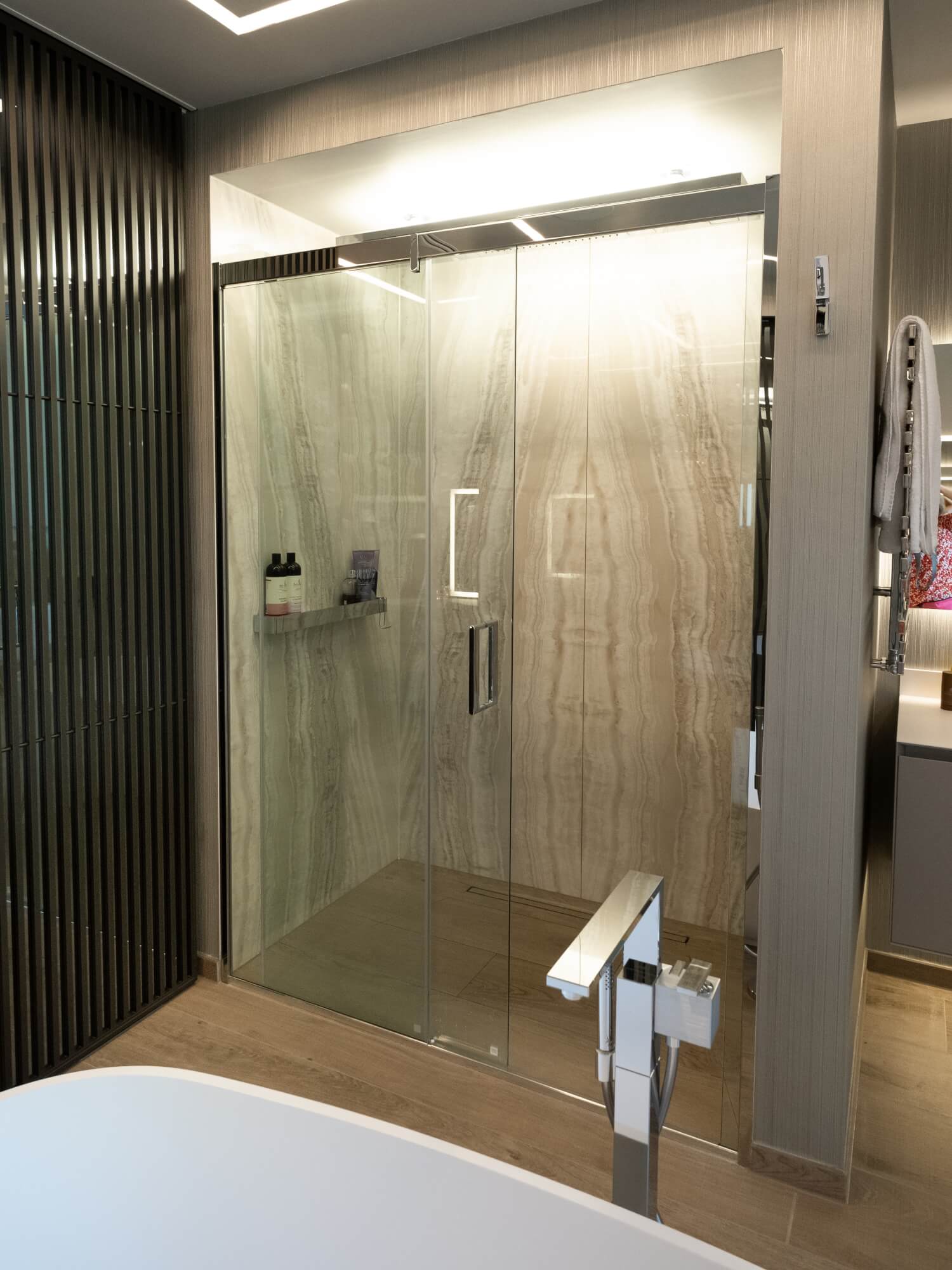
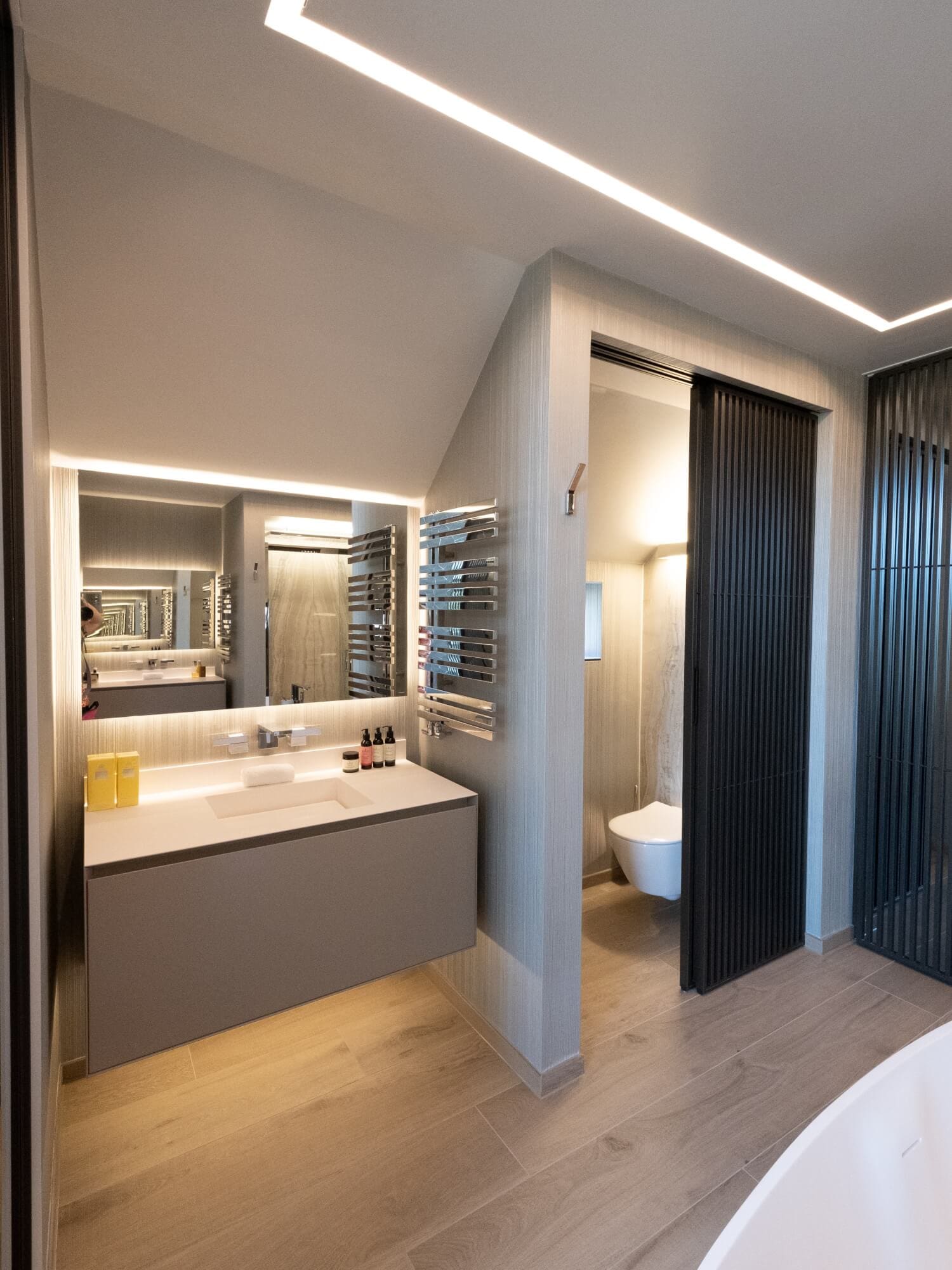
Rimadesio reflective glass doors balance openness and privacy between bedroom, ensuite, and dressing room. The ensuite is composed around a central freestanding bath, paired vanity units, and a generous shower with book-matched marble-effect walls, set out to read as one surface.
Guest Ensuite
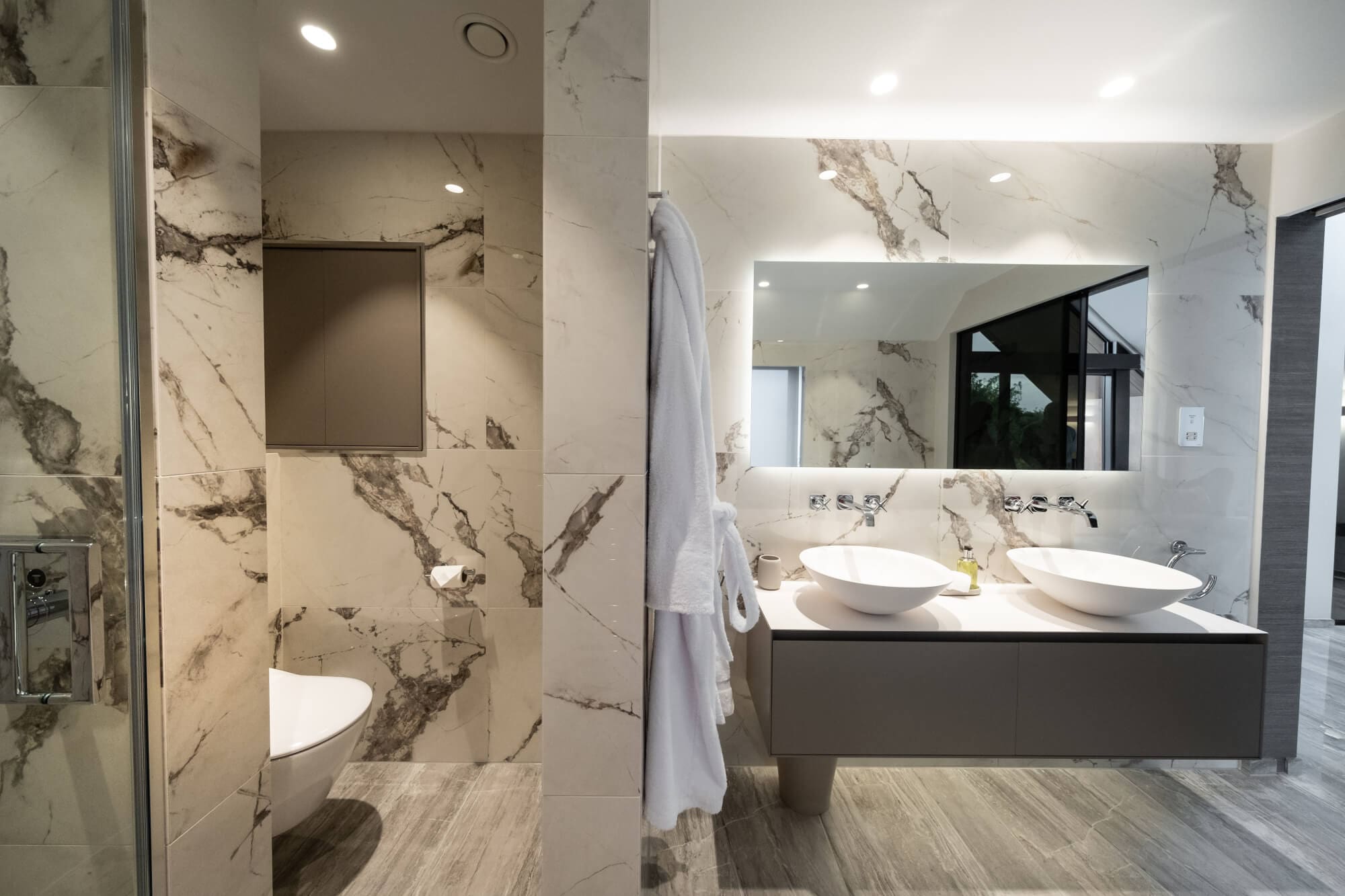
Polished marble-effect wall tiles are paired with honed stone-effect flooring, extended into the bedroom to keep material transitions calm. A concealed WC allows the double vanity with sculptural basins and wall-mounted taps to sit as the focal element, keeping the room functional and visually ordered.
This project reflects Dream Design’s wider approach to kitchen design, bathroom design, and interior architecture, shaped through spatial planning, zoning, sightlines, and detailing, with proportion, circulation, and material continuity used to deliver a quiet, enduring sense of luxury.
OTHER Projects
-
 Discover: Sway Country Home Read more: Sway Country Home
Sway Country Home
The Sway Country Home kitchen project is a testament to thoughtful planning and design, where form and function combine to create a stunning space that maximises its natural surroundings.
-
Discover: Pangbourne Hill Country House Read more: Pangbourne Hill Country House
Pangbourne Hill Country House
Pangbourne Hill Country House exemplifies the seamless integration of classic architecture with contemporary design, resulting in a home that is both elegant and welcoming.
-
Discover: Friars Cliff Apartment Read more: Friars Cliff Apartment
Friars Cliff Apartment
Dream Design was engaged to transform two apartments into a single, harmonious home, blending functionality with breathtaking aesthetics.
-
Discover: Lymington Coastal Home Read more: Lymington Coastal Home
Lymington Coastal Home
Lymington Coastal Home’s architectural details and high ceilings provided the perfect canvas for a refined blend of traditional and contemporary design.