

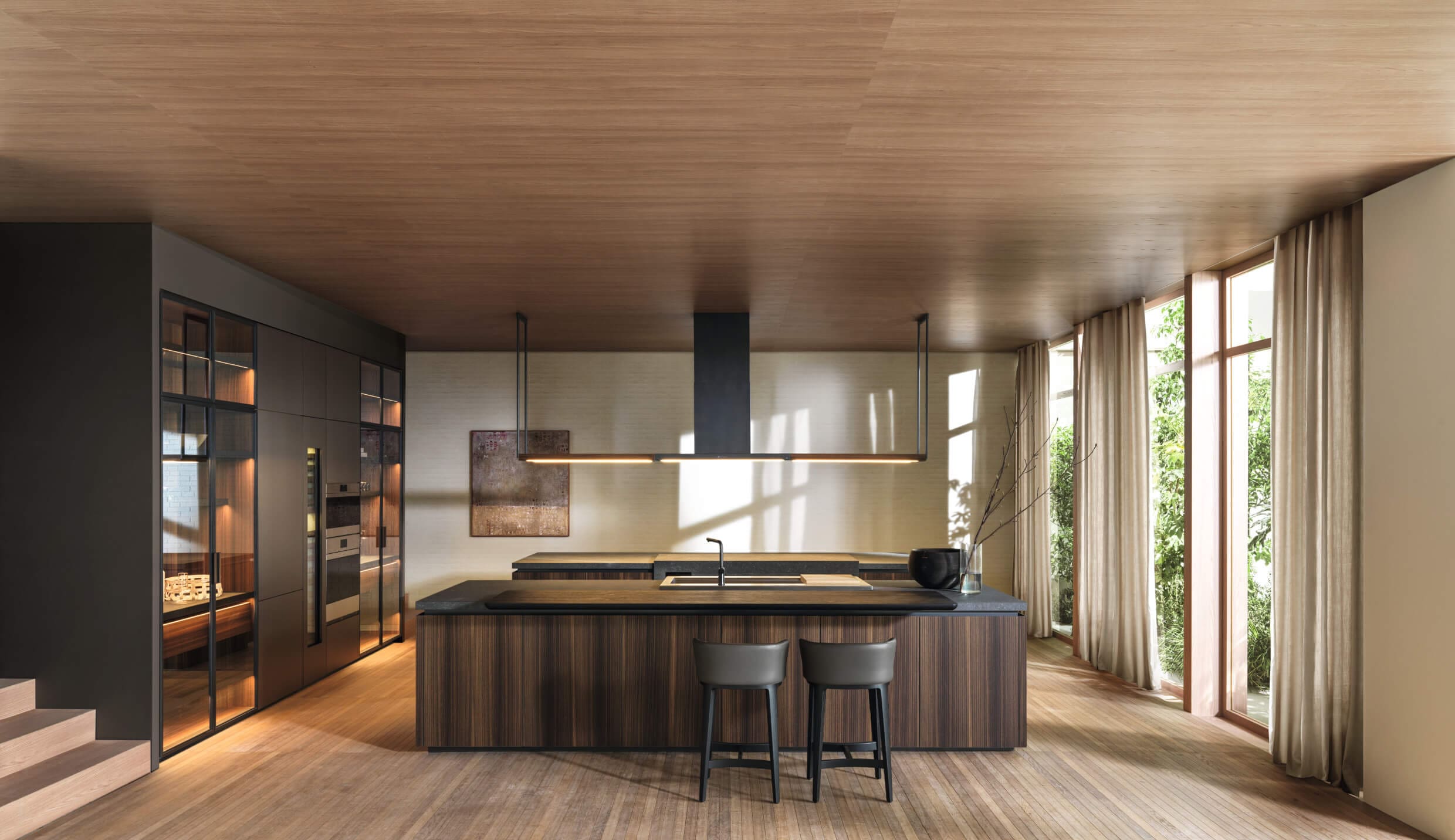
Open-Plan Kitchen Zones: Cooking, Dining, Living
Open-plan living brings cooking, dining and relaxing into one continuous space, and the set-out carries a bigger share of the room’s success in daily use. The first decision is not “style”. It is how the room will move: routines mapped, adjacencies aligned, and key circulation routes fixed so two people pass while drawers are open and the space remains legible at peak use.
The island line, dining position and lounge edge are coordinated as one plan, then those alignments carry through lighting layers, storage logic and junction detailing so the open-plan room reads as a resolved whole in use.
THE NEW TRIANGLE: COOKING, DINING, LIVING
An open-plan kitchen performs when zones are explicit, even if boundaries are quiet. The classic triangle—sink, hob, fridge—still matters, but it sits inside a wider sequence that includes dining, seating and circulation.
Cooking and preparation require a direct working run and practical clearances around the island so the kitchen functions under load.
Dining and gathering require seating positions that welcome people into the room without placing circulation through the working zone.
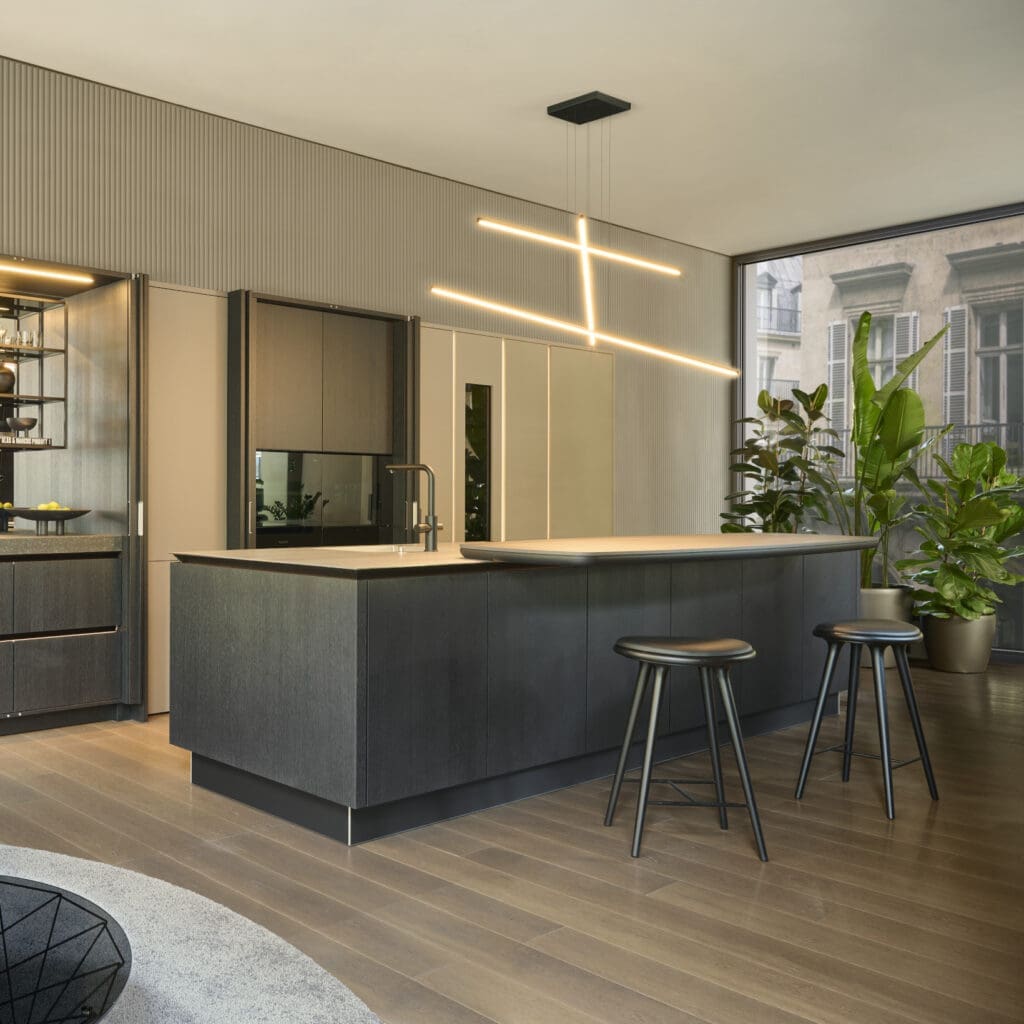
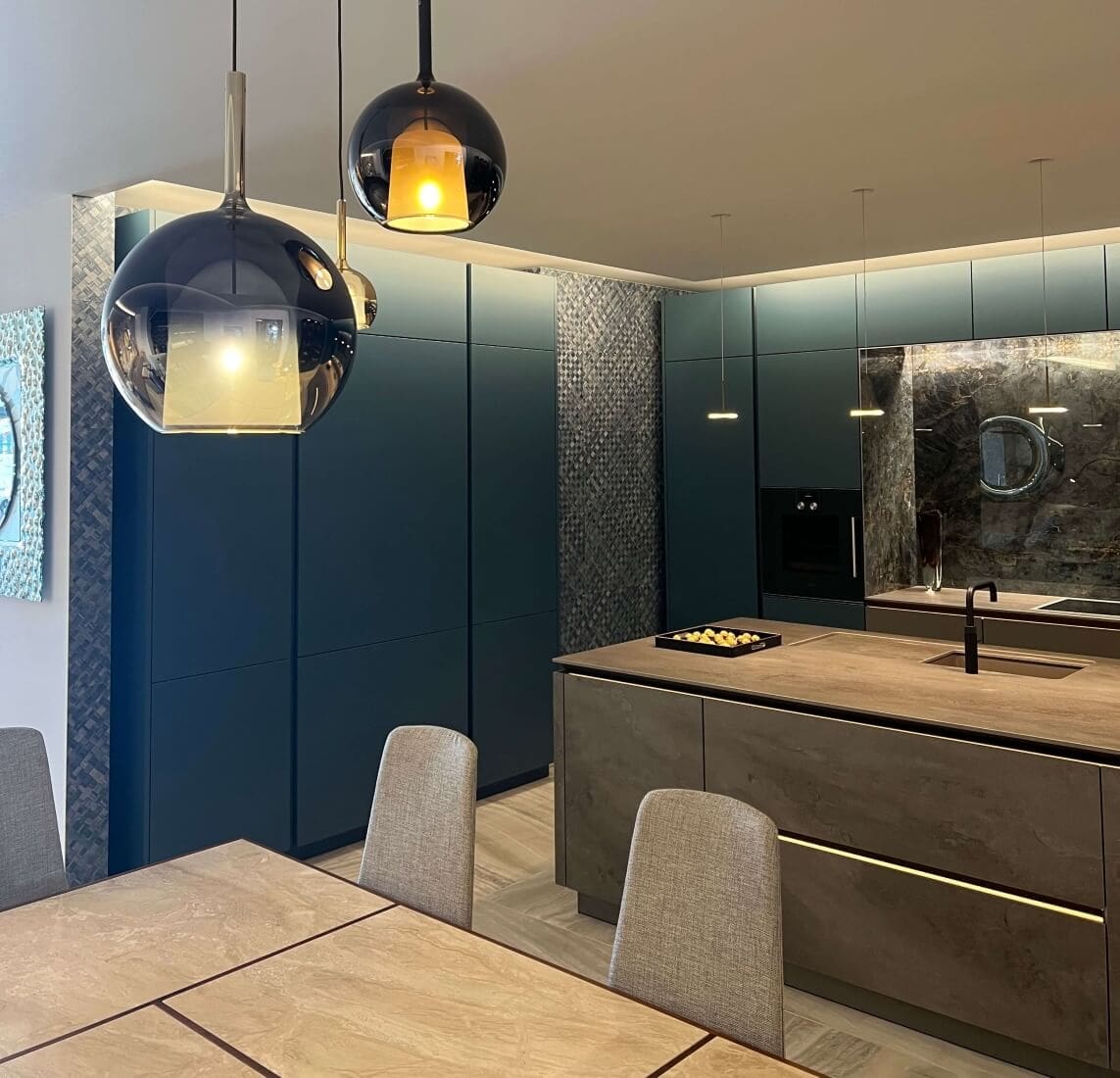
Living and relaxing require sightlines that stay clear, with lighting used to define the shift from task to rest so the room changes pace without changing structure.
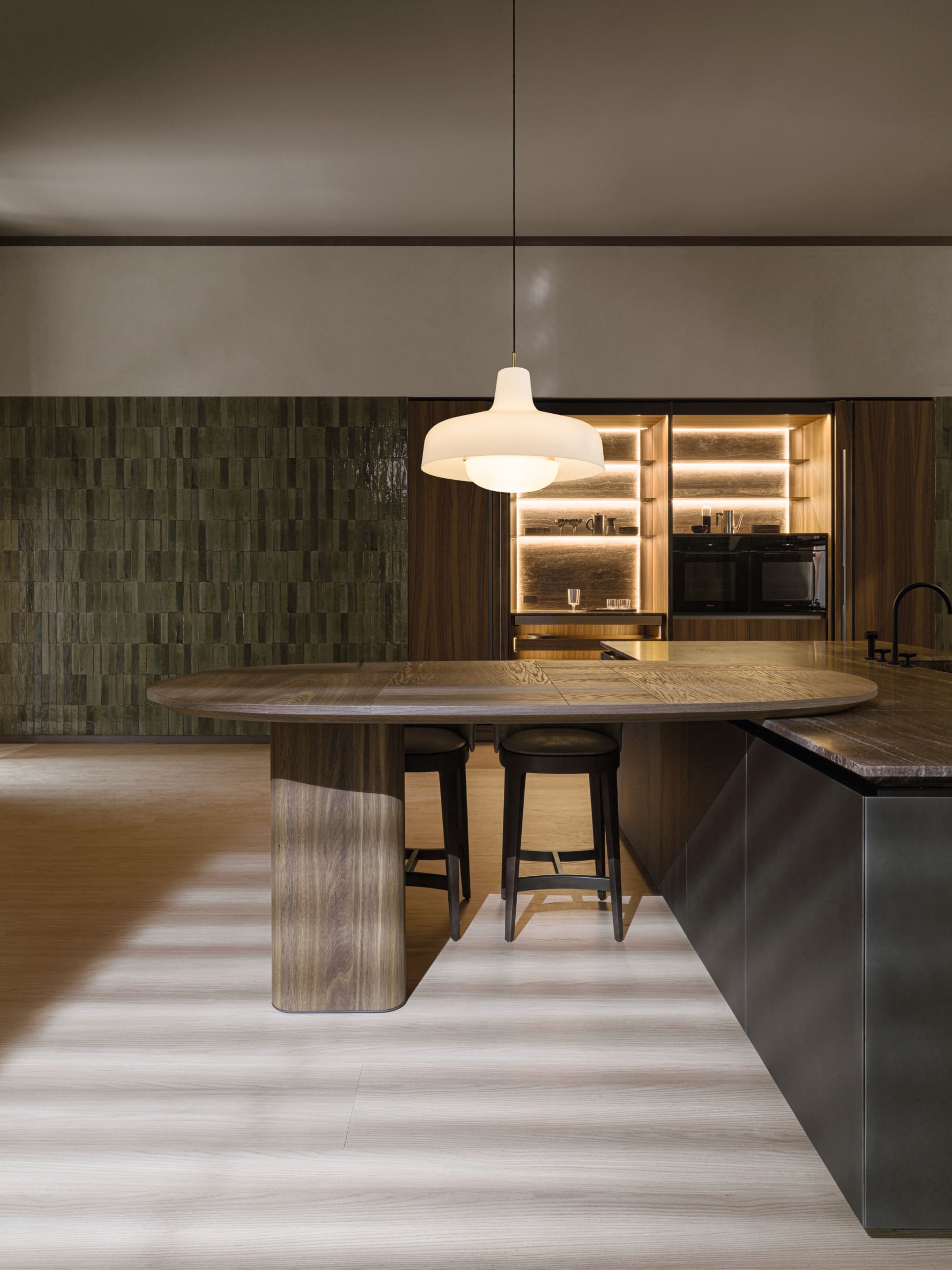
That present-day brief is unpacked further in luxury modern kitchens, where “modern” is defined by performance rather than aesthetics.
THE ISLAND AS ANCHOR
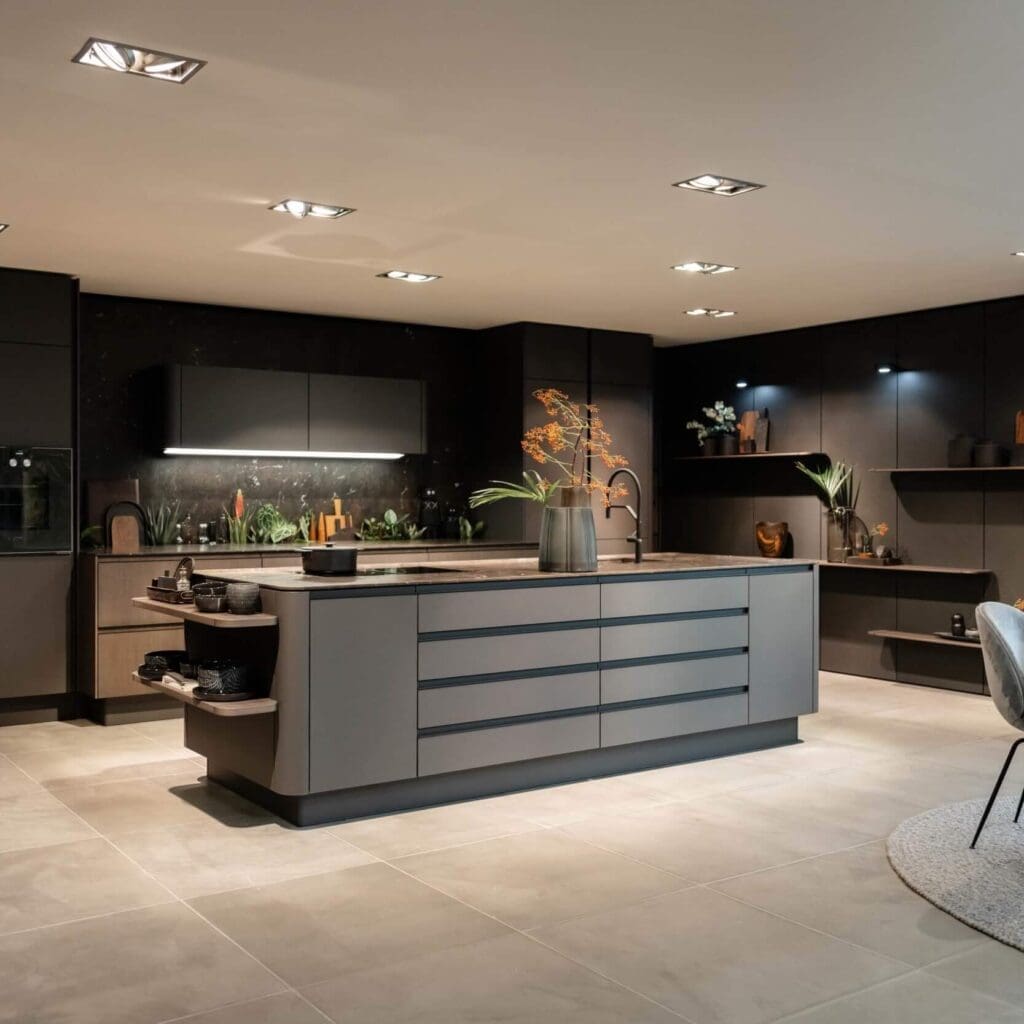
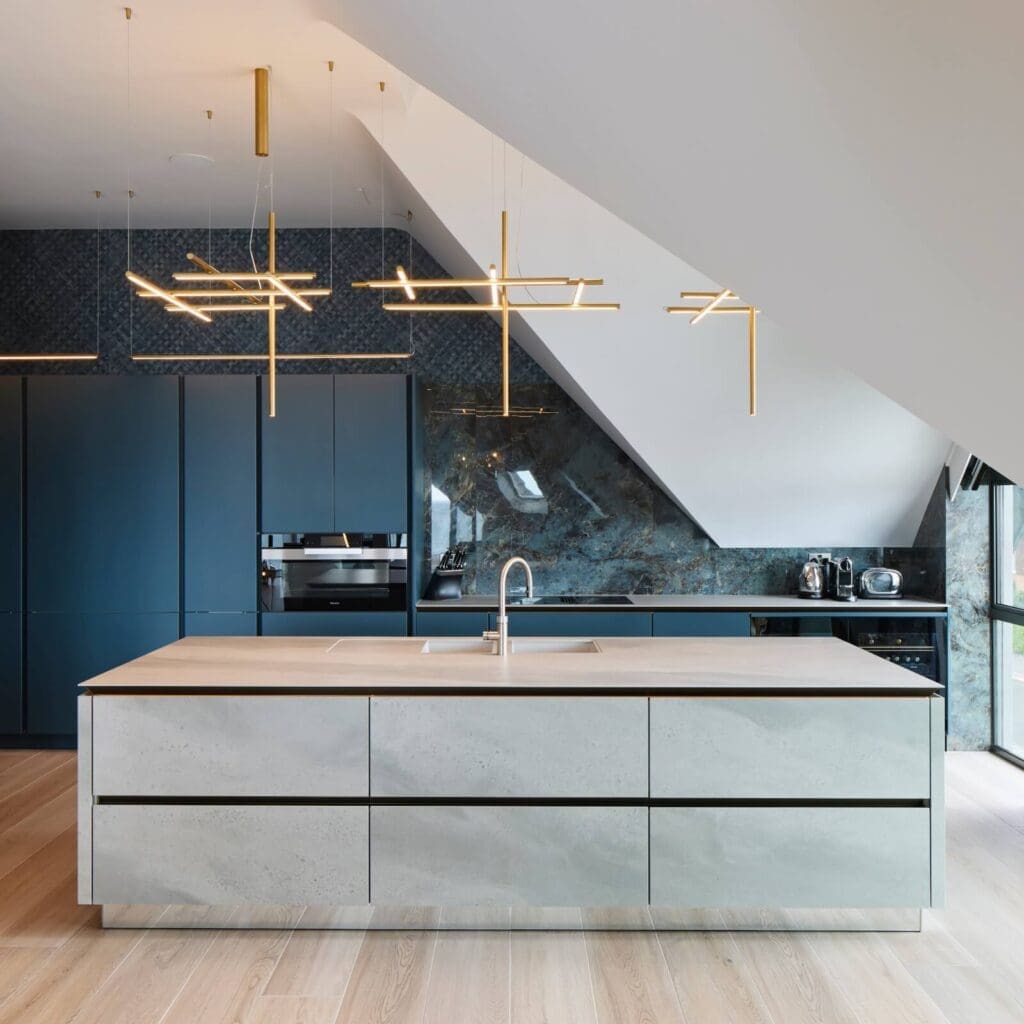
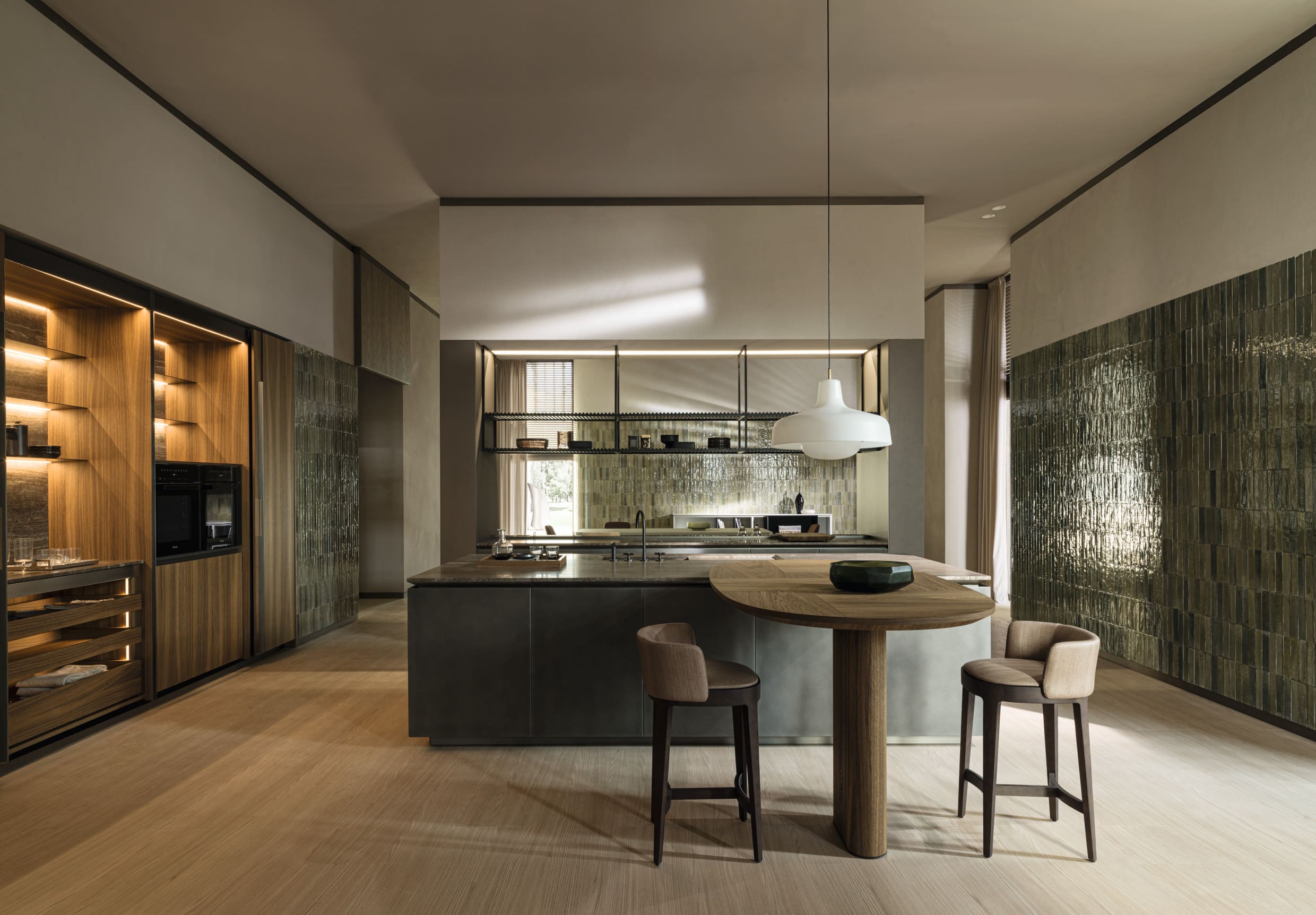
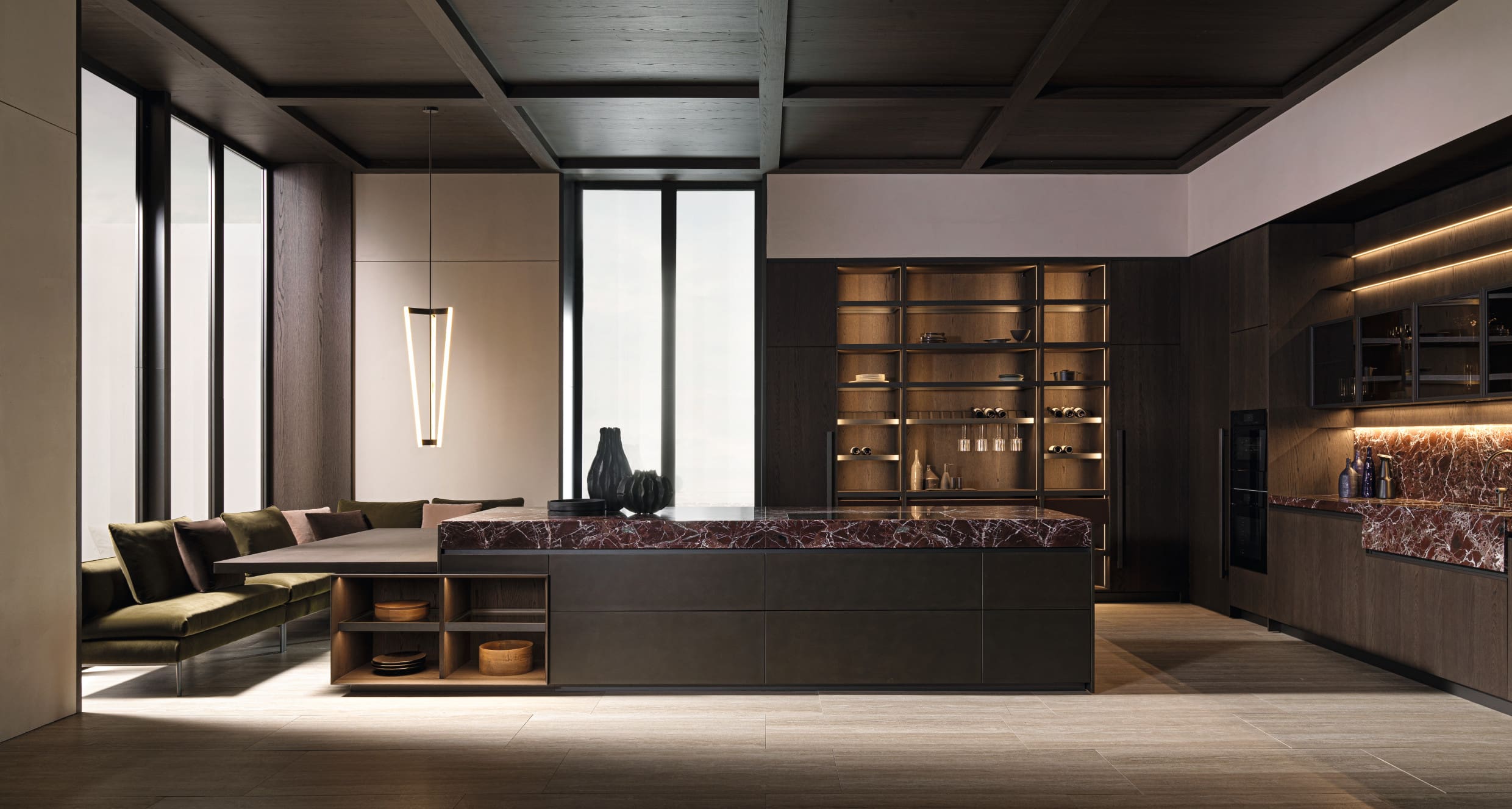
The island acts as the organiser in open-plan kitchens. It fixes the working route, defines the social edge, and sets the relationship between kitchen, dining and living zones so movement stays readable across the room.
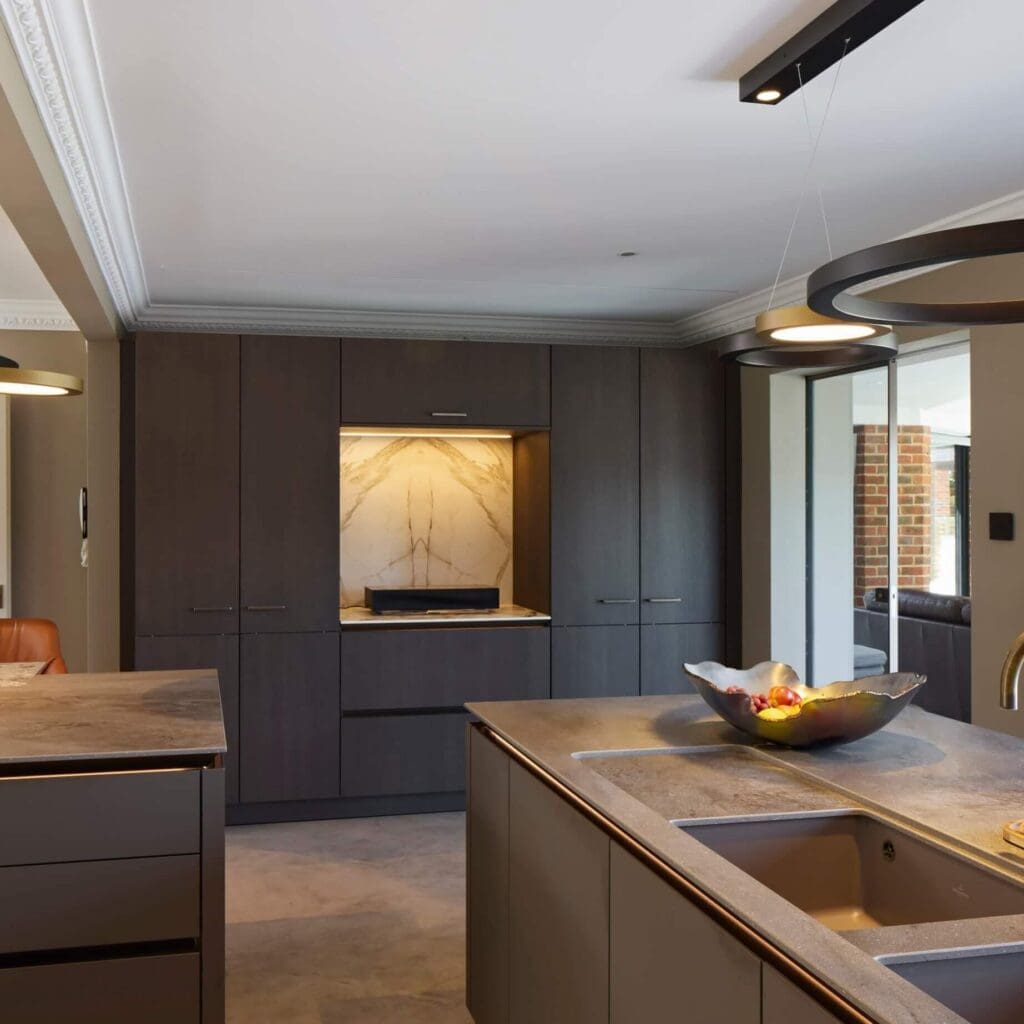
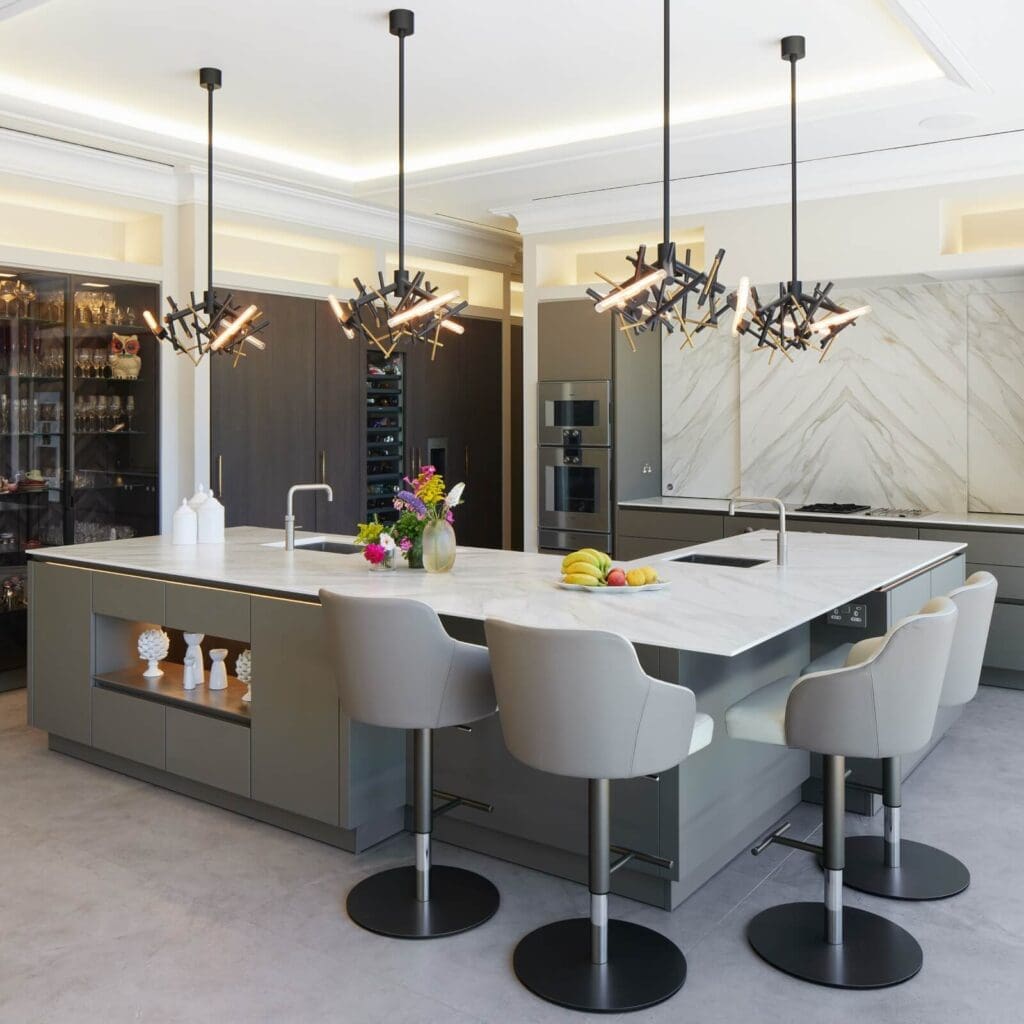
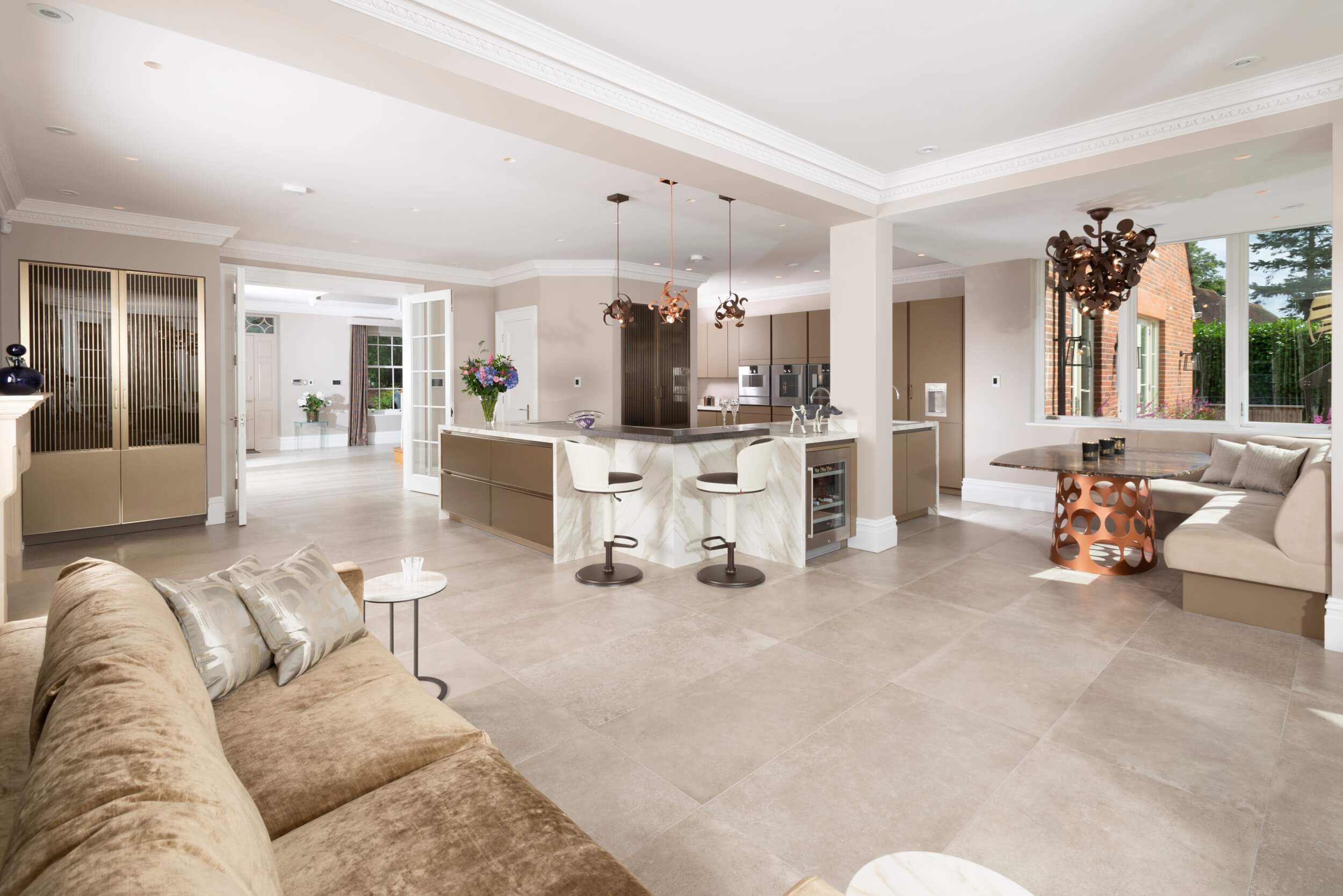
At our New Forest Home project in Hampshire, a large-scale open-plan room was anchored by an L-shaped island set out to support natural movement and connection while framing views towards the terrace. The ceiling was also used as an architectural tool: raised sections with concealed LED defined kitchen, dining and lounge zones without introducing visual division.
STORAGE AND CLEARANCE KEEP THE ROOM CALM UNDER LOAD
Open-plan kitchens stay orderly when storage is placed on the routes that carry daily life. Everyday drawers sit at prep height, waste and recycling sit on the short route between sink and prep, and tall storage carries bulk and small appliances without interrupting circulation.
This is not an organisational afterthought; it is an architectural decision that affects how the room looks at rest. The storage mapping behind larder walls, drawer zoning and concealed stations is set out in detail in kitchen storage ideas, where “tidy” is treated as a consequence of planning.
FURNITURE THAT BELONGS
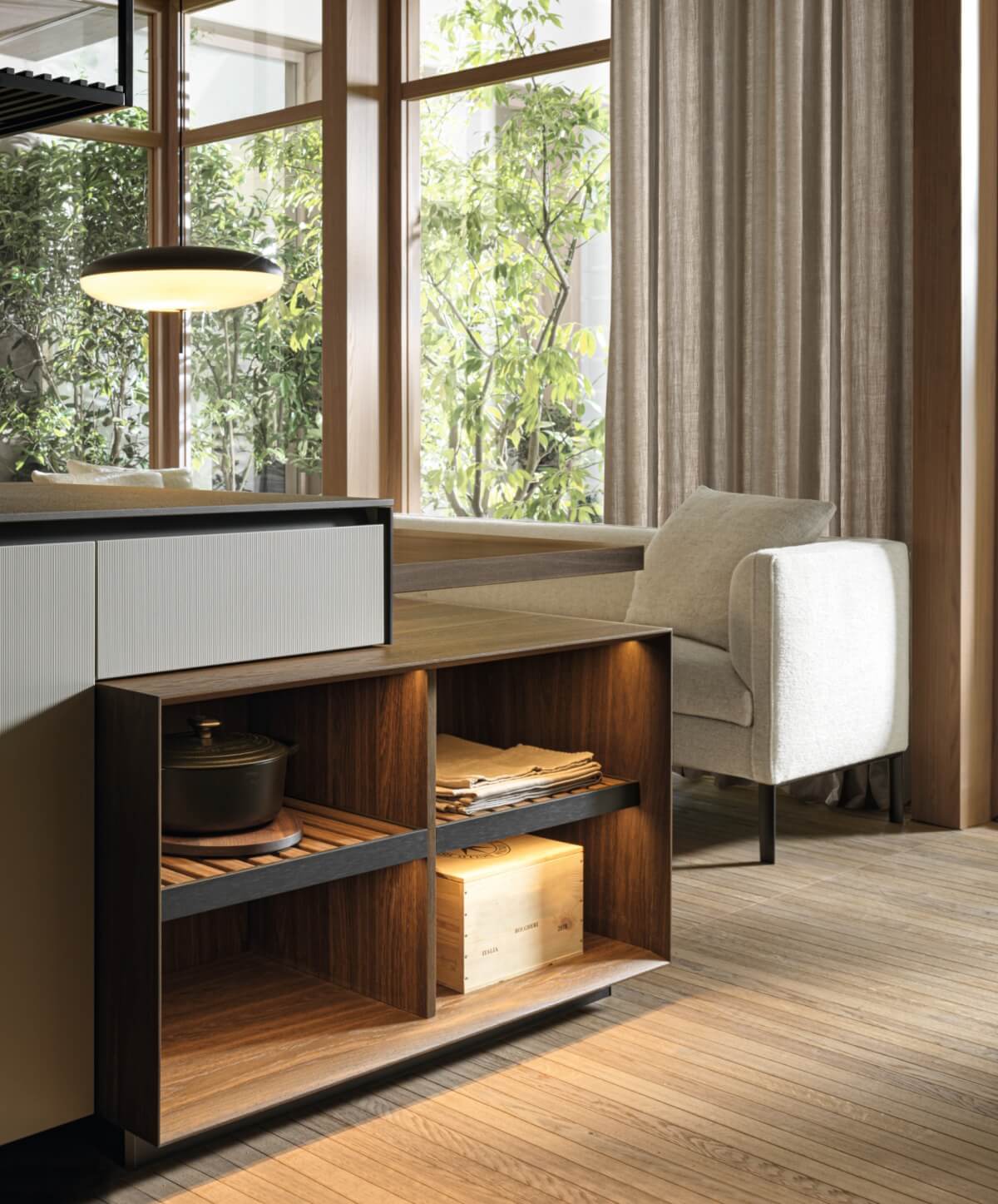
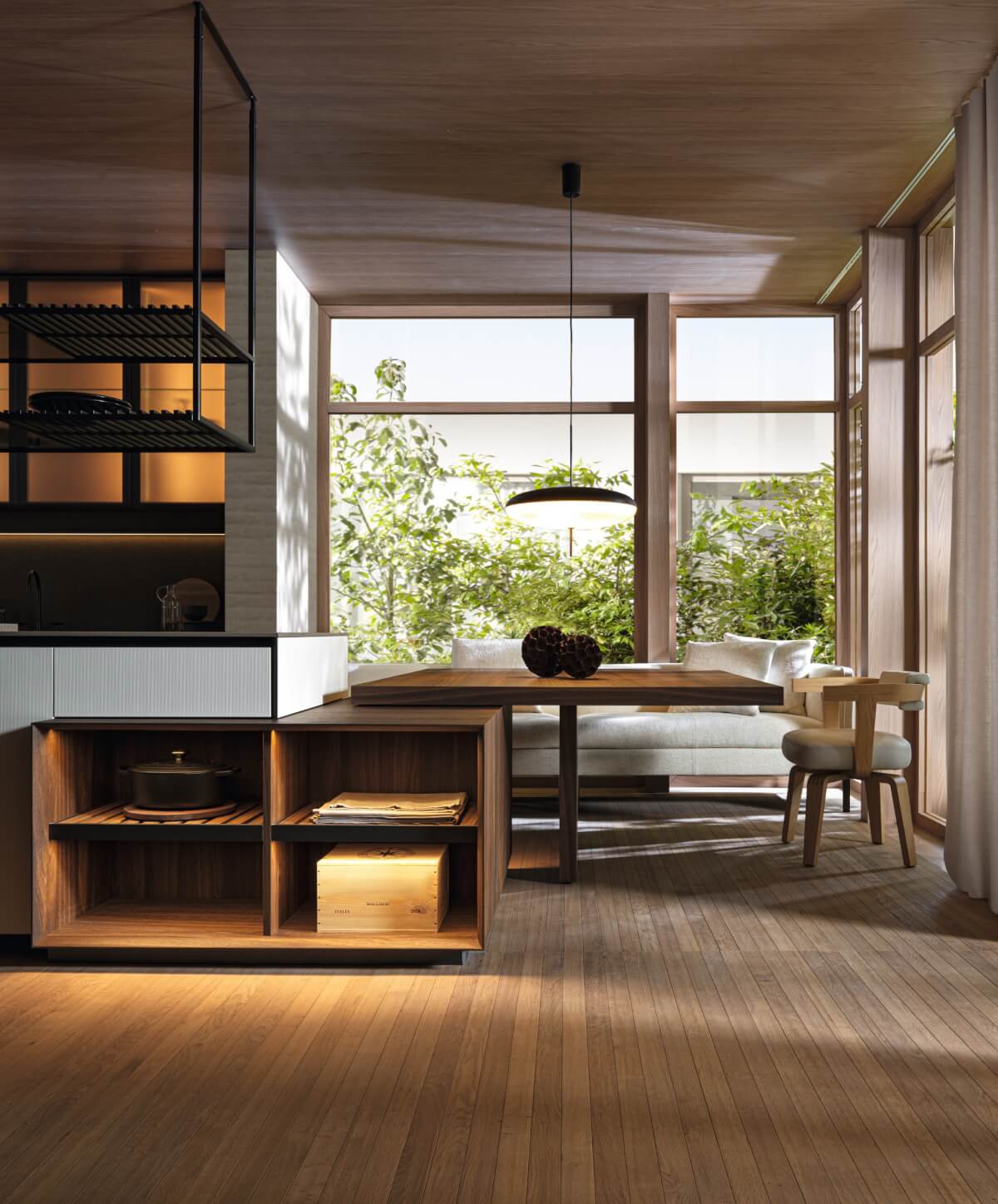
Furniture extends the kitchen set-out into the wider room. Dining tables, banquettes and lounge seating are positioned to reinforce proportion, maintain threshold clarity and keep chair pull-back clearances comfortable around the working area.
At Pangbourne Hill Country House, a banquette fixed the dining line and held consistent clearances at the table edge, creating a clean transition between kitchen and living zones while keeping movement continuous when the kitchen was in full use.
SERVICES, LIGHTING AND JUNCTIONS NEED ONE COORDINATING GRID
An open-plan room reads resolved when multiple systems share one organising logic. Services and ventilation routes are coordinated against the cabinet grid; lighting circuits are grouped to match daily modes; junction details are drawn to keep the material field continuous across kitchen and living areas.
Inside Dream Design’s open-plan kitchen design, that coordination is treated as the mechanism that produces calm—so the room stays coherent as it shifts from morning preparation to evening hosting.