

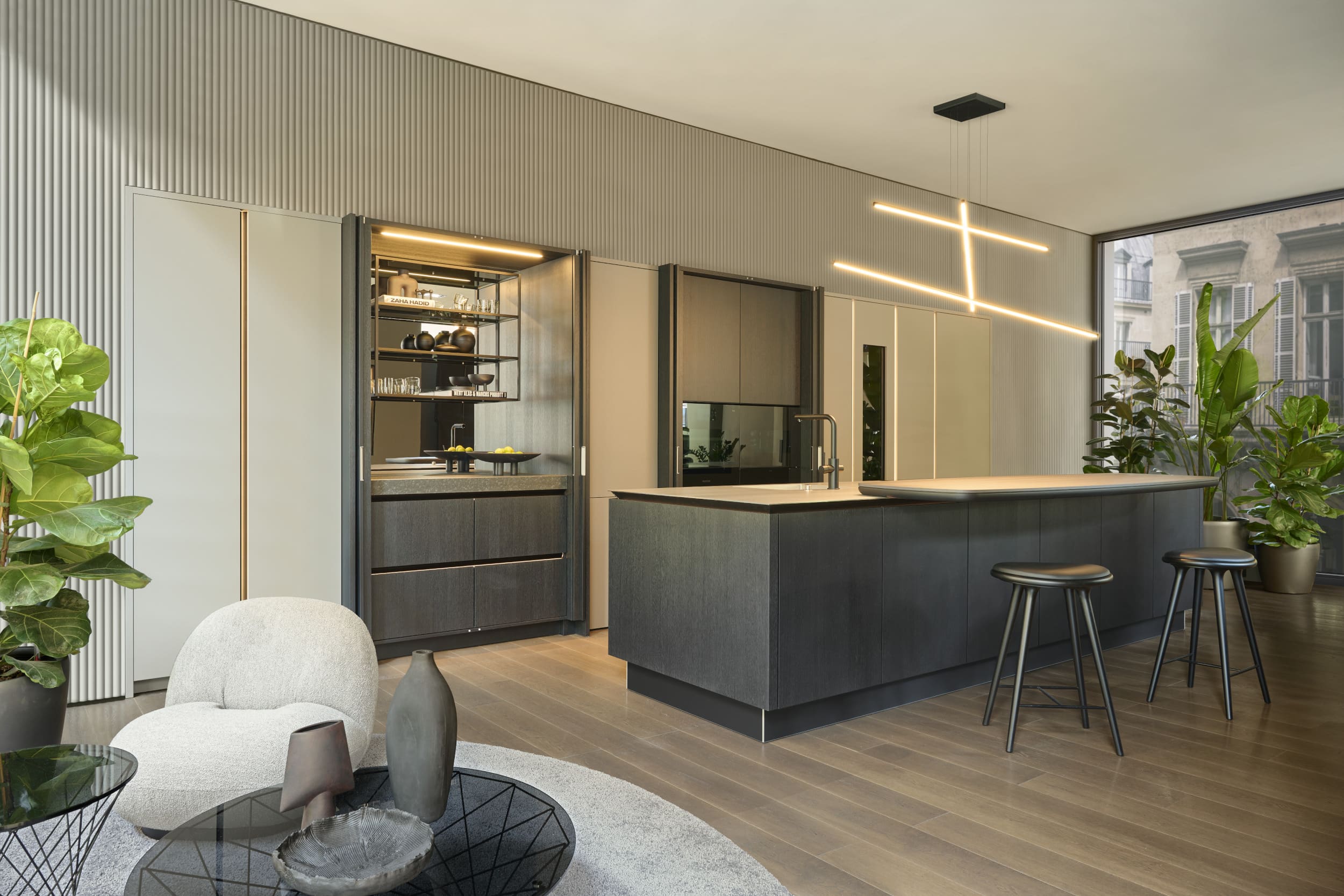
LUXURY MODERN KITCHENS: WHAT “MODERN” MEANS IN KITCHEN DESIGN
A modern kitchen is defined less by a look and more by a present-day brief: open-plan routines, integrated technology, and a room that carries cooking, dining and gathering as one connected sequence. The decisive work sits in the set-out—adjacencies, clearances, appliance integration and storage volumes resolved so the kitchen stays orderly in use and coherent in view.
At Dream Design, “modern” is treated as interior architecture. The cabinet grid, working routes, lighting layers and junction lines are coordinated as one system, then carried through drawings and site checks so the finished room reads calm because it performs with clarity over time.
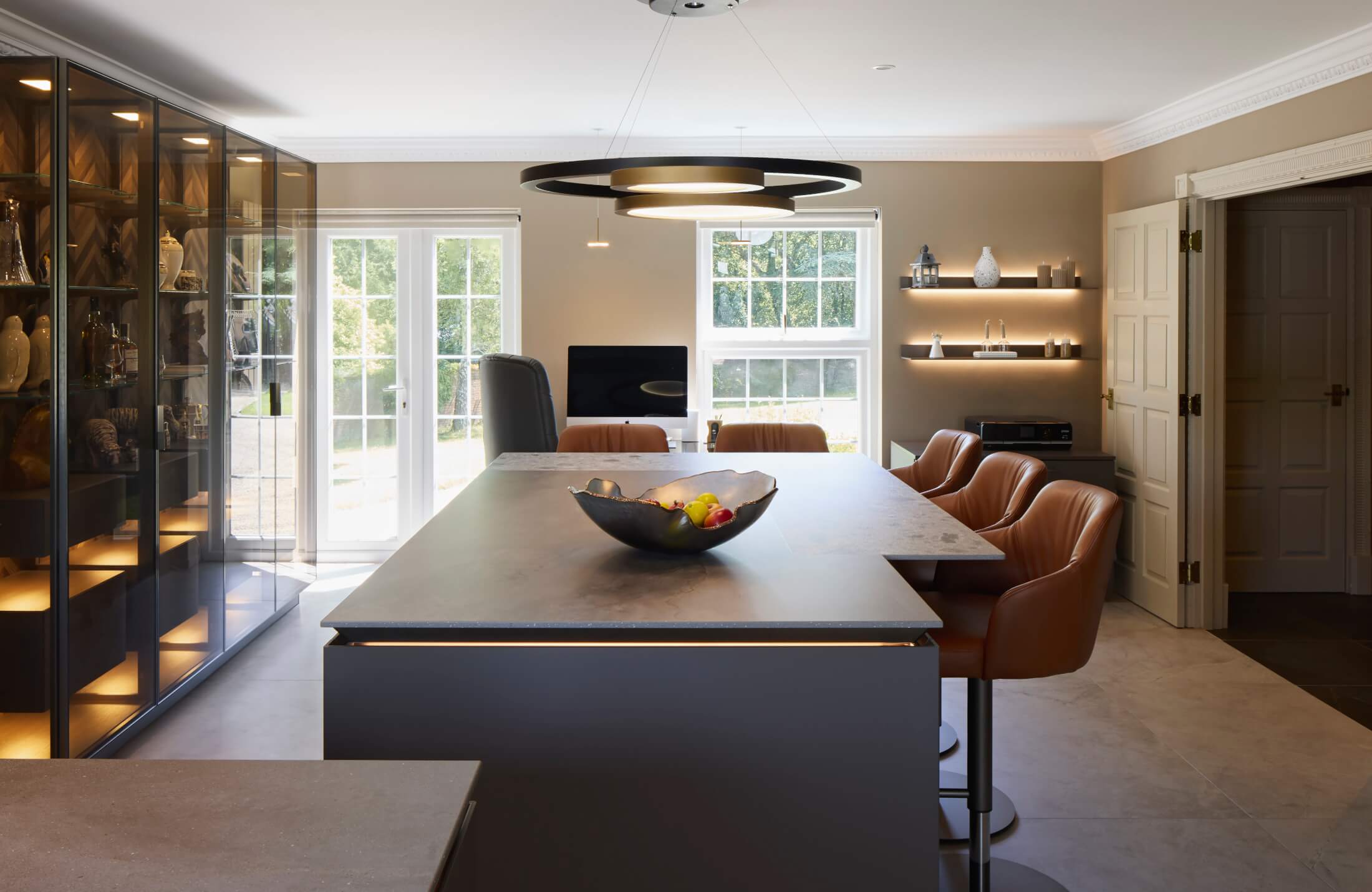
MODERN IS A PRESENT-DAY BRIEF, EXPRESSED THROUGH A CHOSEN STYLE LANGUAGE
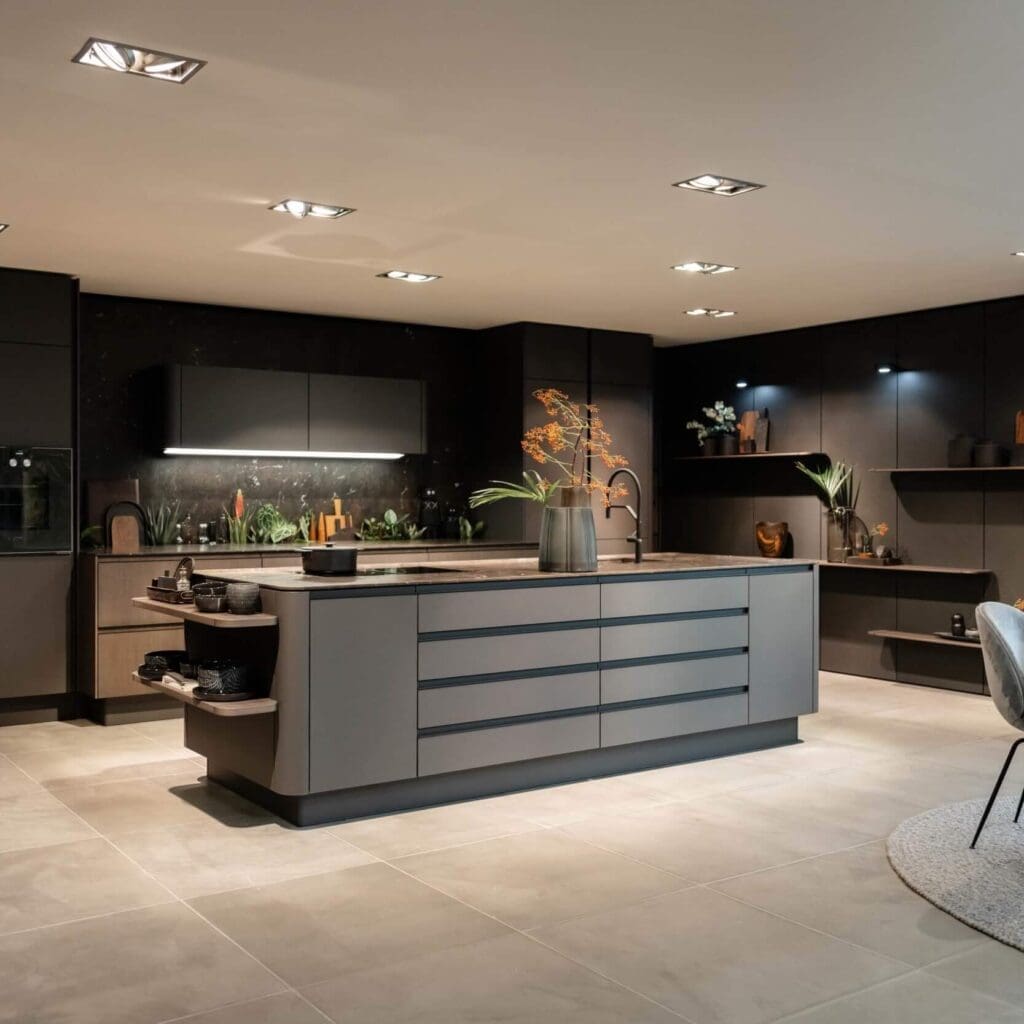
Modern describes the decisions that shape how a kitchen works now: a disciplined layout, appliances integrated into a legible elevation, lighting planned in scenes, and storage mapped to routine so surfaces remain usable across a day. When the cabinet grid and datum lines are held consistently, the room stays visually readable while it is being used.
Contemporary is one style language that can express that brief—clean planes, reduced visual noise, handleless detailing. Classic detailing can also carry a modern brief when the planning remains disciplined: framed fronts or shaker-style proportions can sit within the same present-day performance requirements when junctions, clearances and lighting are resolved with the same rigour. The distinction matters because modern is performance-led; contemporary (or classic) is the chosen expression of that performance.
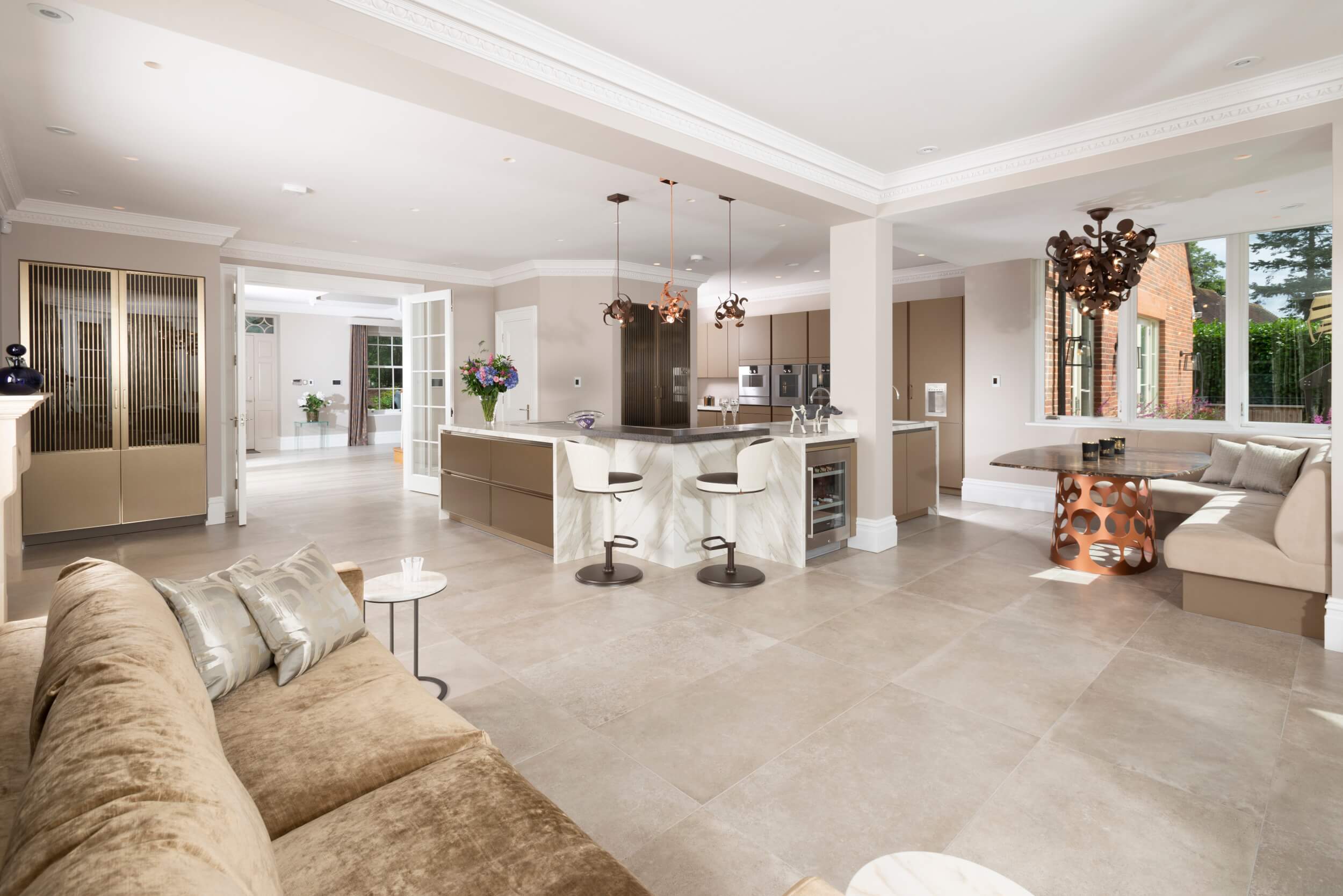
THE SET-OUT CARRIES MODERN LIVING ACROSS COOKING, DINING AND GATHERING
The plan holds together when the working sequence is direct. Sink, prep and hob positions align to a short route; refrigeration, waste and primary storage sit on that same path so the rhythm of cooking and clearing remains steady and worktops stay available during simultaneous use.
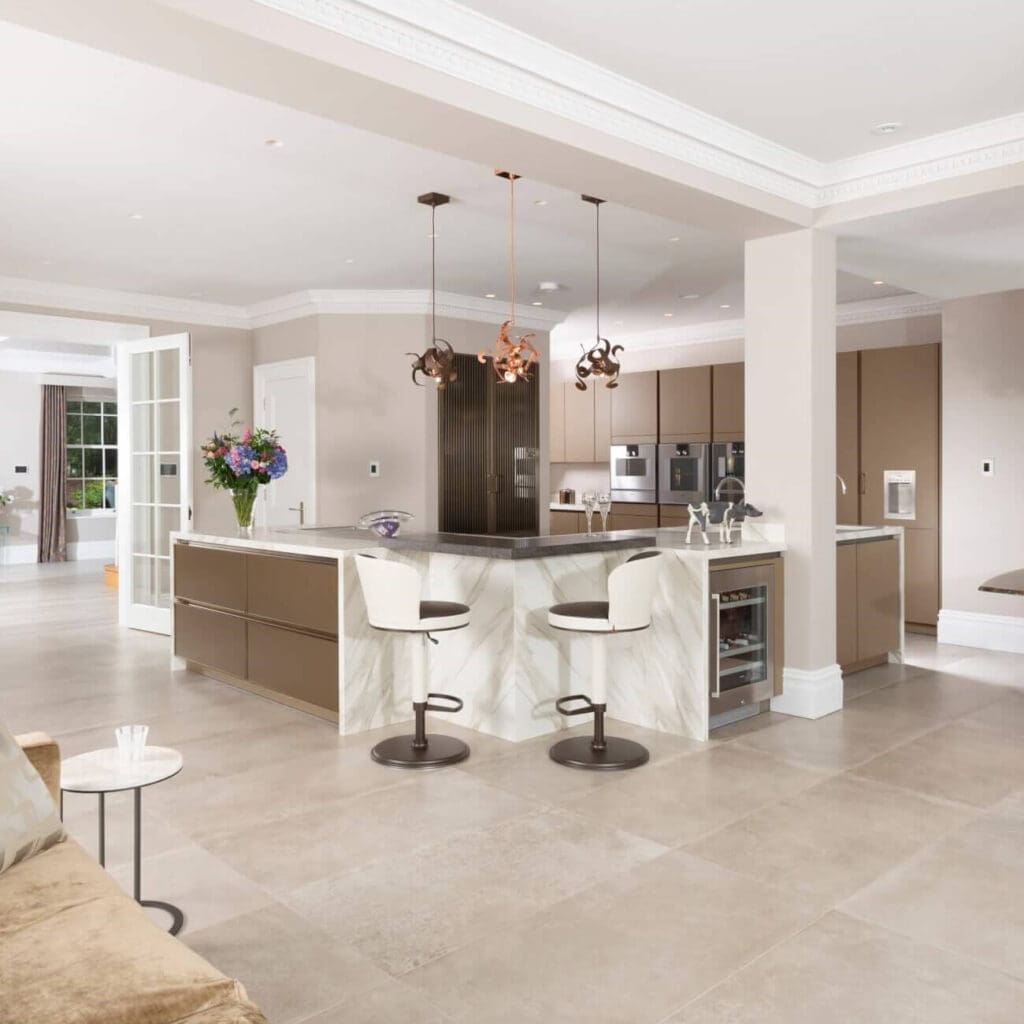
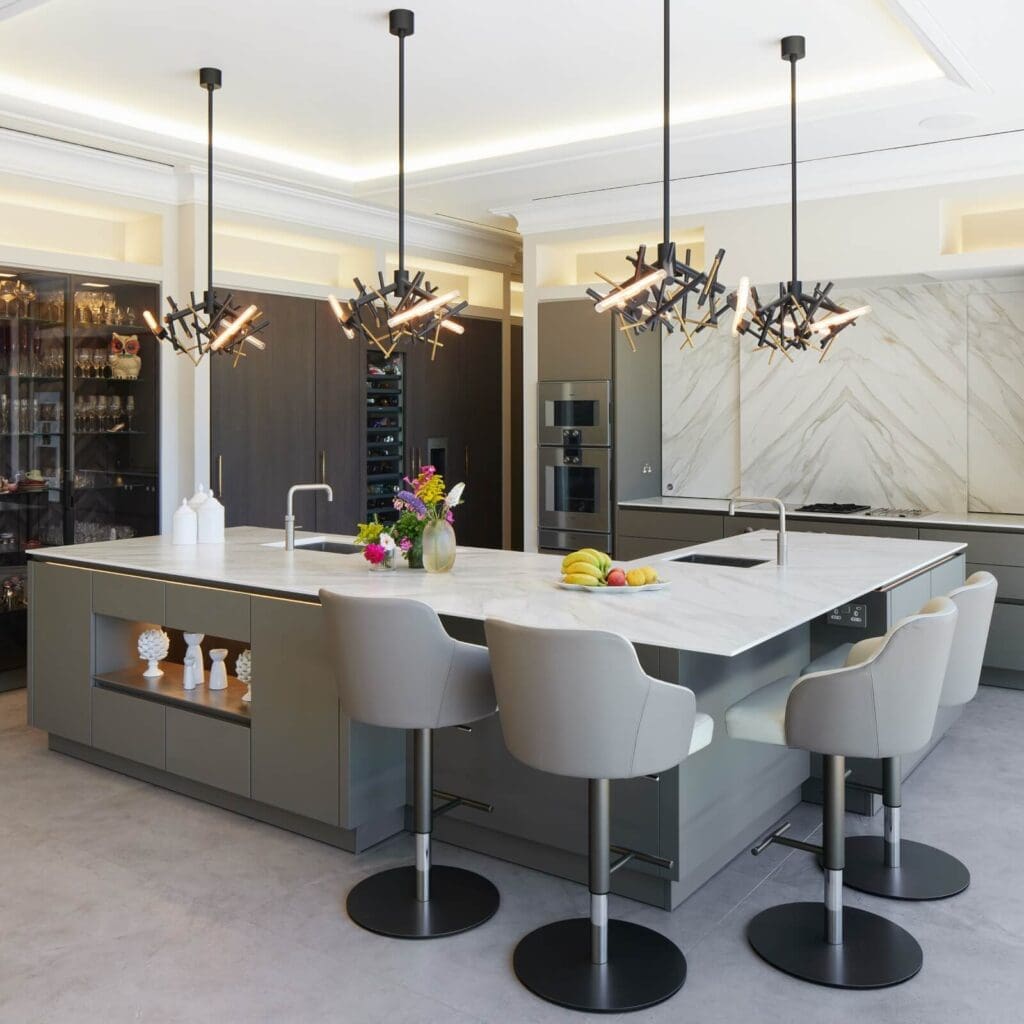
The island becomes the organiser when its geometry is planned as furniture rather than cabinetry. Stool spacing, knee space, prep depth and walkway widths are set out together so the island supports both task and rest without compromising circulation. That same zoning logic is extended through seating and sightlines in open-plan kitchen zones, where the kitchen’s set-out is carried into dining and living areas without the room losing hierarchy.
TECHNOLOGY IS QUIET WHEN IT IS DESIGNED INTO THE ARCHITECTURE
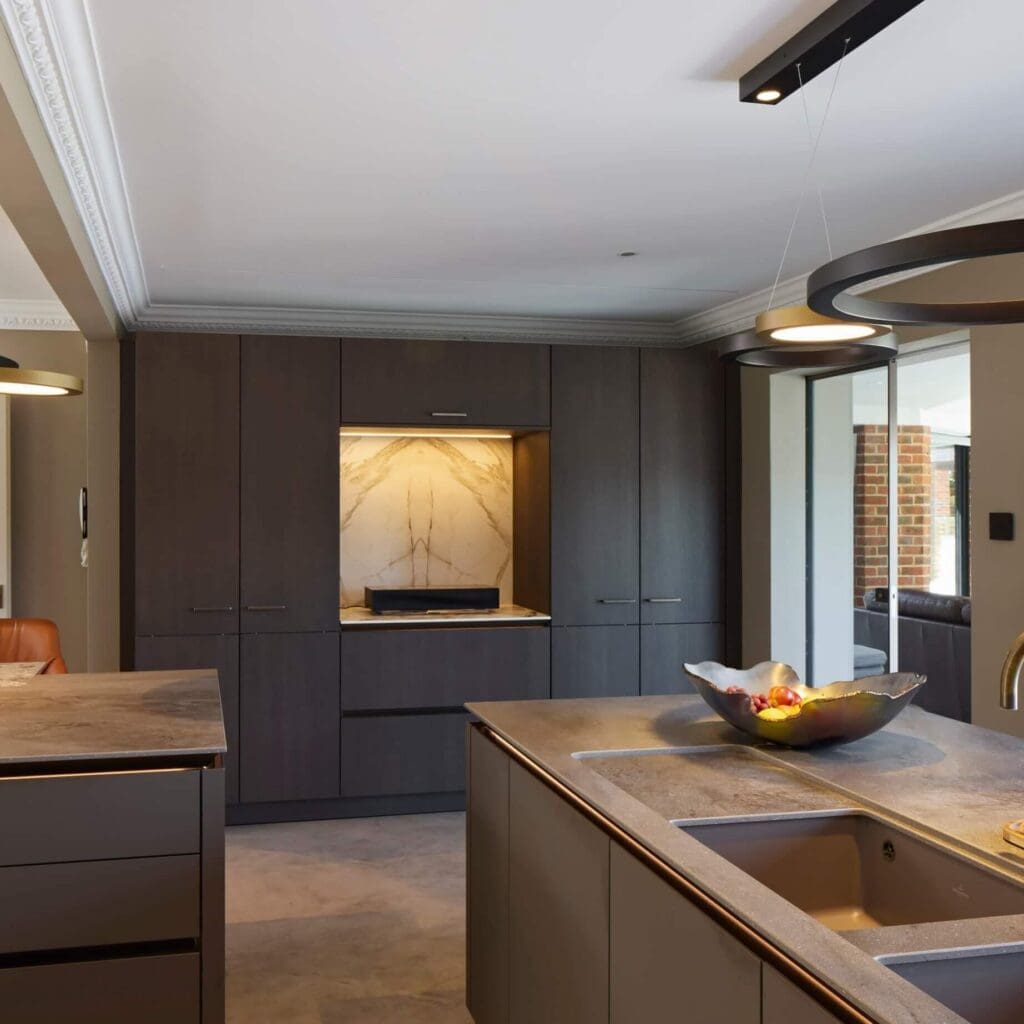
Integrated appliances read modern when they sit inside a stable cabinet grid and remain serviceable over time. Ventilation routes, access panels and service clearances are coordinated early so the elevation stays continuous and maintenance remains practical after handover.
Smart technology is most useful when it supports routine rather than announcing itself. Lighting scenes, extraction strategy and appliance placement are planned to match daily patterns—morning preparation, cooking under load, slower evening use—so the room shifts mode without changing its structure.
Where a long-established kitchen partner supports the brief, component tolerances and system logic can strengthen the outcome. In practice, that means aligning the set-out and specification discipline to the way the manufacturer’s system is built and adjusted—one reason projects may be specified through partners such as SieMatic when the brief requires long-term consistency.
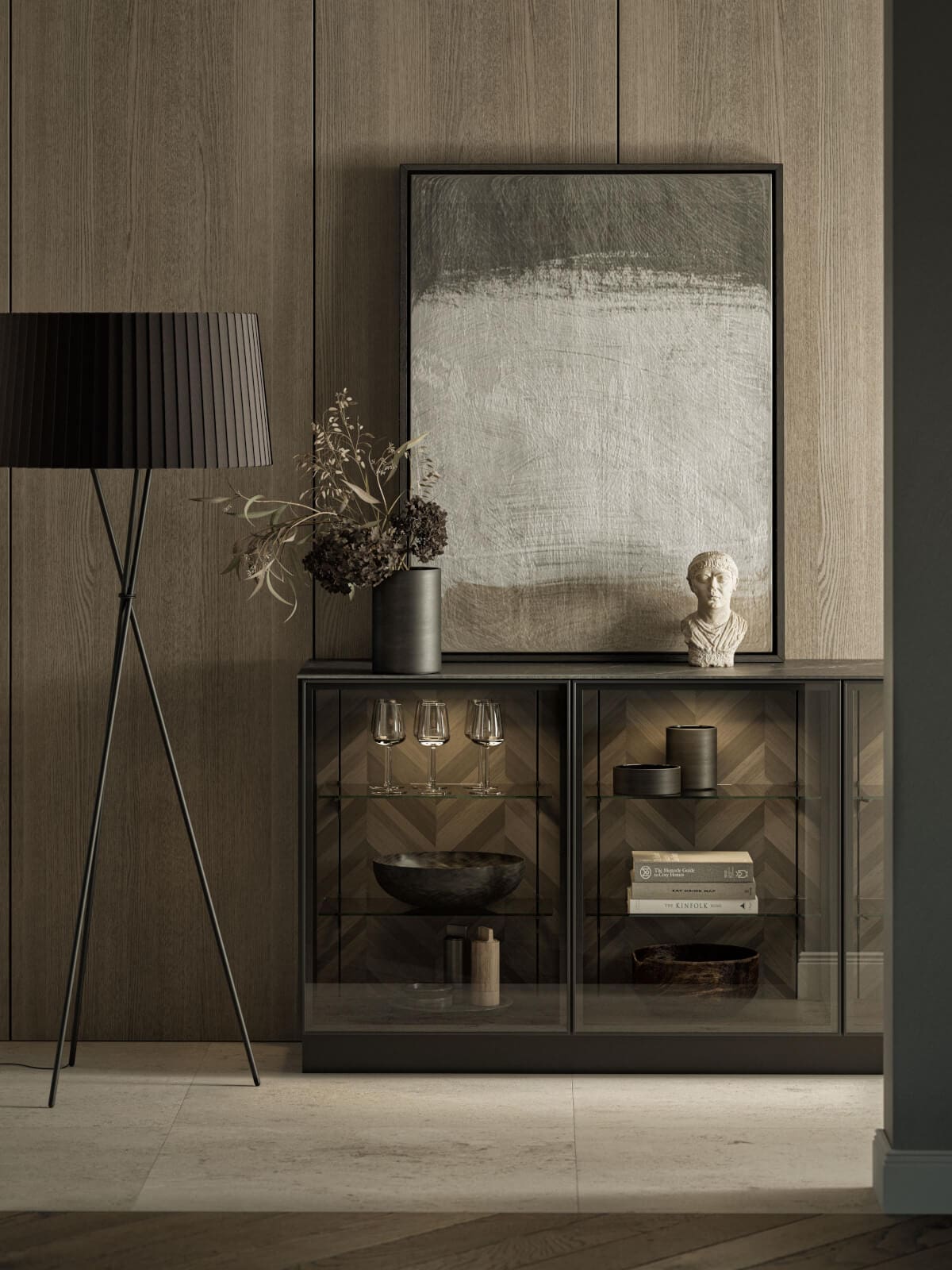
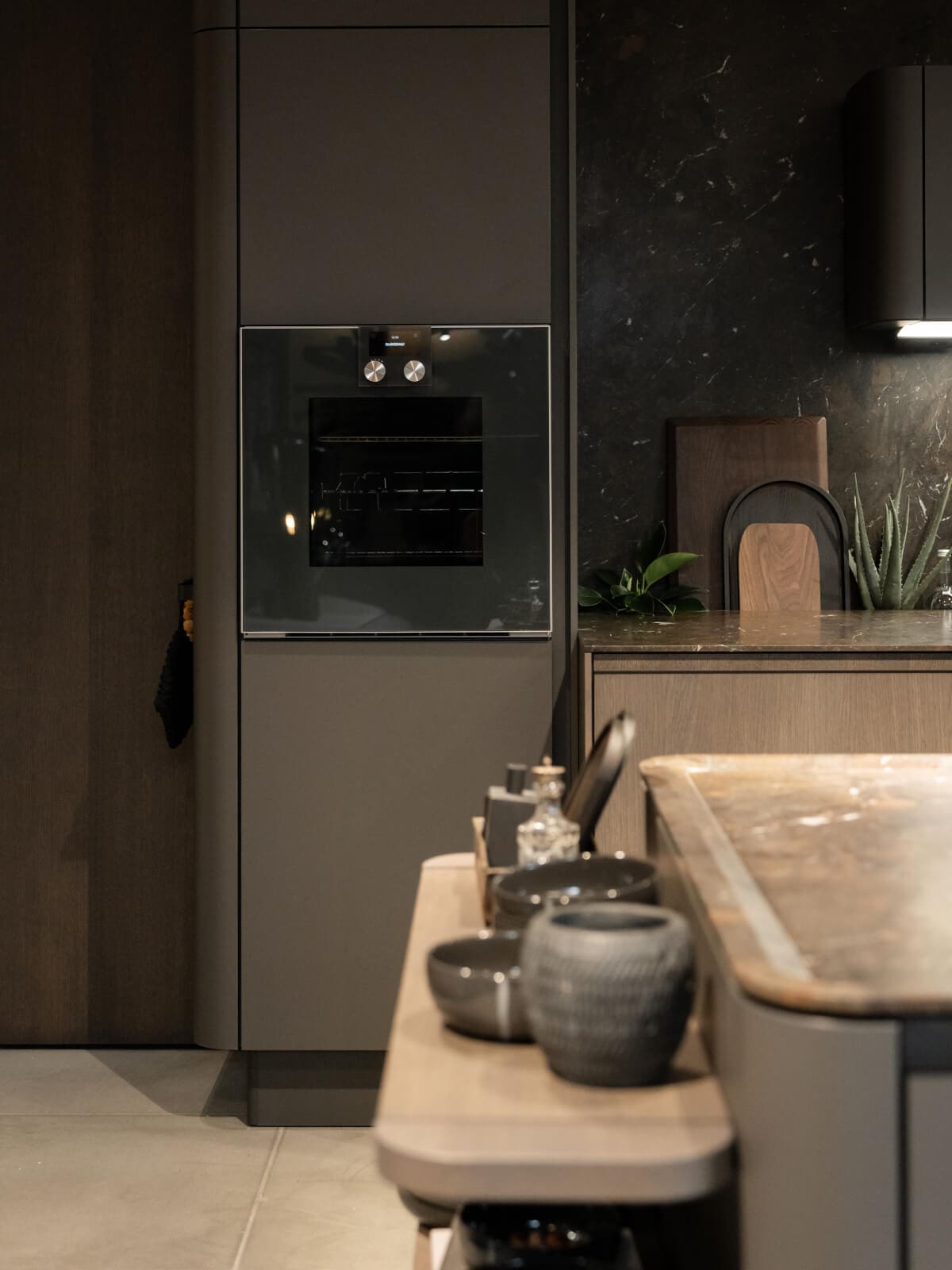
MATERIALS, LIGHT AND JUNCTION CONTROL DECIDE WHETHER MODERN FEELS TIMELESS
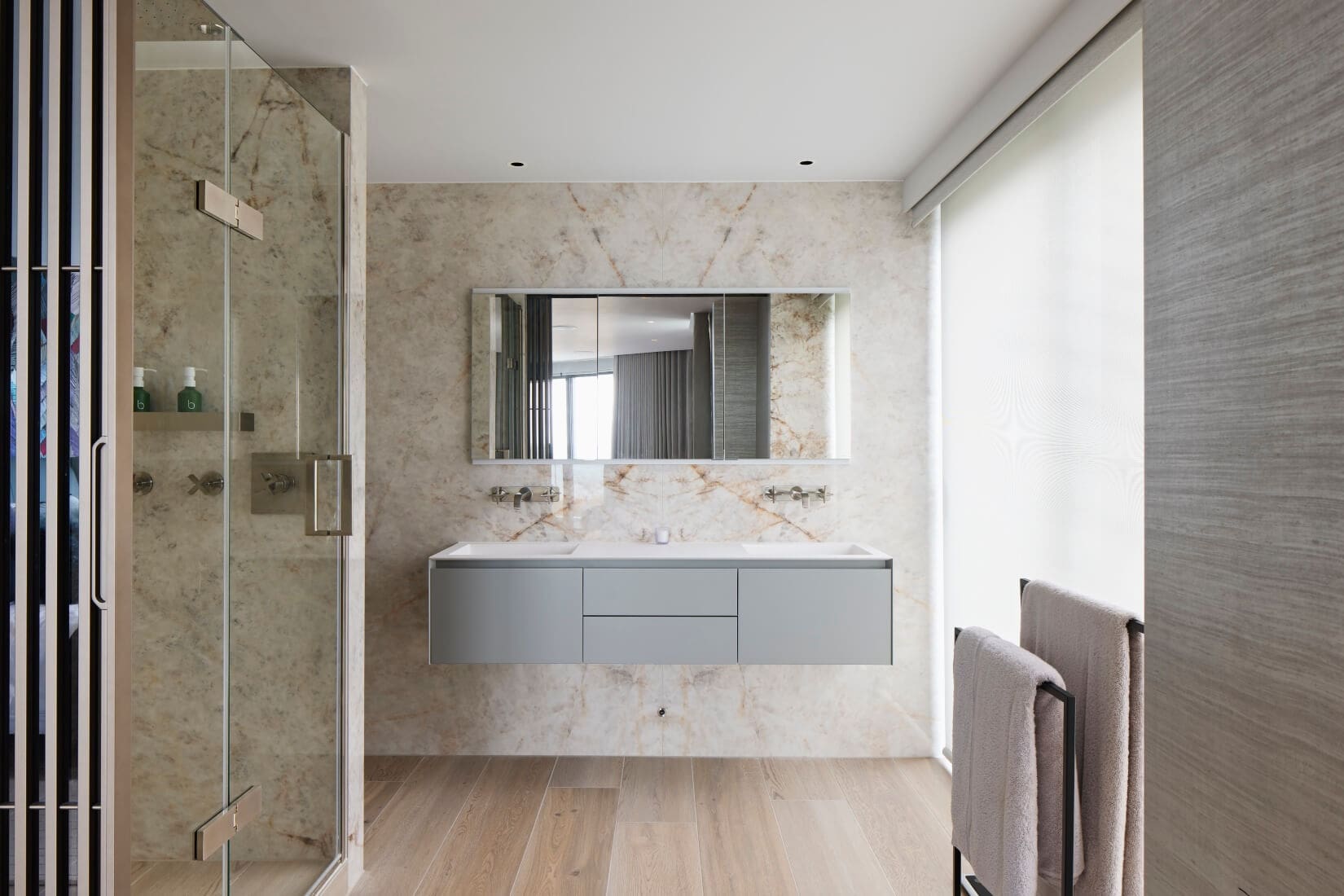
A modern kitchen reads settled when materials are detailed to consistent geometry. End panels, returns and splashbacks align to reference lines; edges are specified to take wear around sinks and dishwashers; junctions are drawn so the room stays composed through cleaning regimes, steam and repeated contact.
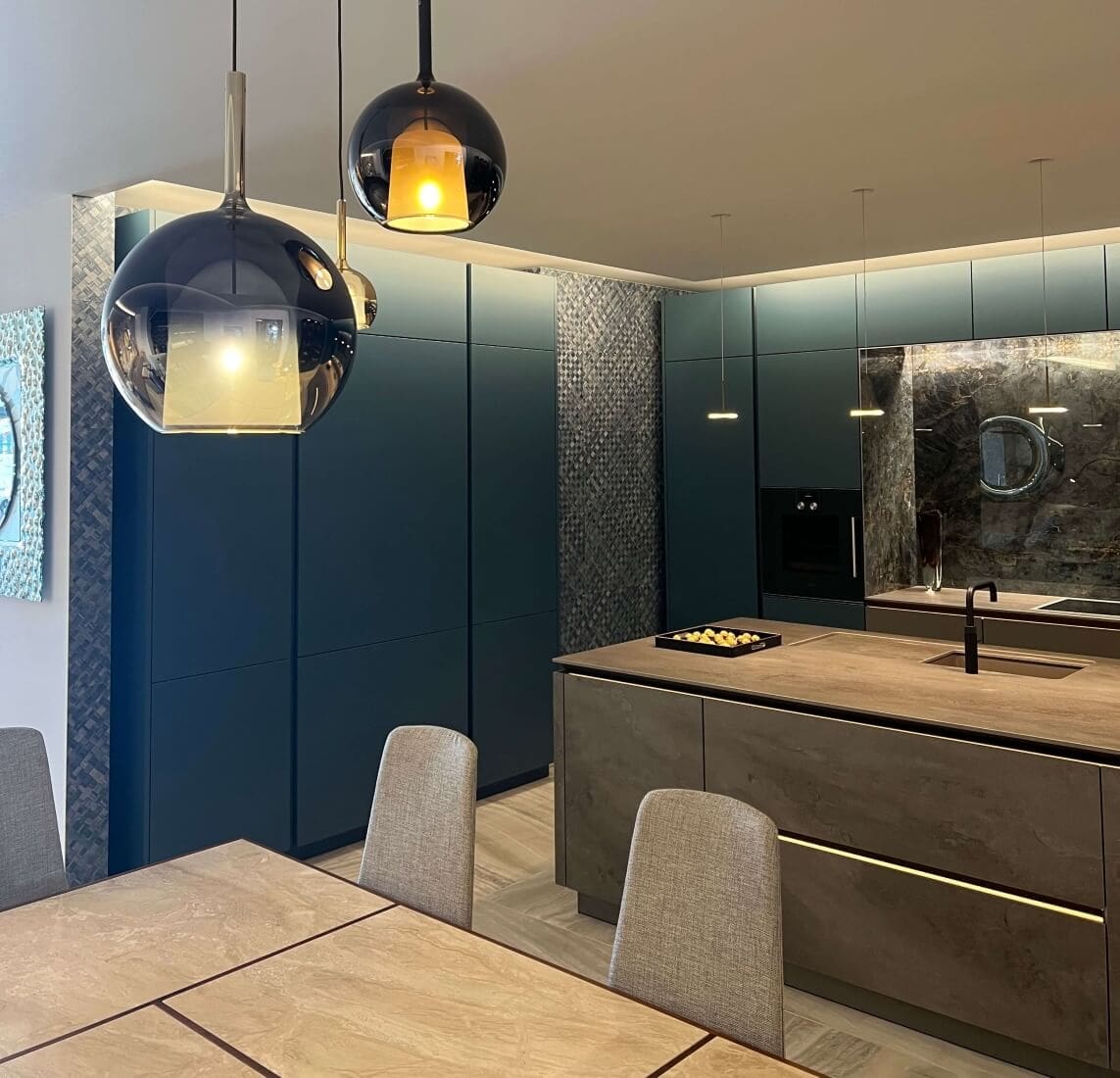
Lighting carries the room across the day when layers are coordinated to the cabinet grid. Task light supports prep and sink zones, ambient light sets the evening field, and accent light lifts material depth. Glare control is resolved through beam angle, diffuser choice and finish reflectance so stone, timber and lacquer read accurately rather than harshly.
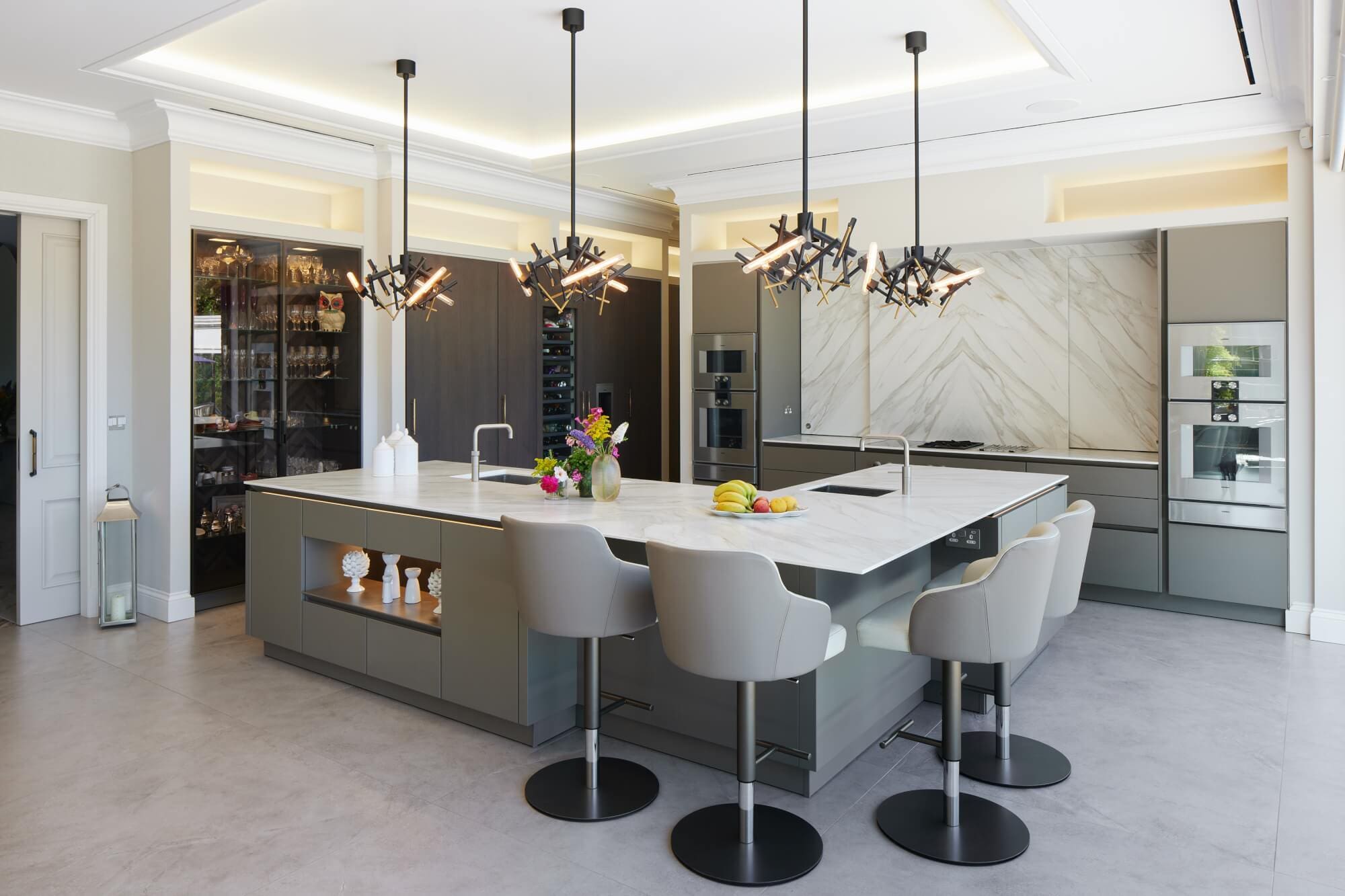
PROOF IN BUILT WORK: SWAY COUNTRY HOME
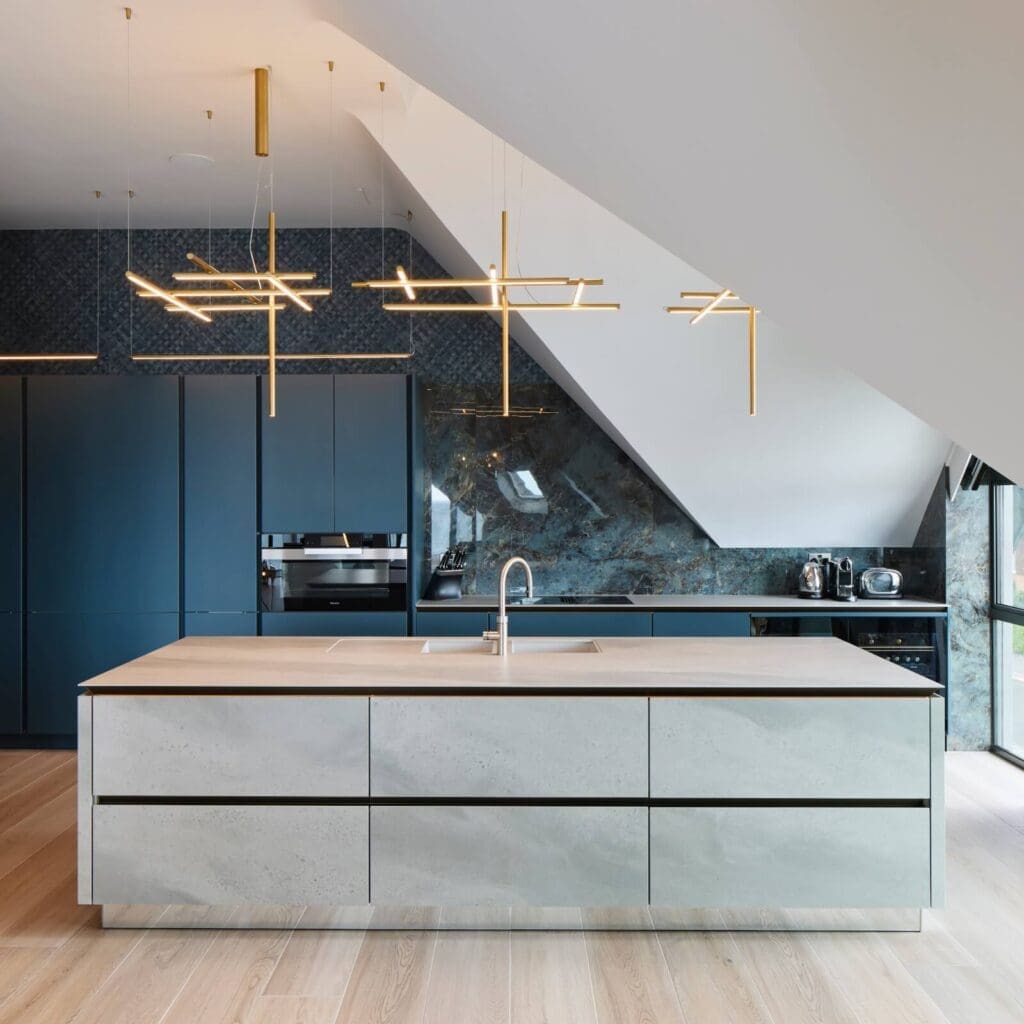
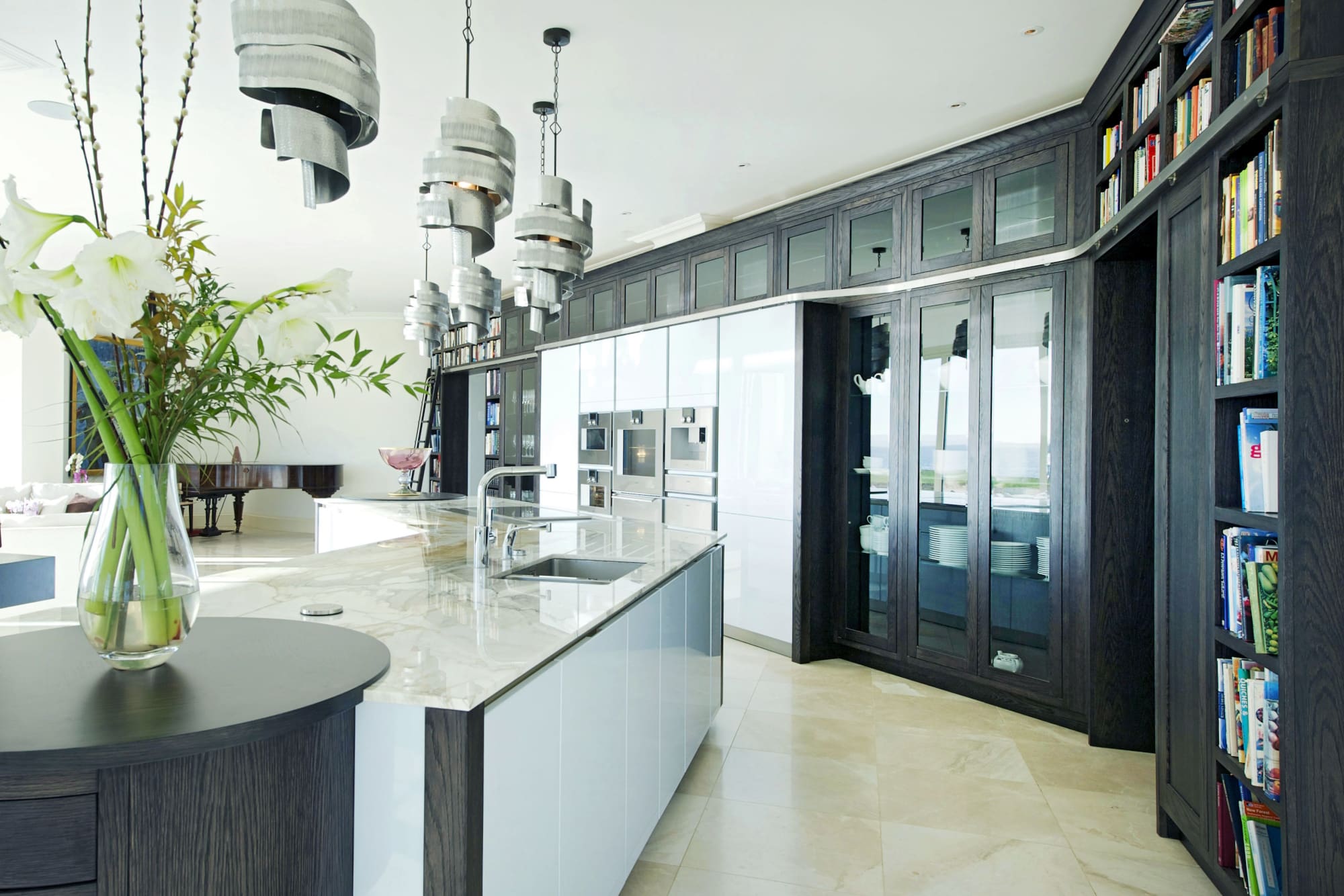
At our Sway Country Home project in Hampshire, the sink was positioned within the island to free the exterior wall for a panoramic window set below worktop height. That single set-out decision opened the elevation to landscape views while keeping the working route compact and the cabinet line clean.
The modern brief was then carried through detail: junction lines were held across the main elevation and the lighting set-out followed the same organising datums, allowing the room to move from morning preparation to evening hosting without losing visual order.
PRACTICAL VERIFICATIONS
A modern kitchen holds its calm when a small set of decisions are fixed early and then protected. Establish the working route first, then lock storage, waste and refrigeration to that sequence so the room stays predictable under load. Set island proportions from circulation and seating pull-back clearances, then coordinate power and task lighting to that same geometry so the social edge never compromises movement.
Resolve appliance integration around service access and ventilation routes before elevations are finalised, so the joinery line remains continuous and maintainable. Draw junction lines at end panels, splashbacks and returns as continuous geometry, then specify edges to match use at sinks, dishwashers and primary touchpoints. Build lighting scenes from routine—prep, cooking, dining, evening—and align fittings and profiles to the cabinet grid so the hierarchy holds from day to night.
Within Dream Design’s luxury modern kitchen design, modernity is carried by set-out discipline, junction control and lighting hierarchy—so the kitchen reads calm because it works predictably in daily life.