

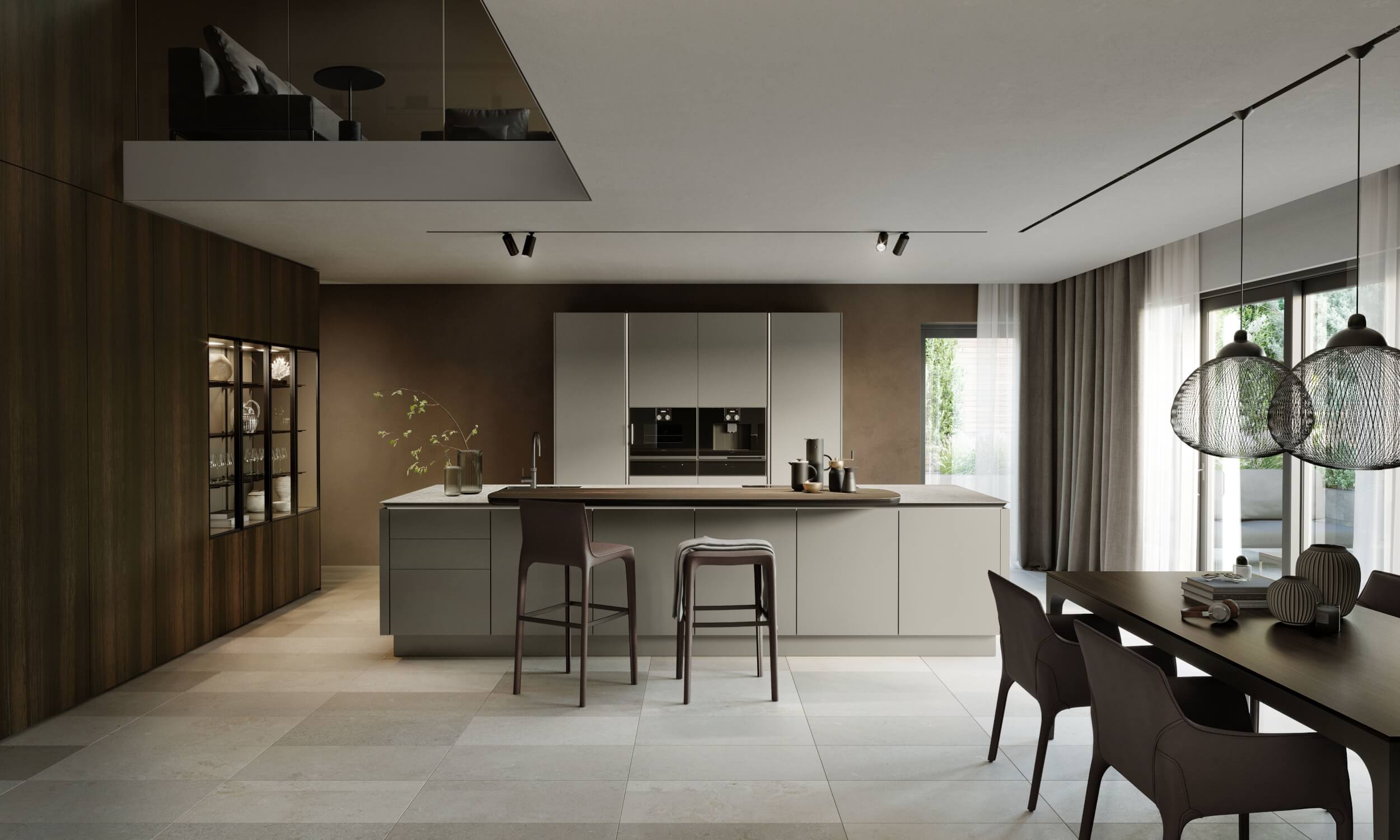
Luxury Kitchen Renovation: Set-Out, Junctions and Delivery
A kitchen renovation succeeds when the room performs in daily life and reads as a coherent part of the house. The decisive work happens early: the set-out fixes proportions and clearances, adjacencies structure routine, and junction lines carry through materials, lighting and services so the finished room holds its order in use.
Dream Design treats renovation as a coordination problem as much as a design problem. Thresholds, storage logic, lighting layers and installation tolerances are resolved as one system, then carried through controlled drawings and site checks so the built result matches the planning intent at handover.
THE SET-OUT TURNS A RENOVATION INTO INTERIOR ARCHITECTURE
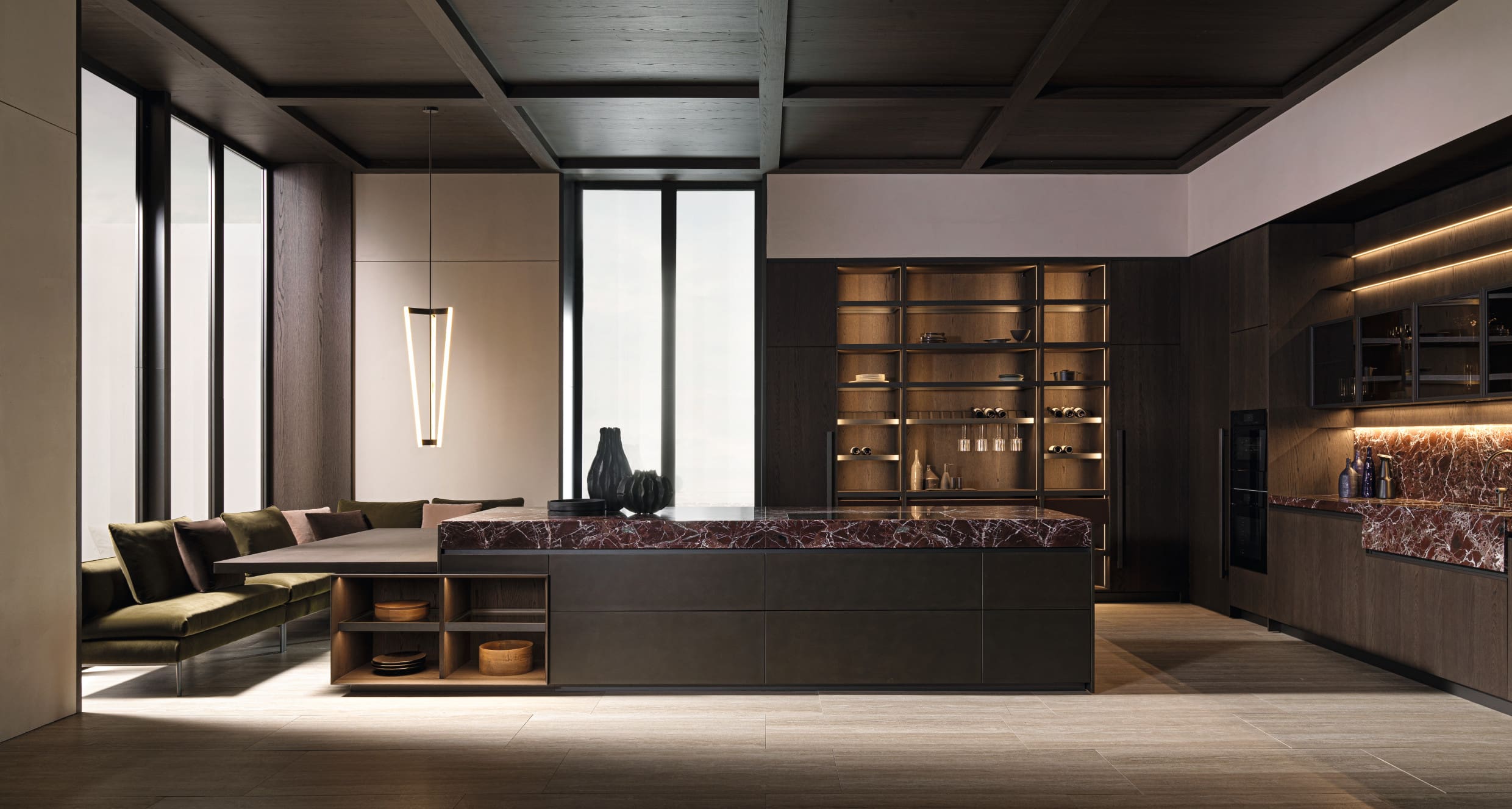
A renovation becomes architectural when the set-out establishes hierarchy. Cabinet lines align to openings and thresholds; appliance positions lock to working runs; circulation widths are protected so movement stays clear during cooking, clearing and hosting. These decisions give the room its clarity even at peak use.
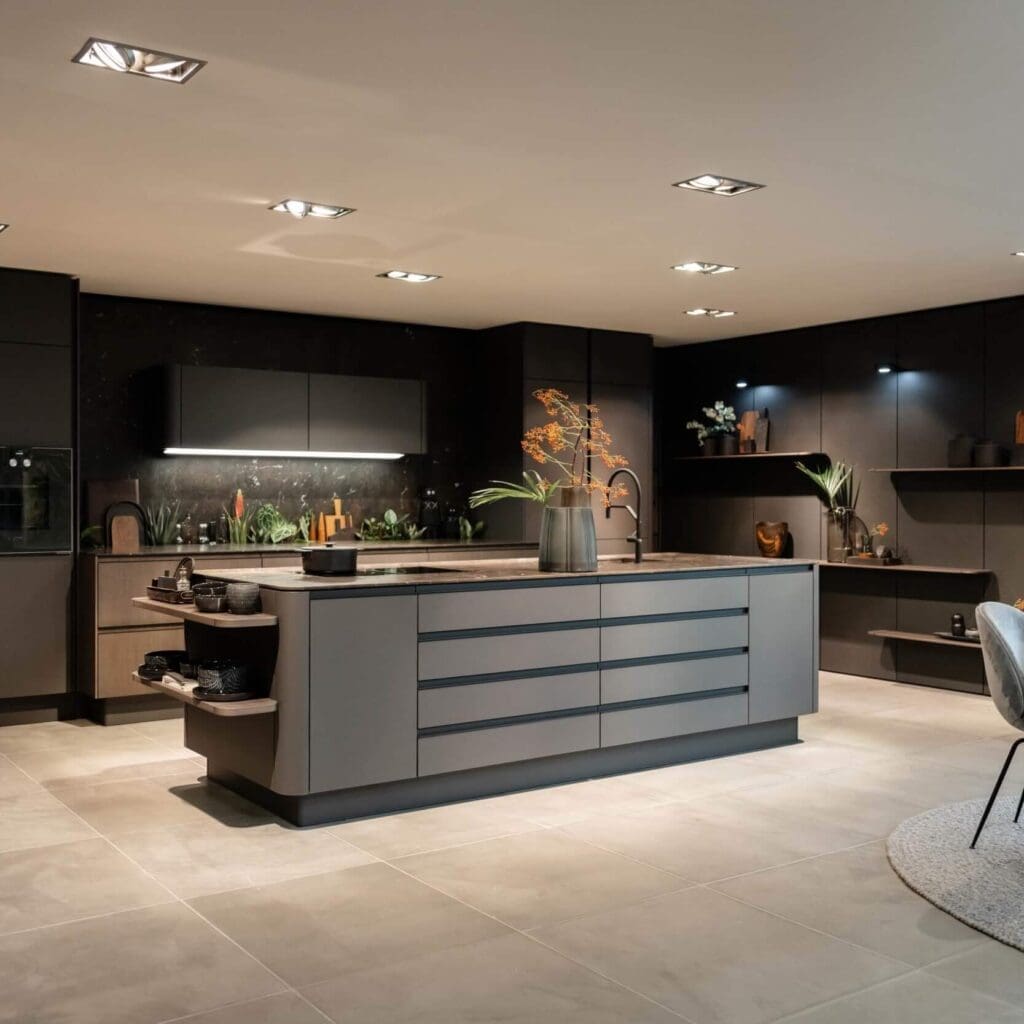
The working sequence is planned around a short route: sink, prep and hob align to one path, with refrigeration, waste and primary storage placed on that same line so routine stays efficient and the room remains composed during simultaneous use.
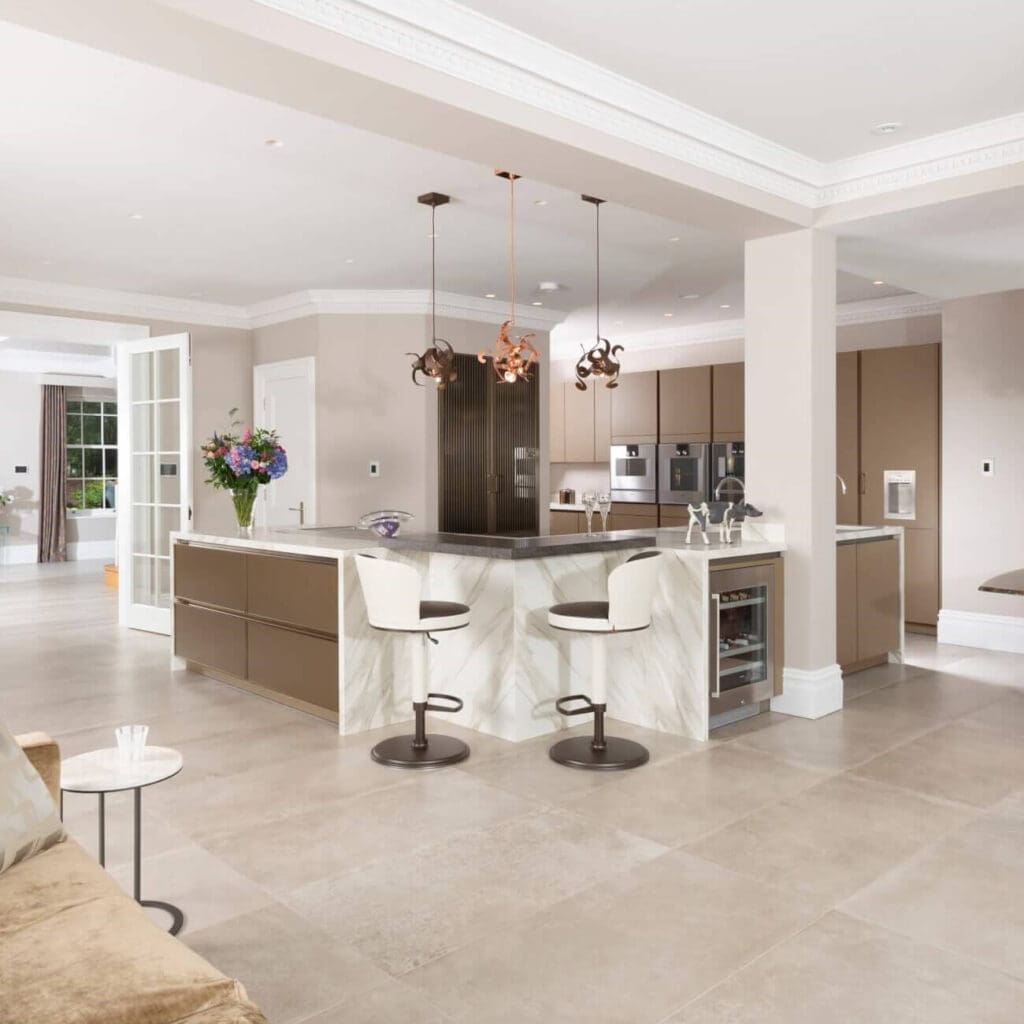
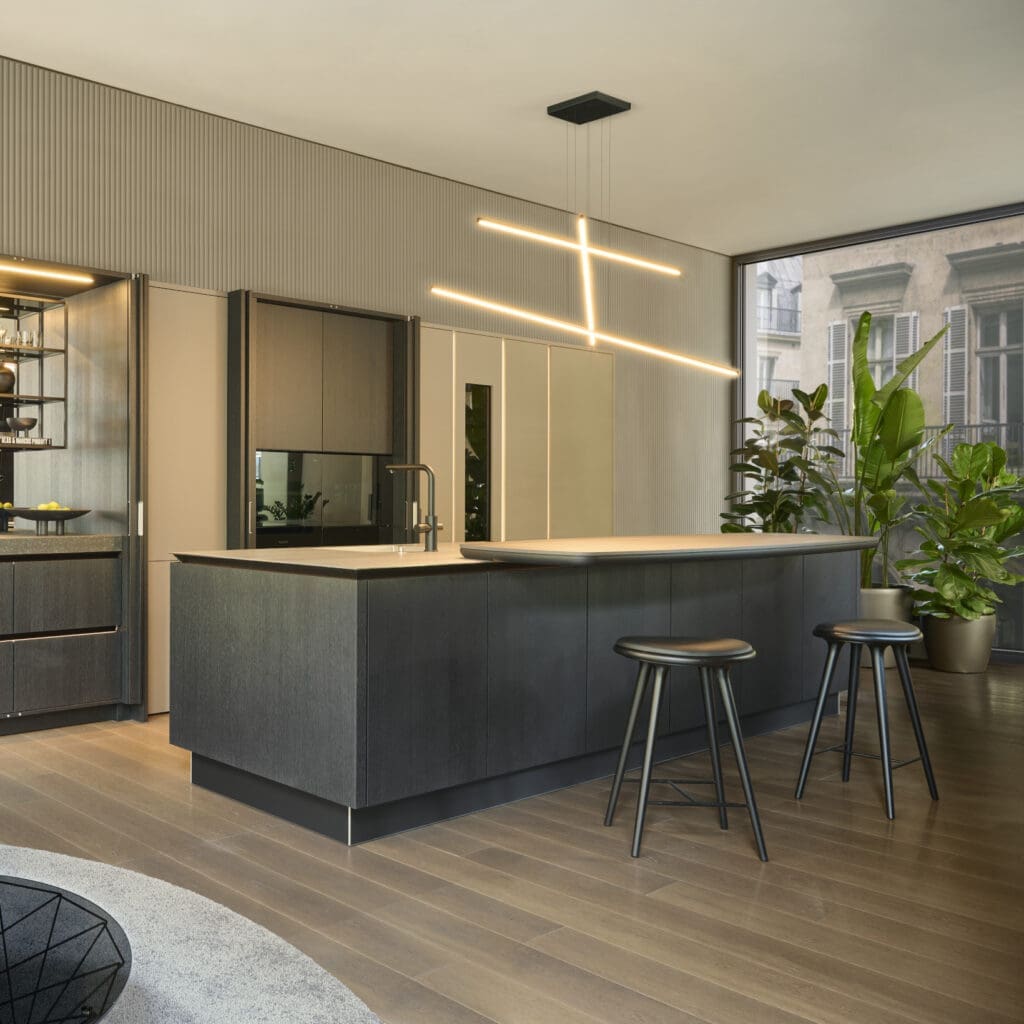
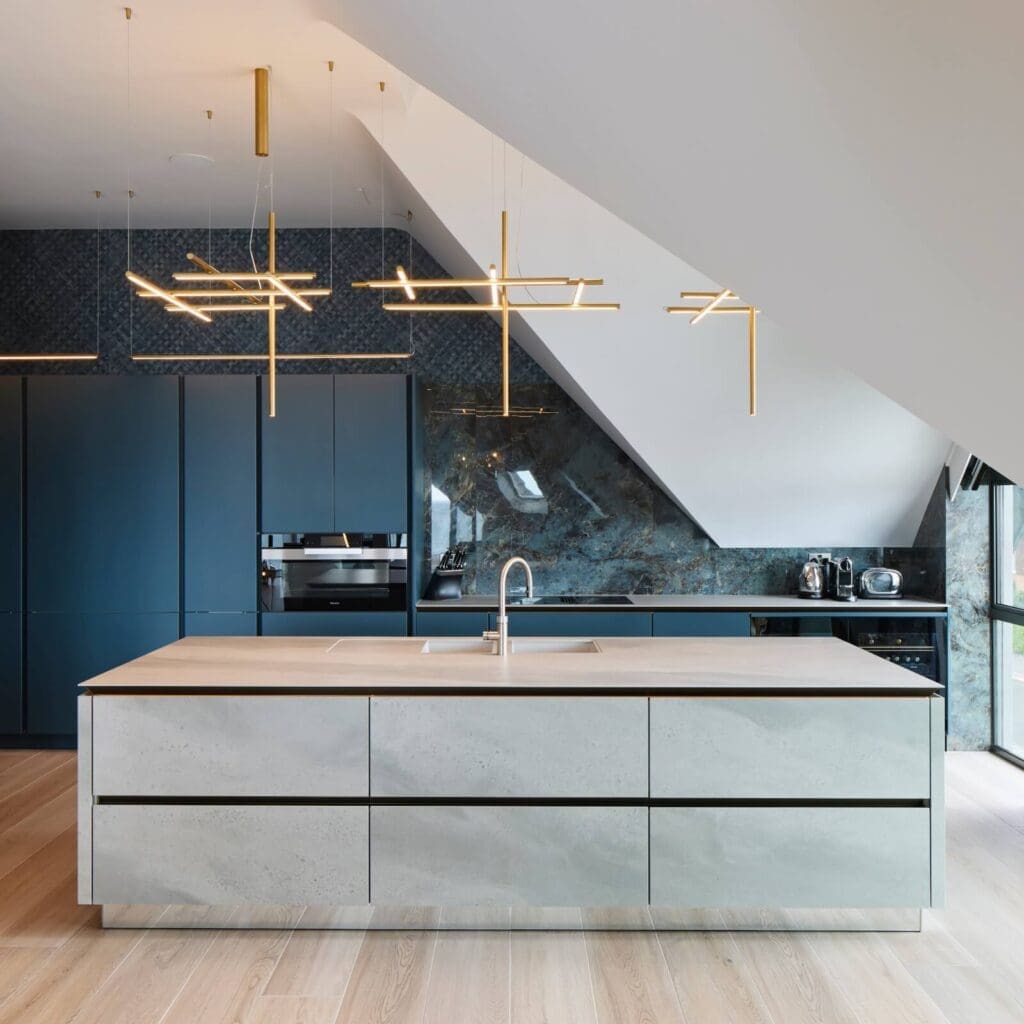
The island earns its footprint when overhang depth, stool spacing, leg room and walkway width are resolved with task lighting and power positions. This is where bespoke design becomes meaningful: the island is shaped to the room’s geometry, not applied as a generic feature.
MATERIALS AND JUNCTIONS DECIDE HOW THE KITCHEN AGES
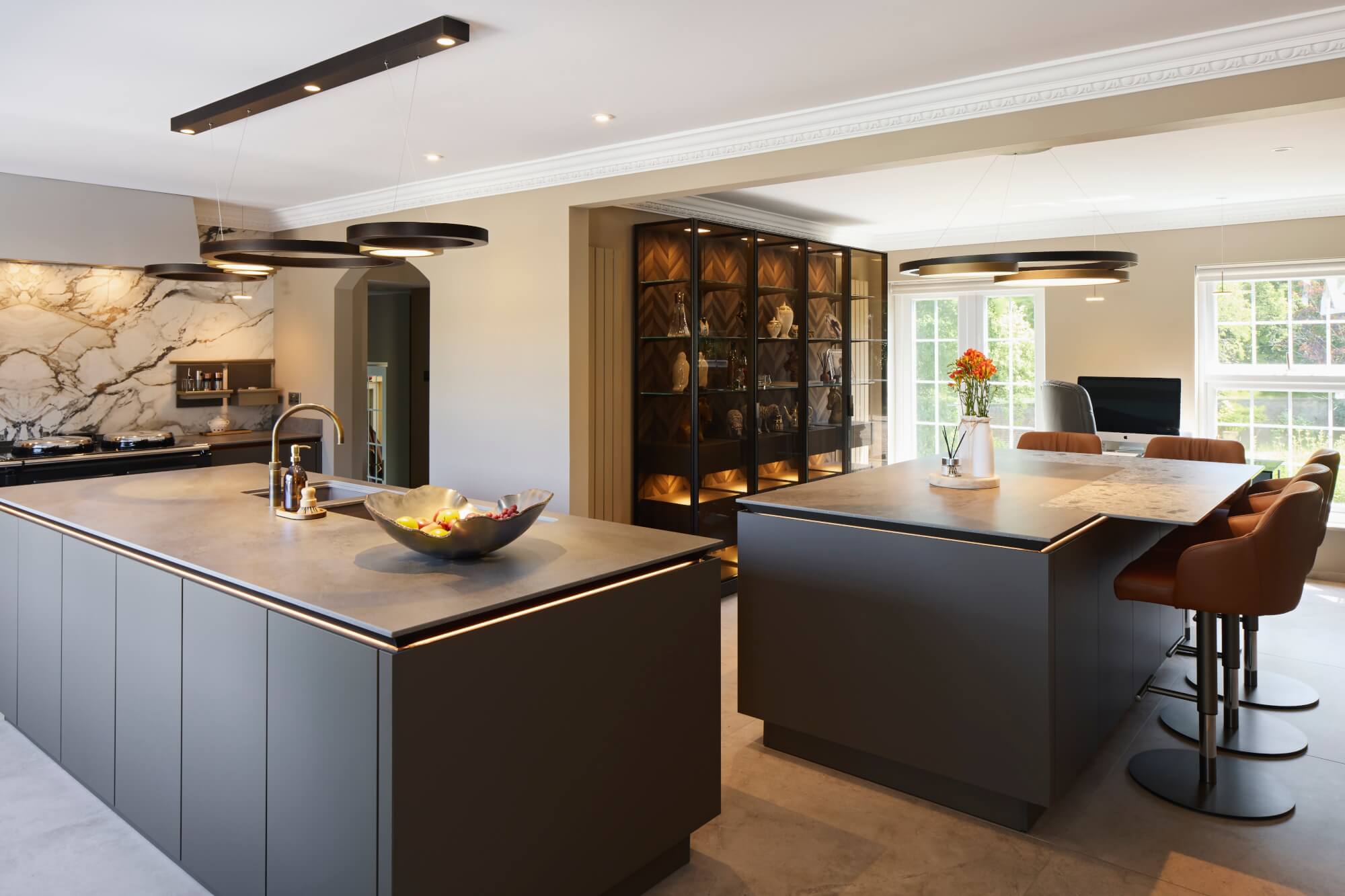
A calm kitchen reads as a continuous surface because junction lines hold. End panels, returns and edges are detailed to consistent geometry so the elevation remains settled as materials take wear.
Worktops and splashbacks perform when the specification includes a usage brief. Heat tolerance, abrasion resistance and cleaning practicality are matched to edge detailing at sinks and dishwashers, with junction lines drawn so corners and returns stay coherent after years of daily contact.
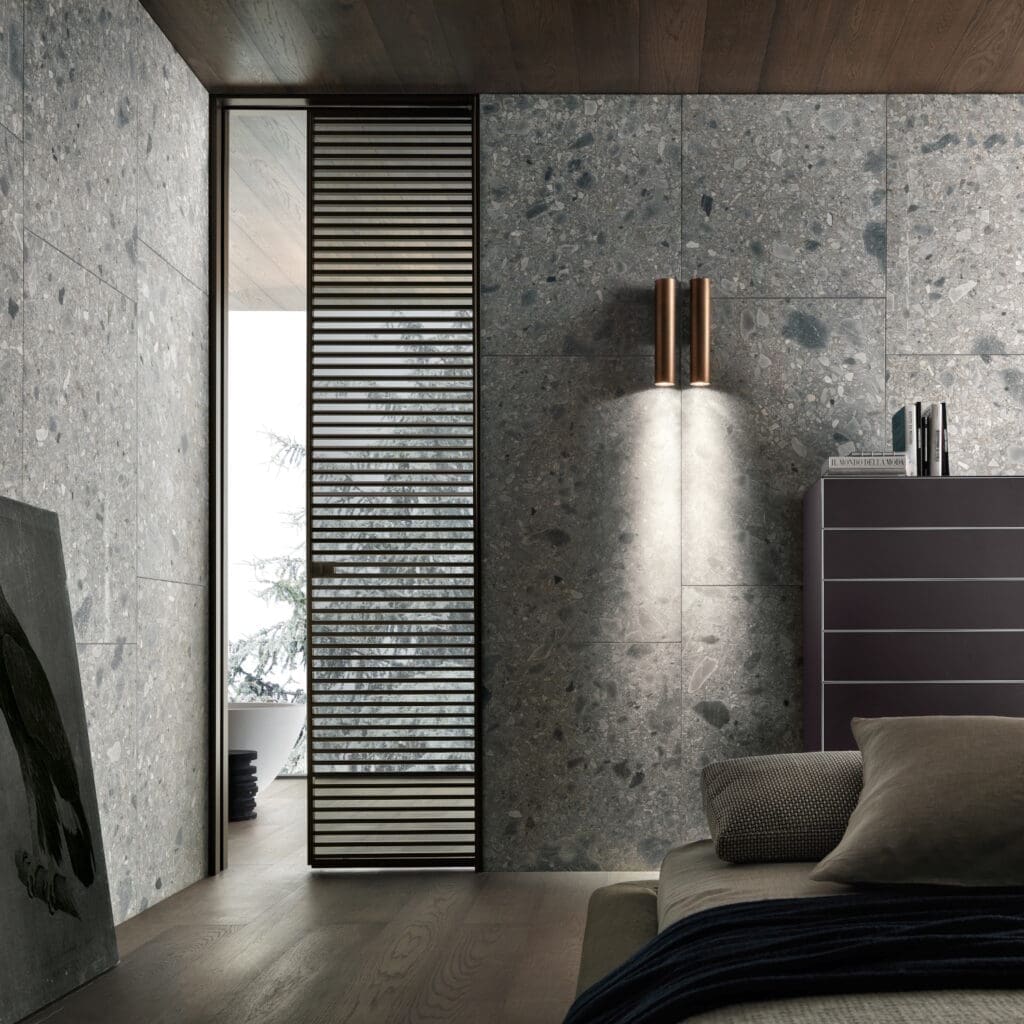
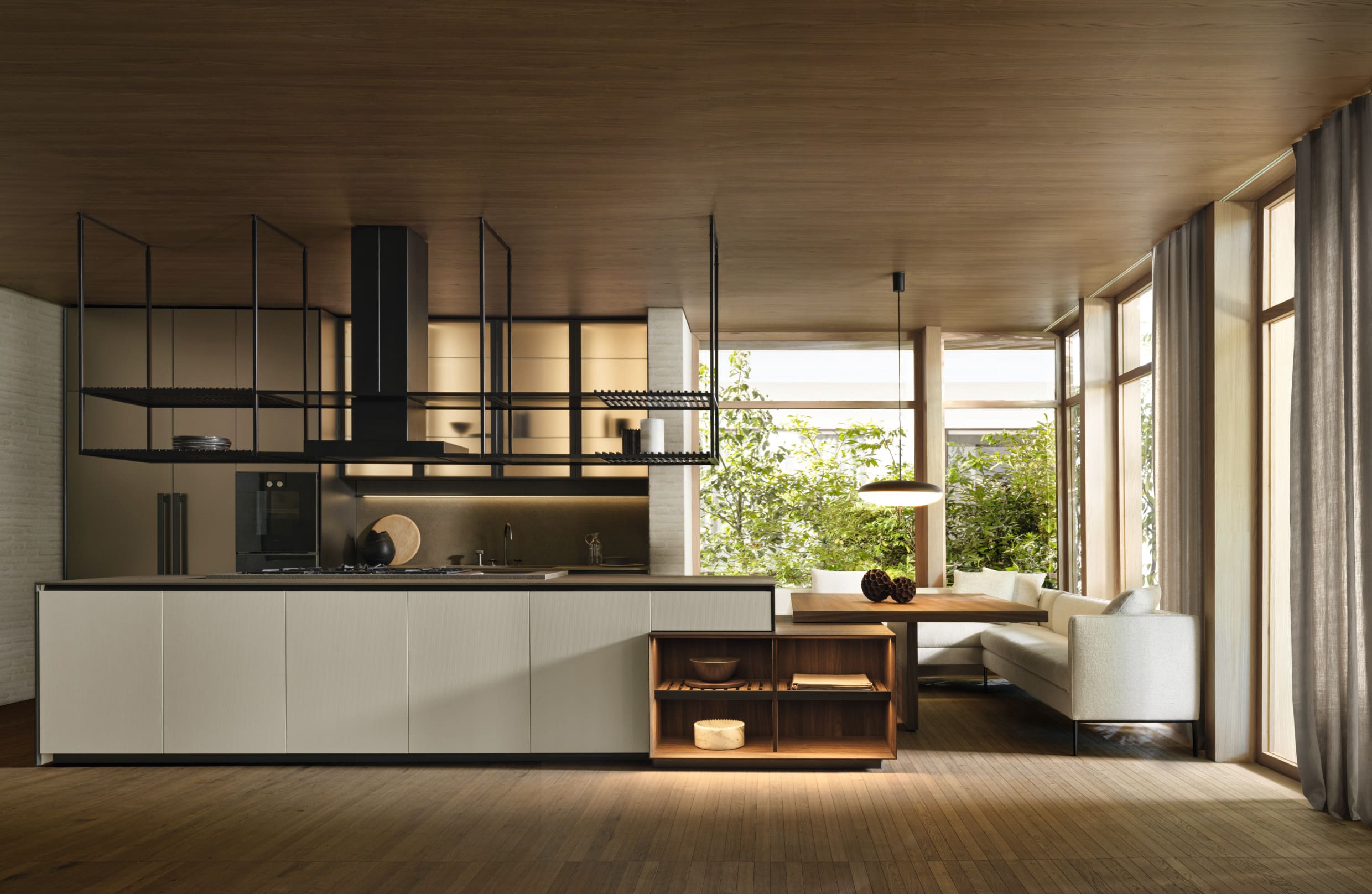
Material warmth is best carried by placement rather than quantity. Timber and tactile finishes sit where hands and routine meet the room—breakfast ledges, seating edges, touchpoints—while primary planes remain restrained so the kitchen stays readable in use.
STORAGE AND INTEGRATION KEEP THE ELEVATION QUIET
Storage volumes are assigned by routine at the point of use—prep tools near prep, pans near the hob, crockery near the dishwasher—so worktops remain usable during cooking and clearing.
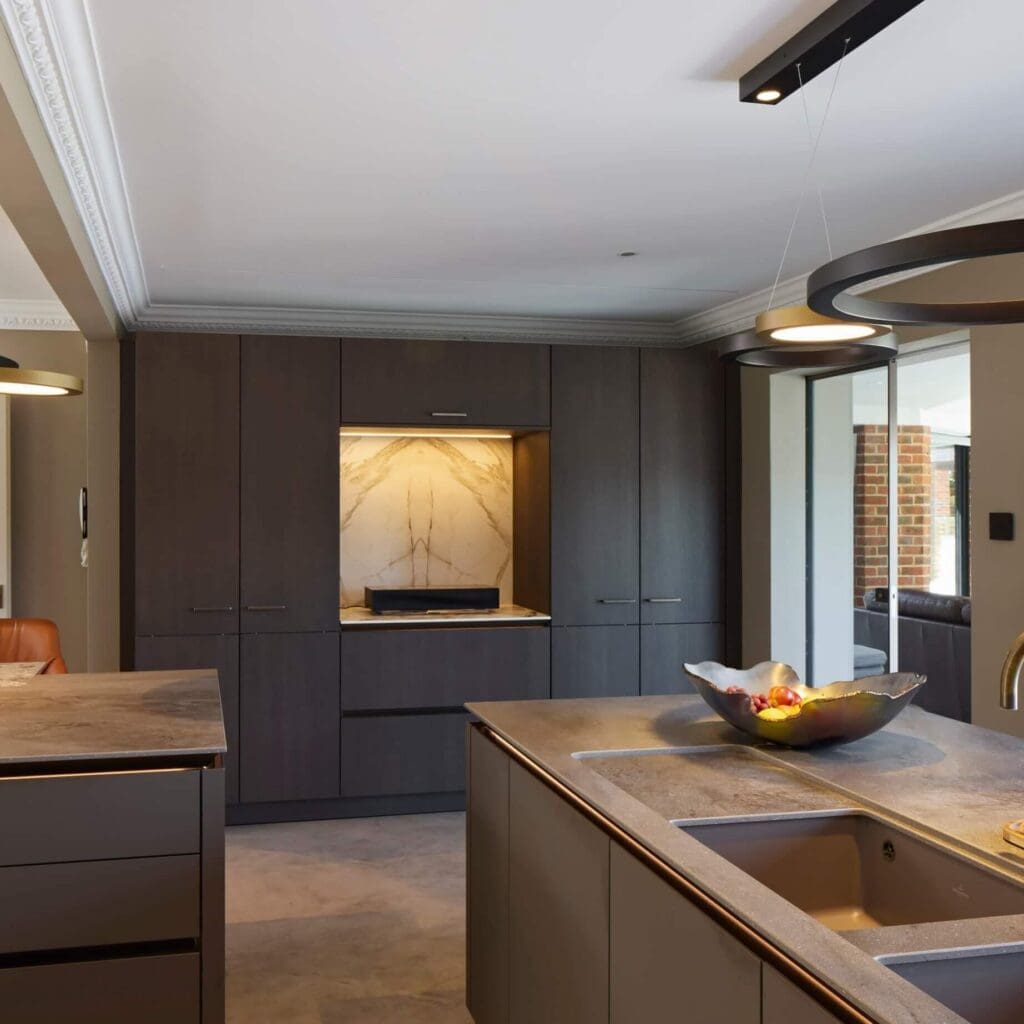
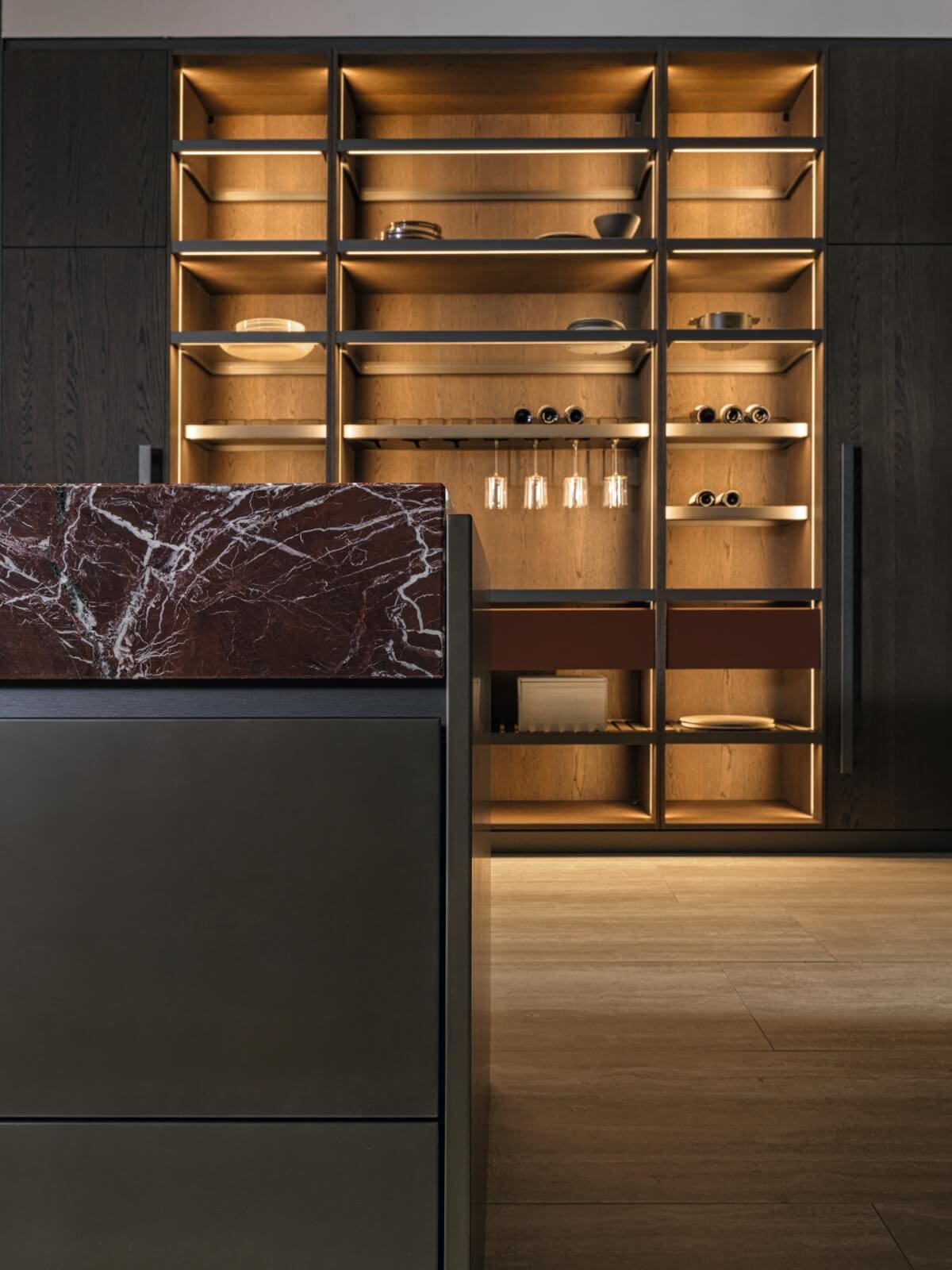
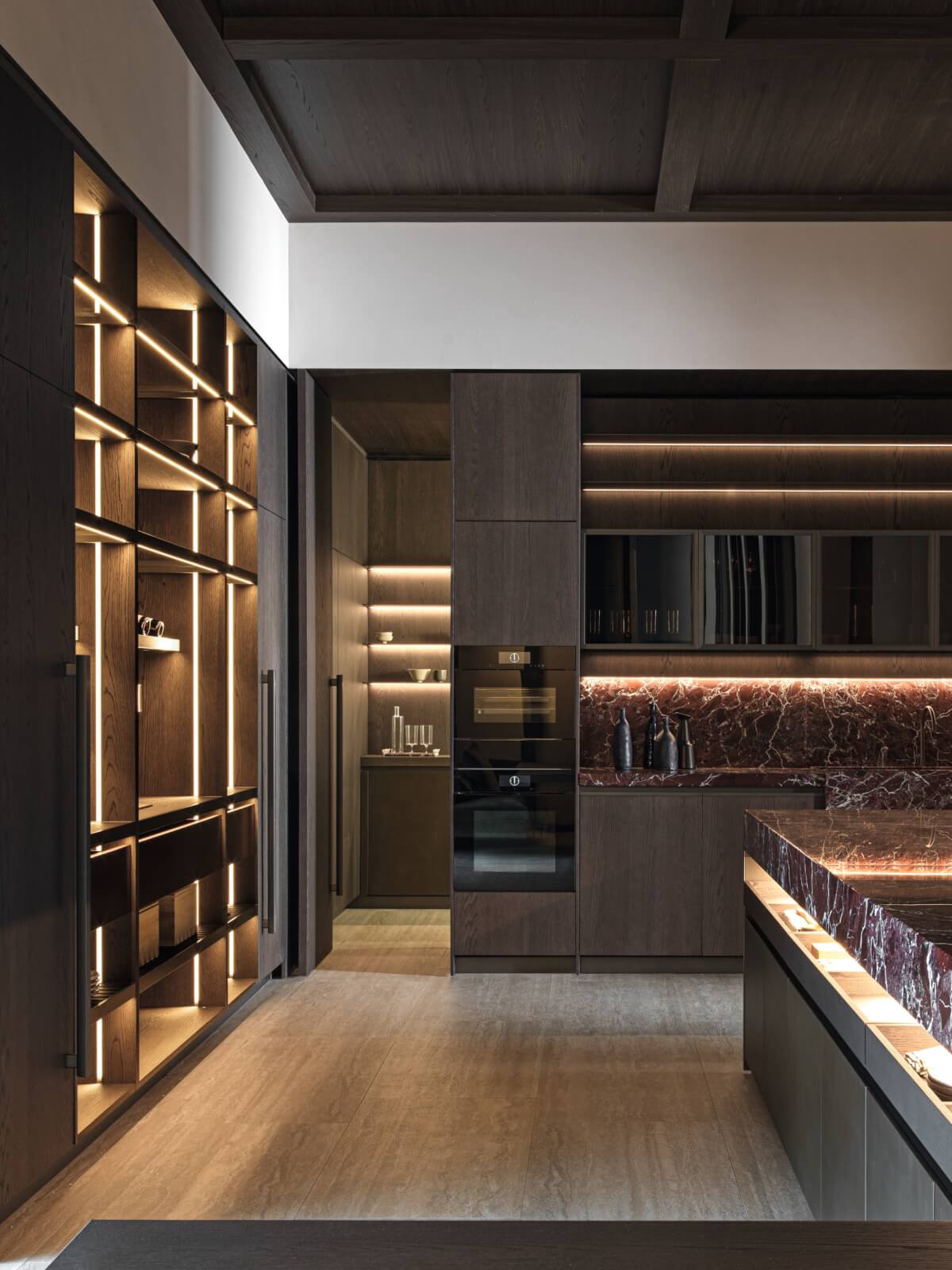
Tall storage succeeds when internal layouts are resolved on drawings. Shelf heights align to real objects, small appliances receive defined zones and service access is planned early so the finished run stays continuous and practical after installation. That internal discipline is developed further in kitchen storage ideas, where “tidy” is treated as a planning outcome rather than a styling aim.
Concealed stations support routine through coordinated clearances. Coffee and breakfast zones sit on a short route between sink, refrigeration and dining, with power positions and ventilation allowances resolved so doors and pocket panels open cleanly and return to the joinery line.
DELIVERY MECHANISMS PROTECT THE RESULT
A design-led kitchen renovation is protected by how information is issued. The set-out is delivered as a controlled drawing package; service routes are coordinated with builder and trades; junction details are locked before manufacture so tolerances remain stable at installation.
Site checks verify threshold lines, cabinet lines, worktop junctions and lighting set-outs so the finished room reflects planned geometry rather than site drift. This is where a high level of service becomes tangible: not as reassurance language, but as consistent checking at the interfaces that decide whether the room reads resolved.
PROOF IN BUILT WORK: SWAY COUNTRY HOME
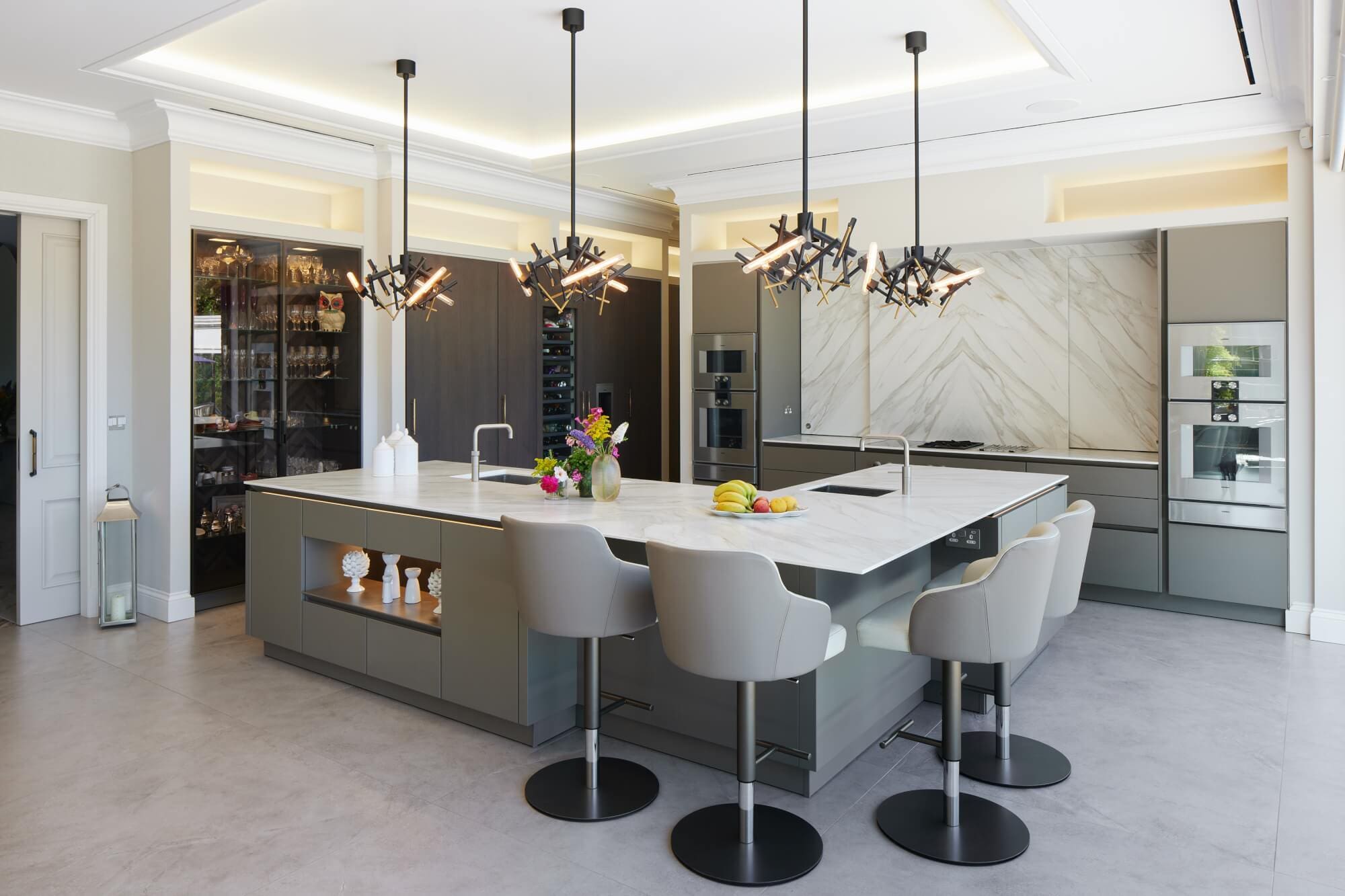
At Sway Country Home, the key renovation decisions were held through set-out and junction discipline. Positioning the sink within the island freed the exterior wall for a panoramic window below worktop height, opening the elevation to landscape views while keeping the working route compact.
The same discipline carried into installation: cabinet lines, lighting positions and junction geometry were coordinated against the organising grid so the room retained clarity from first drawings through to handover.
DECISION TESTS USED ON DREAM DESIGN KITCHEN RENOVATIONS
- Lock the set-out before elevations: circulation widths, door swings, drawer opens and seating pull-backs.
- Tie storage, waste and refrigeration to the working route so clearing stays direct under load.
- Specify worktops and splashbacks to a usage brief, then detail edges and returns to match.
- Coordinate services and ventilation against the cabinet grid so elevations remain coherent and accessible.
- Verify key datums on site: thresholds, plinth heights, worktop junctions and lighting positions.
Within Dream Design’s luxury kitchen renovation service, the design is realised through set-out certainty, junction control, and disciplined site coordination—ensuring the kitchen feels calm through predictable performance in daily use.