

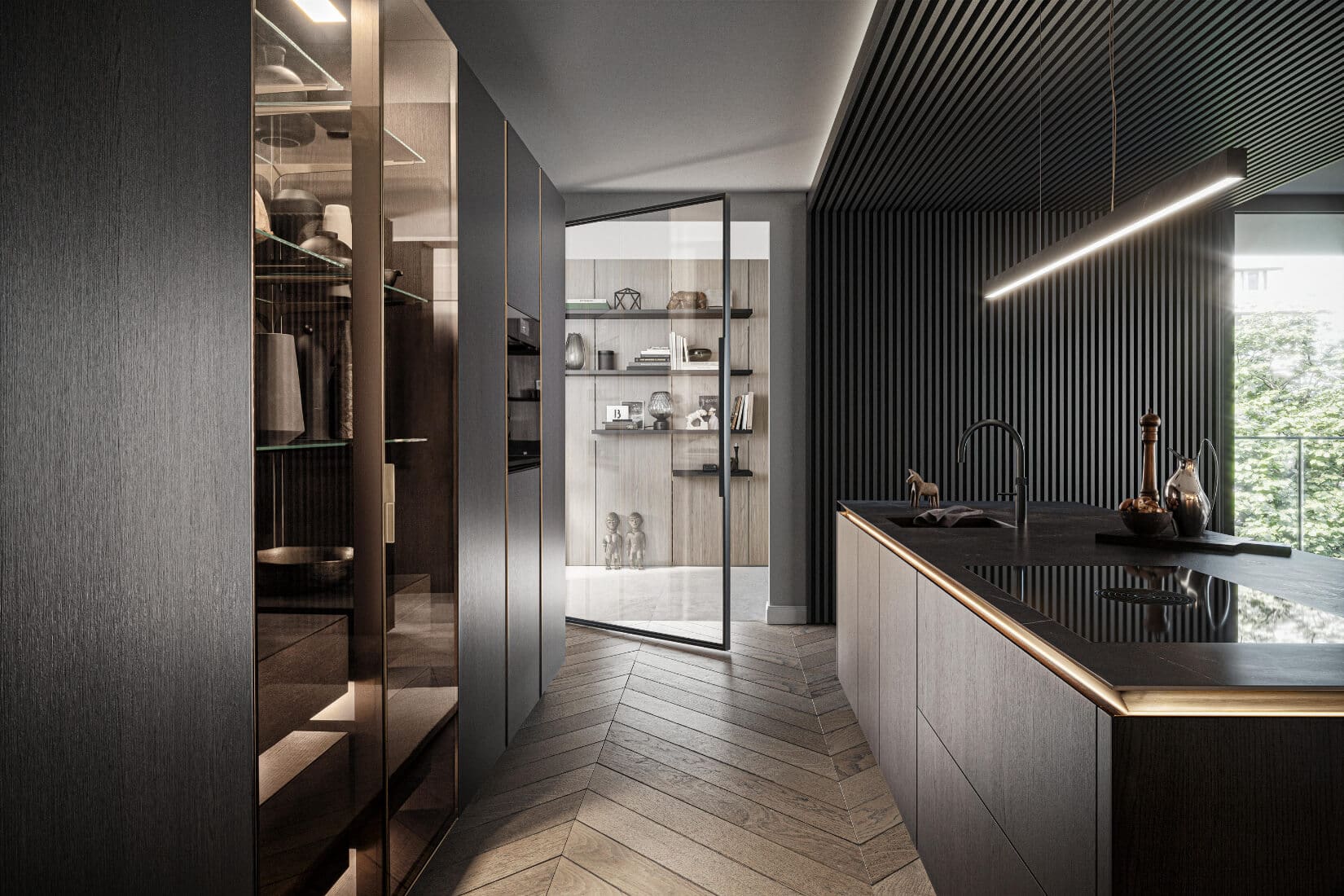
HANDLELESS KITCHENS: SET-OUT DISCIPLINE FOR A CALM ELEVATION
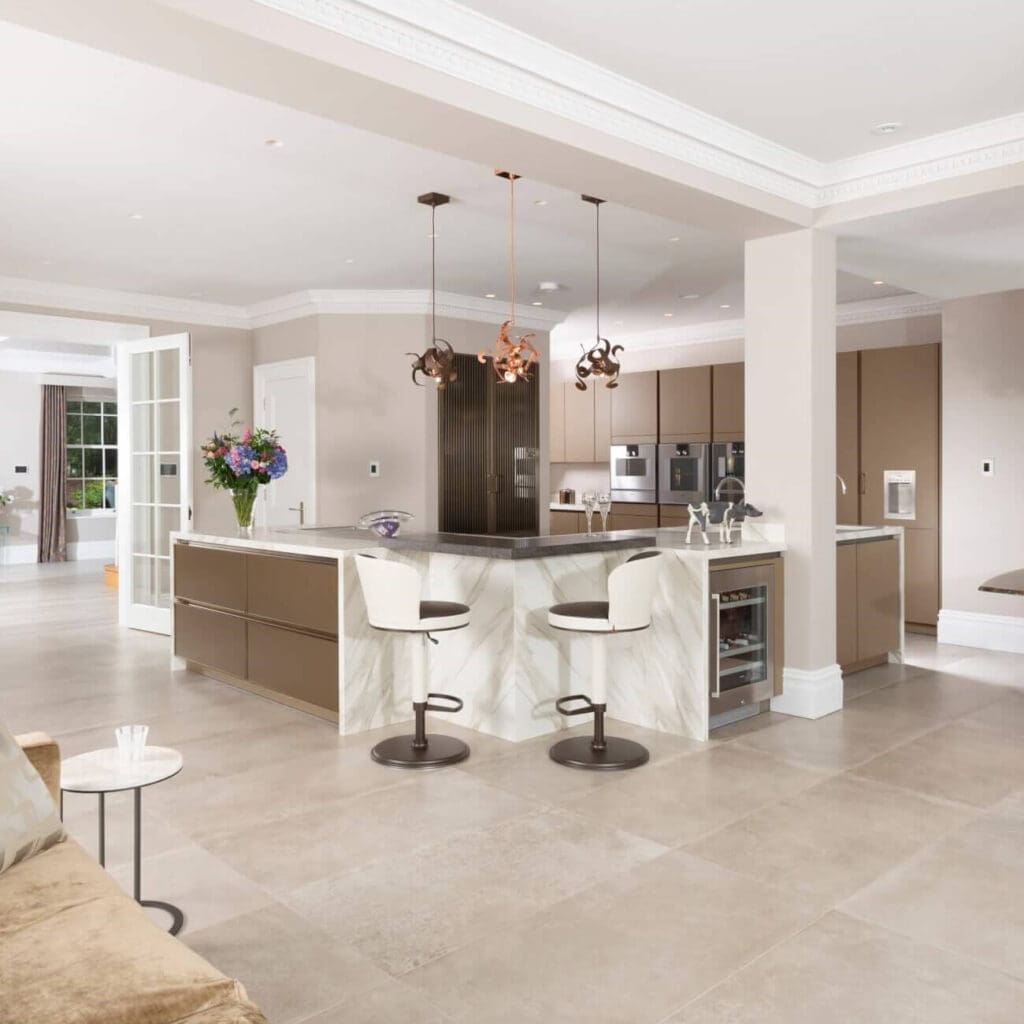
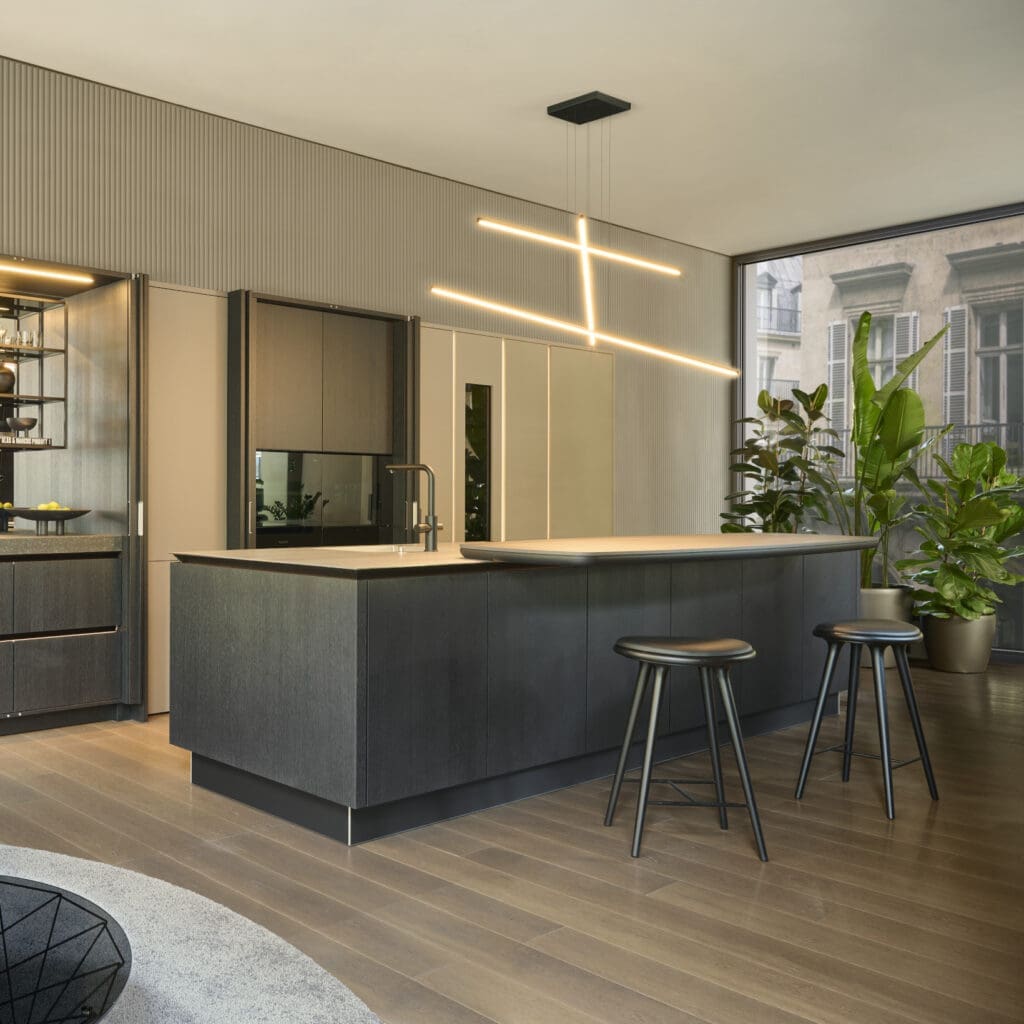
Handleless kitchens read calm when the set-out carries the order. The cabinet grid fixes consistent door lines, reveal widths and grip logic so the elevation stays legible through daily use, and the same organising lines carry into lighting set-outs, appliance housings and junction detailing.
A handleless scheme only holds its refinement when geometry and hardware behaviour are resolved together. Door weights, hinge adjustment ranges, runner tolerances and grip positions are coordinated on drawings and checked on site so the finished room keeps alignment through years of daily opening cycles.
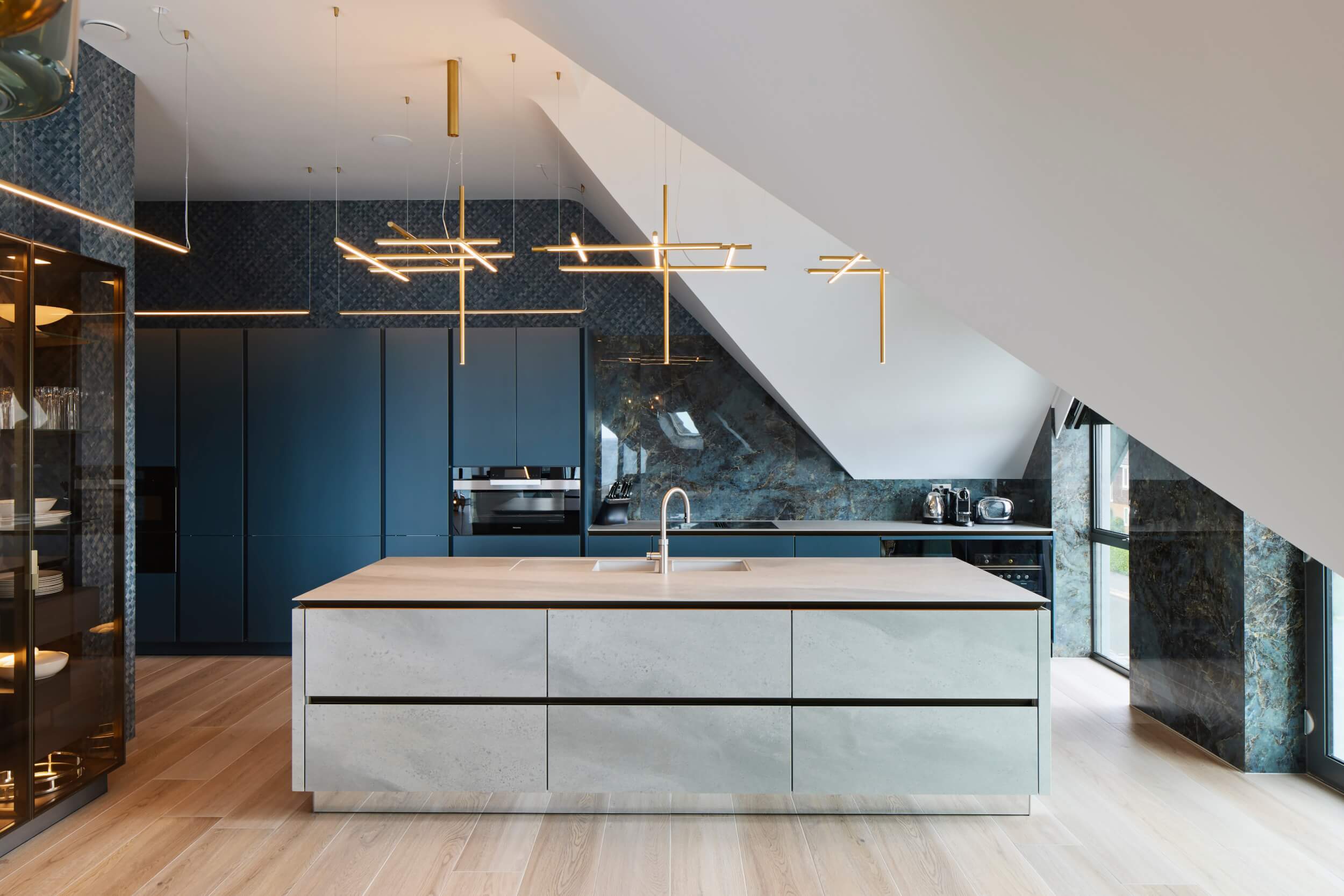
HANDLELESS IS A GEOMETRY DECISION
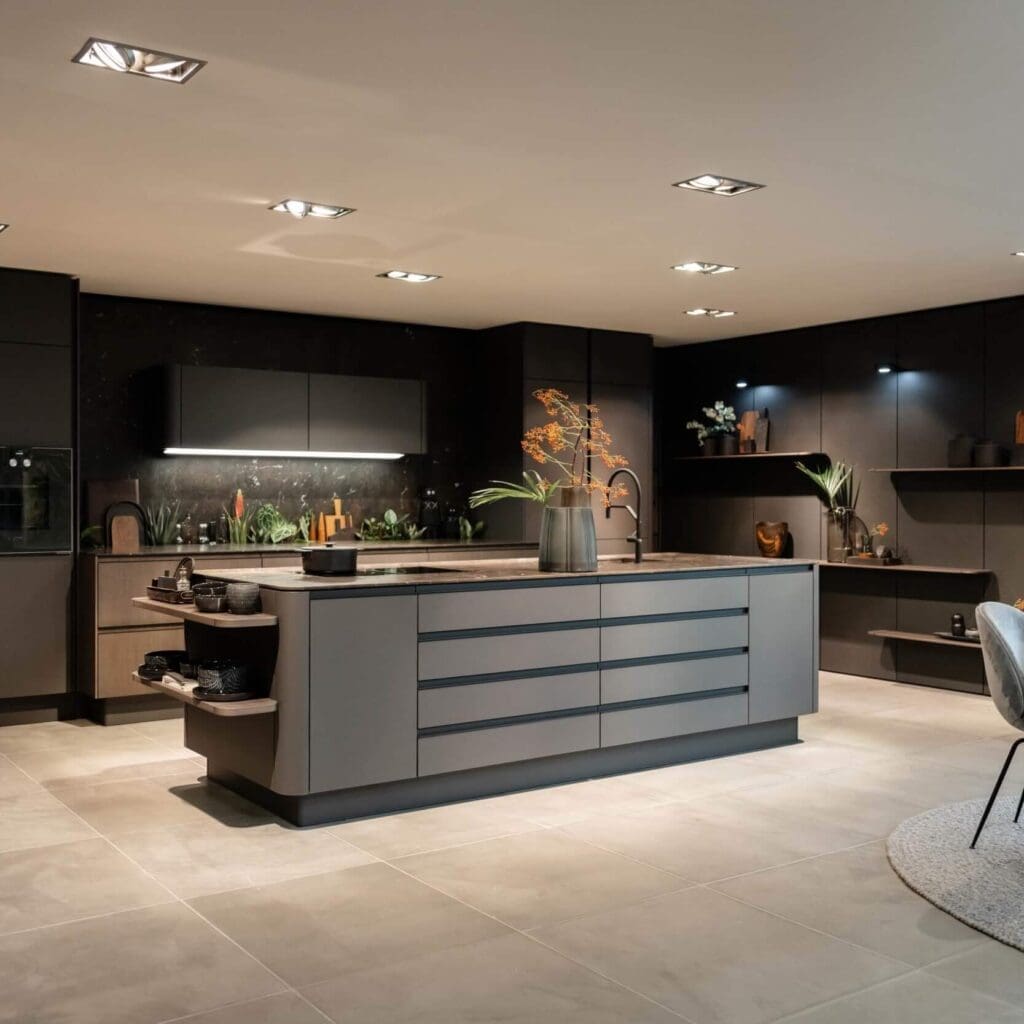
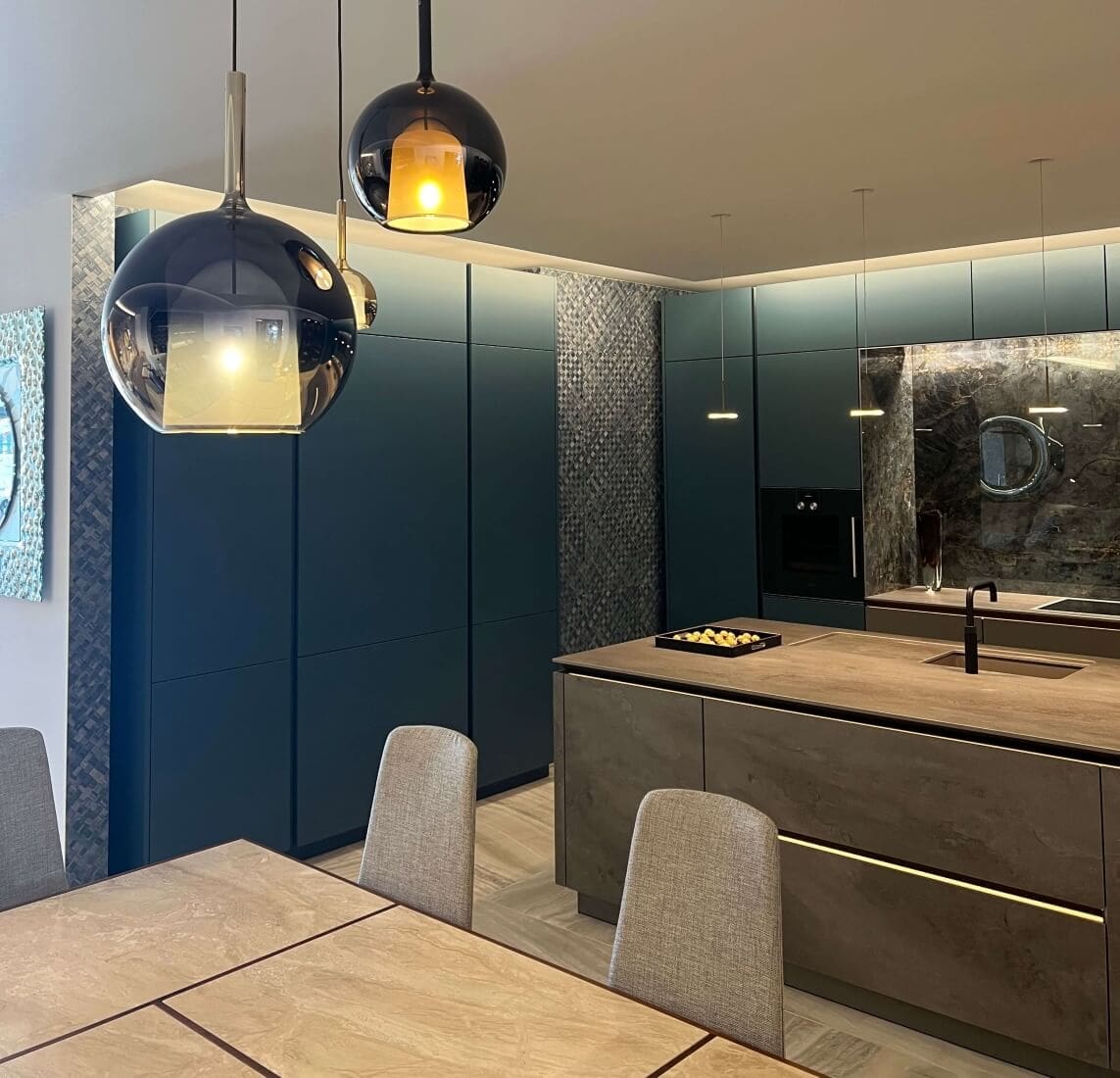
A handleless elevation depends on consistent geometry. Door lines, end panels and appliance housings align to a shared grid so tall runs and islands read as one continuous composition, establishing hierarchy without additional ornament.
The grip strategy sets the human interface. A recessed channel, finger pull or latch mechanism is selected to suit routine, and opening points are placed at natural working positions so use stays intuitive. That choice then governs reveal control, corner returns and how lighting profiles sit against the joinery line.
This detailing discipline sits inside Dream Design’s handleless kitchen design, where the elevation is treated as an architectural plane rather than a collection of units.
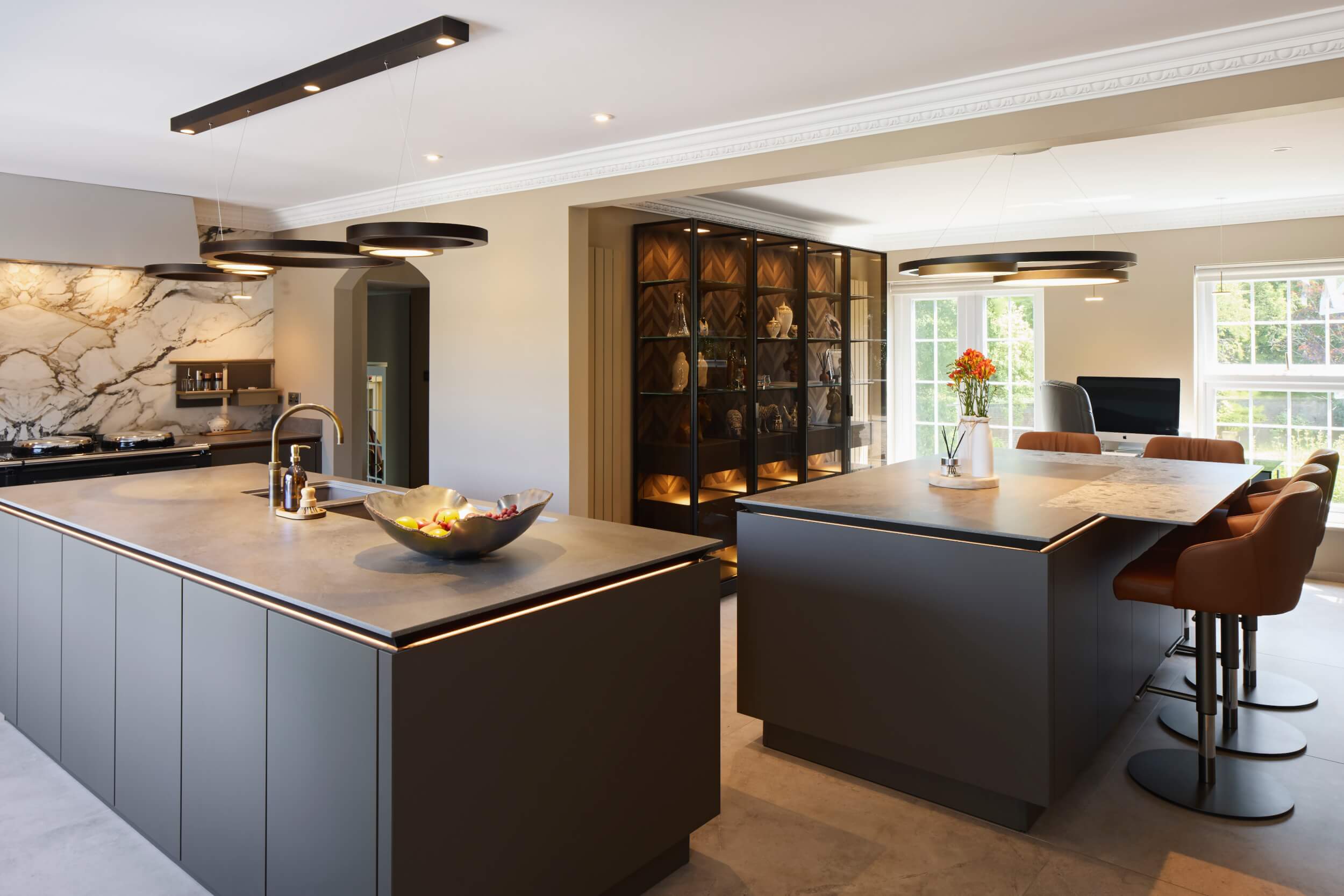
GRIP LINES AND REVEALS HOLD THE VISUAL ORDER
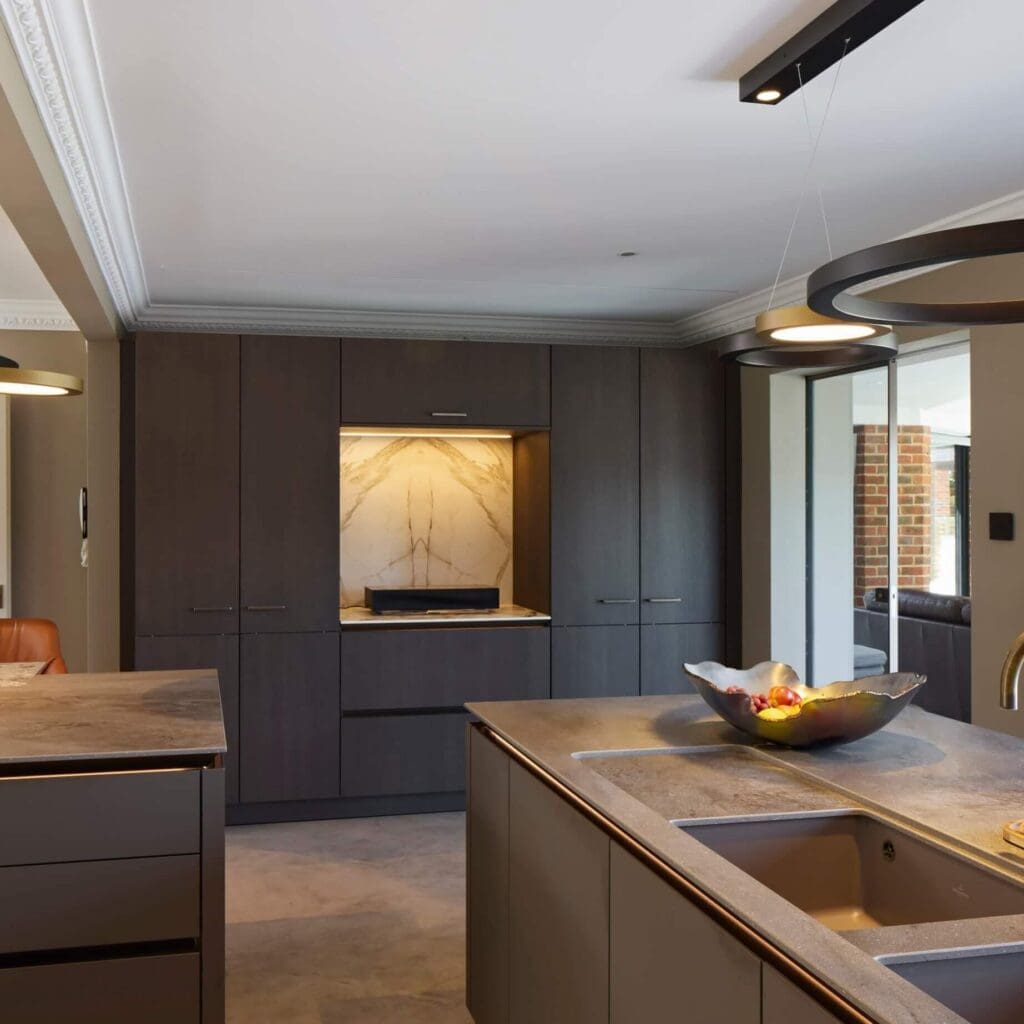
A recessed grip line performs when its height, corner junctions and end returns are resolved as part of the set-out. When the line carries cleanly across tall units and island runs, the elevation gains a continuous reference that keeps the room visually stable as it is used.
Reveal widths carry refinement only when they are designed for installation reality. Setting tolerances on paper is not enough; alignment depends on a joinery grid that anticipates how the room will be levelled, how floors meet plinths, and how long runs behave at thresholds and corners.
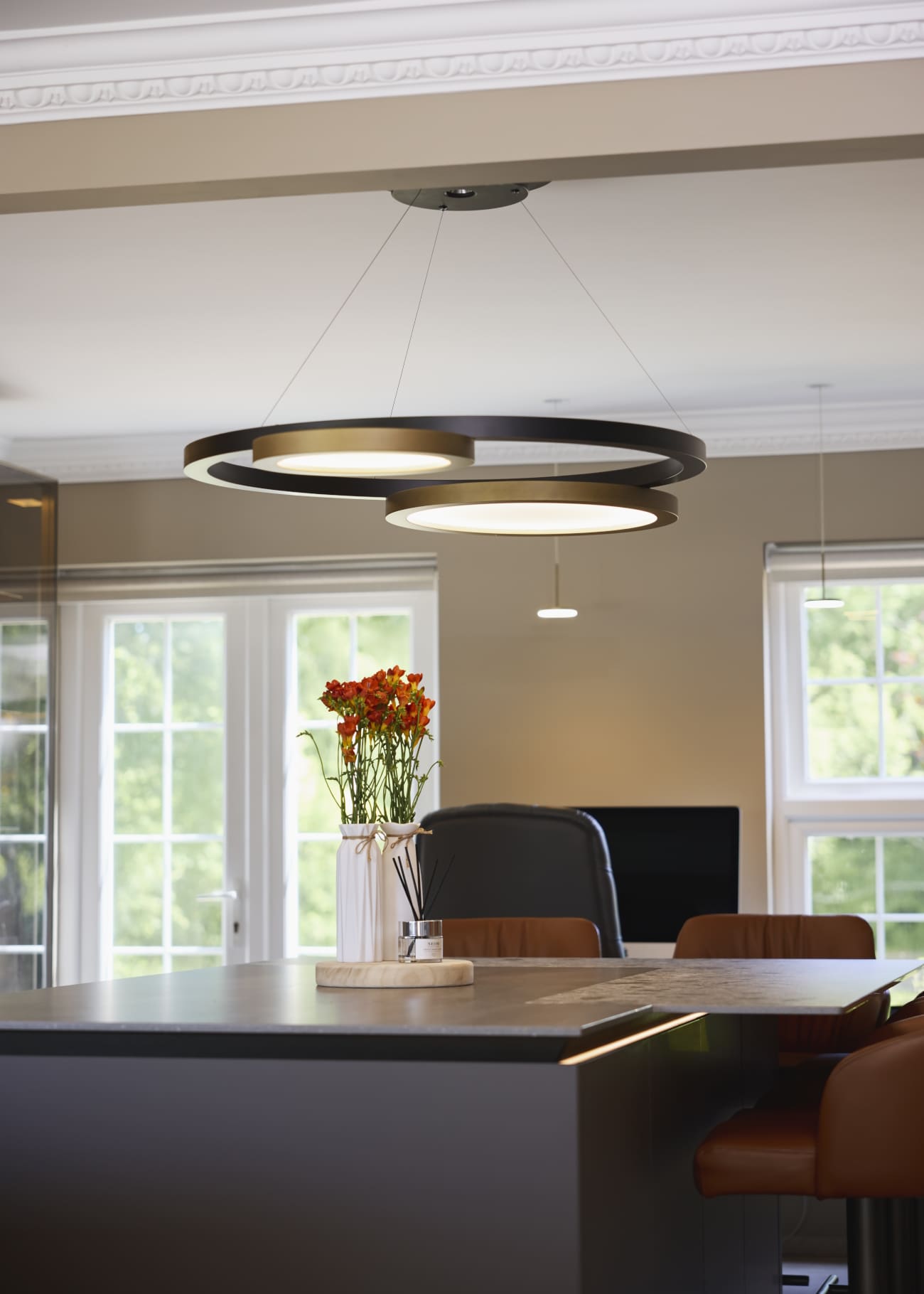
HARDWARE BEHAVIOUR IS THE LONG-TERM TEST
Handleless kitchens are often judged by the first impression, then proven by the thousandth use. Push-latch systems and lift mechanisms hold best when components are specified as a set: door weight, hinge type and opening force coordinated so tall units and integrated fridges move predictably.
Soft-close performance is carried at the hardware layer. Runner specification, hinge selection and adjustment range are matched to door sizes and finishes so drawers close with controlled motion and stable alignment, maintaining a calm elevation even under heavy daily use.
Where a system kitchen partner supports the brief, component logic can strengthen the outcome—one reason handleless compositions are often specified through partners such as SieMatic when the project requires long-term consistency.
LAYOUT, LIGHTING AND APPLIANCE INTEGRATION COMPLETE THE ROOM
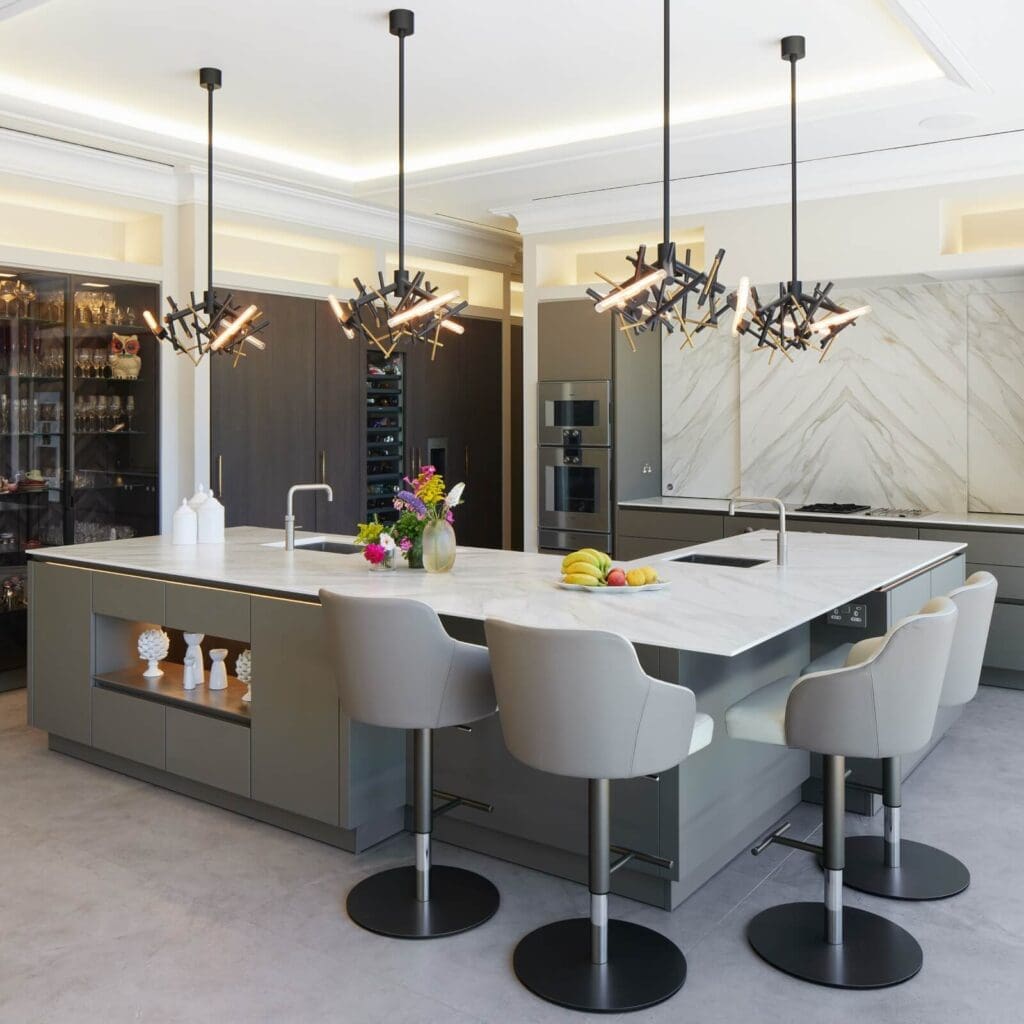
Handleless kitchens feel most resolved when the plan protects clearances. Door swings, drawer opens and circulation widths are set out alongside the cabinet grid so movement remains comfortable during cooking, clearing and hosting.
Lighting lines reinforce the set-out when profiles and fittings follow the joinery geometry. Task lighting supports prep and sink zones; ambient lighting carries evening scenes; integrated profiles sit to the same datums as reveals and grip lines so the elevation stays composed across the day.
In practice, handleless detailing often overlaps with minimalist intent. The proportion and junction discipline that keeps a handleless elevation calm is developed further in timeless minimalist kitchen design, where “quiet” is treated as a planning outcome rather than a styling claim.

PROOF IN BUILT WORK: FRIARS CLIFF APARTMENT
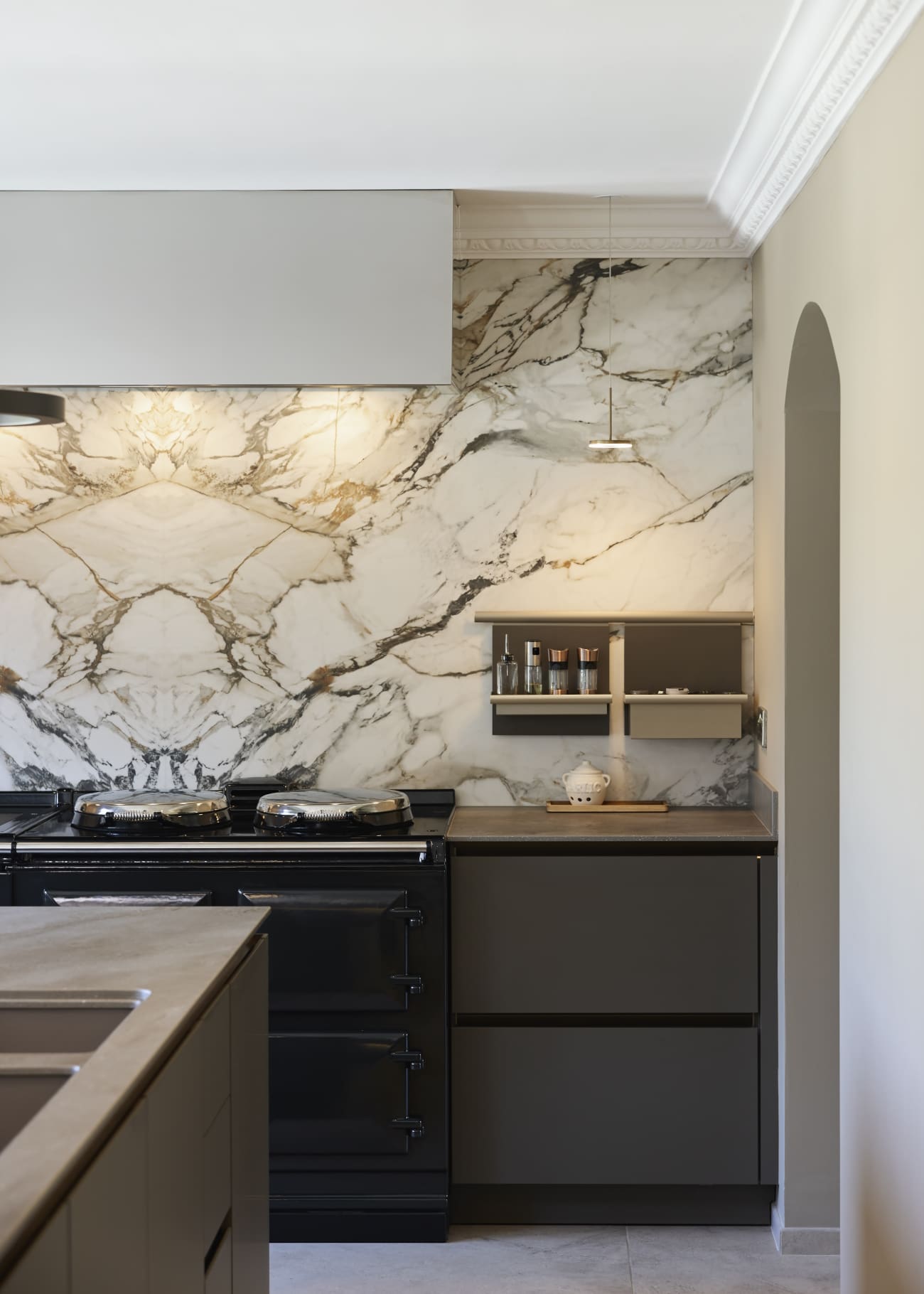
At our Friars Cliff Apartment project in Dorset, a handleless composition was used to keep the elevation clean and architectural, with storage integration and alignment discipline carrying the calm read across the room. The result depends less on “handleless” as a label and more on reveals, junctions and hardware behaviour being resolved as one system.