

Kitchen Storage Ideas: Built-In Storage Planned as Interior Architecture
Kitchen storage succeeds when it is planned from the set-out at concept stage. Routines are mapped, appliance positions fixed, and working clearances held, then storage volumes are assigned to the shortest routes between prep, cooking and clearing so the room stays orderly in use and surfaces remain usable during cooking and serving.
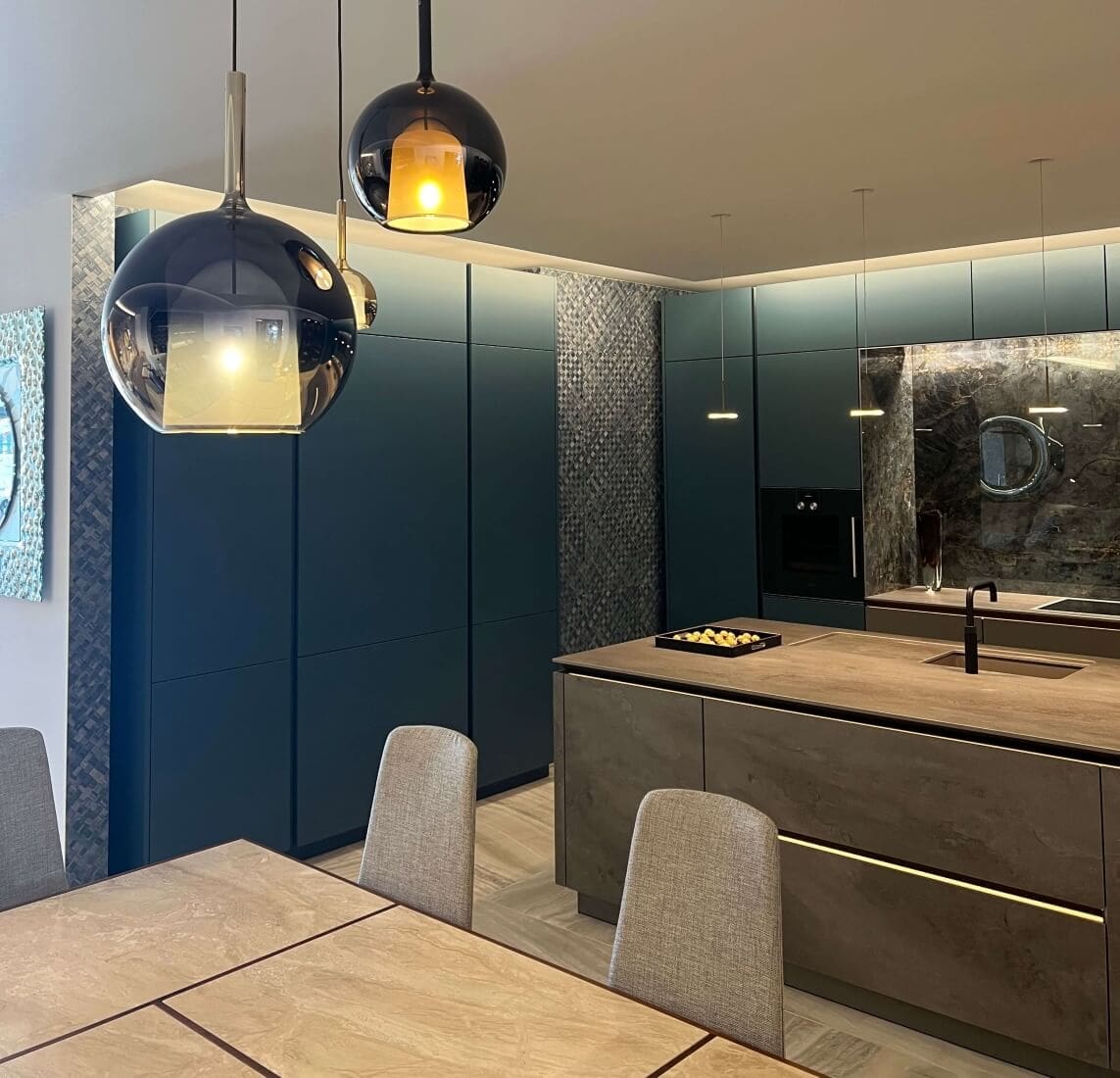
In Dream Design work, storage is treated as part of the interior architecture: tall runs align to thresholds and sightlines, door swings and drawer opens are coordinated with circulation, and lighting layers support both task and rest. The outcome is not “more storage”. It is a kitchen that stays composed because daily life has been designed into the internal volumes.
STORAGE IS AN ARCHITECTURAL DECISION, NOT AN ACCESSORY
A kitchen plan performs best when storage geometry matches real use. Internal volumes are drawn with clear zones for daily items, then the cabinet line carries that organisation into predictable routines at the points that receive the most use.
This discipline protects flow. Everyday drawers sit at working height, tall storage holds bulk without interrupting circulation, and access points sit on the working route so the room remains coherent when multiple people use it at once.
Where renovations change adjacencies and thresholds, storage planning often decides whether the room feels orderly after the first week of use. The set-out logic behind storage is closely linked to luxury kitchen renovation, where junction control and circulation planning are carried through delivery.
BUILT-IN STORAGE PLANNED AS ONE SYSTEM
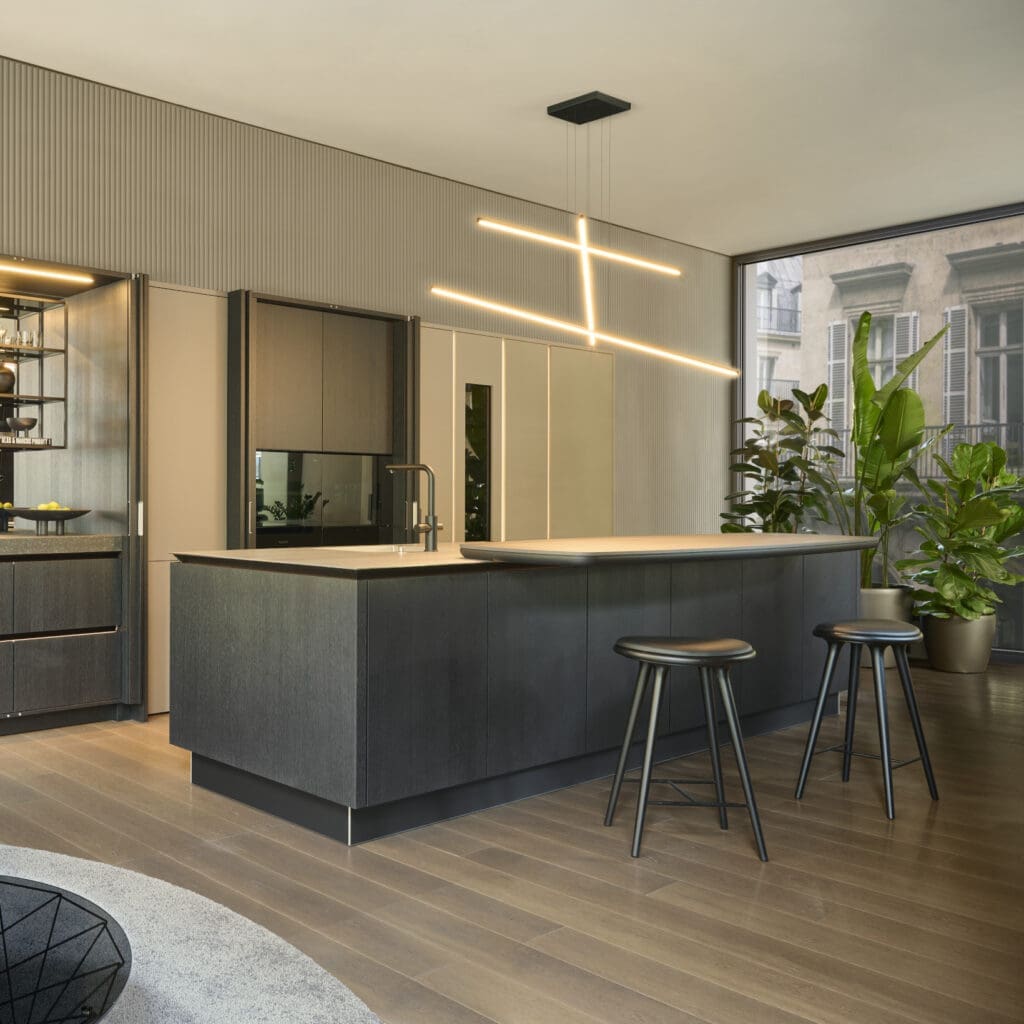
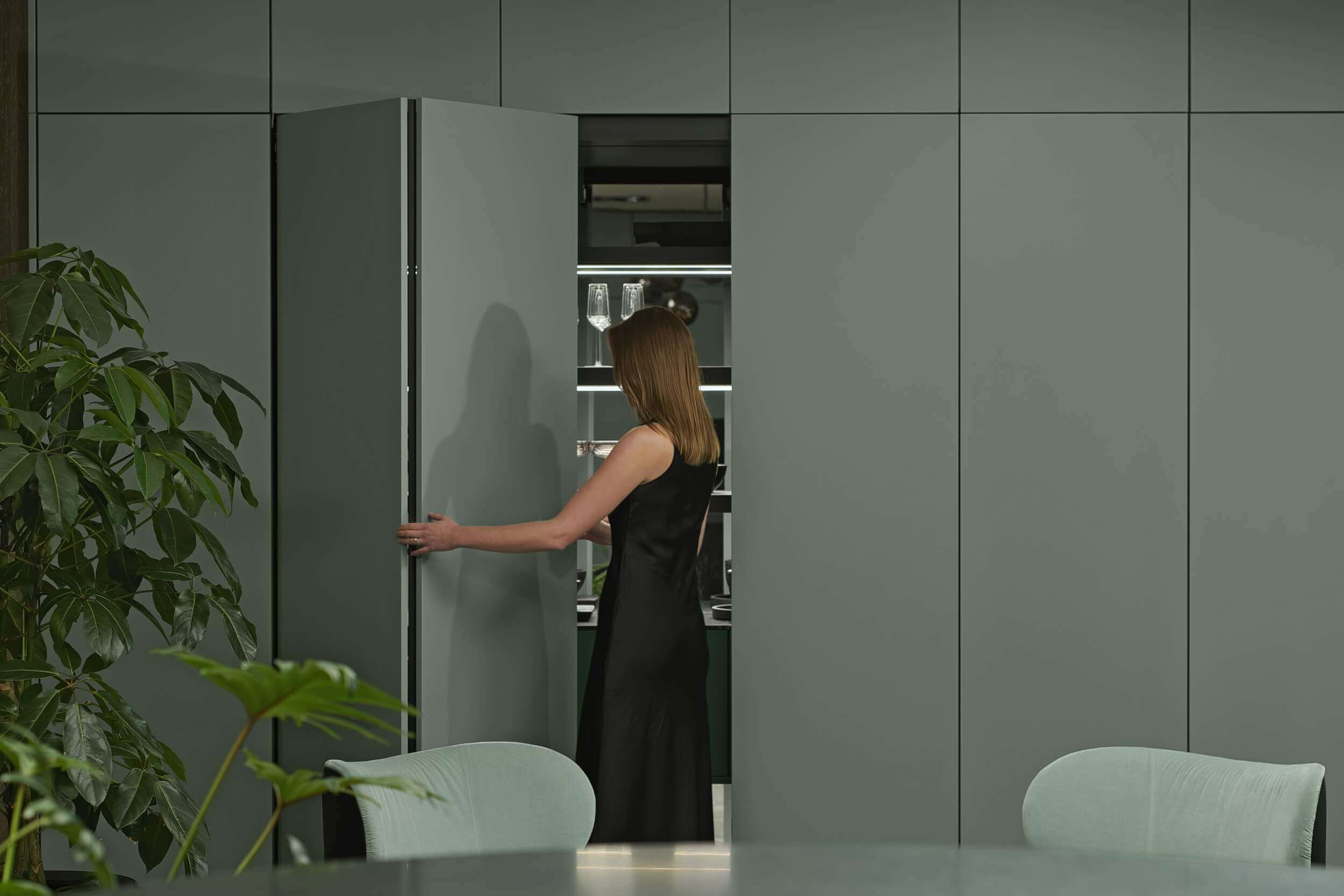
Built-in storage behaves well when mechanisms open and close cleanly inside the cabinet grid. Pocket doors, internal drawer systems and pull-outs are selected against routine and clearance so each element returns to a calm elevation when closed.
Services must be designed into these volumes. Power, ventilation allowance and access panels are coordinated at planning stage so concealed stations remain maintainable, and the joinery line stays continuous at handover.
BUILT-IN KITCHEN STORAGE IDEAS THAT HOLD UP IN DAILY LIFE
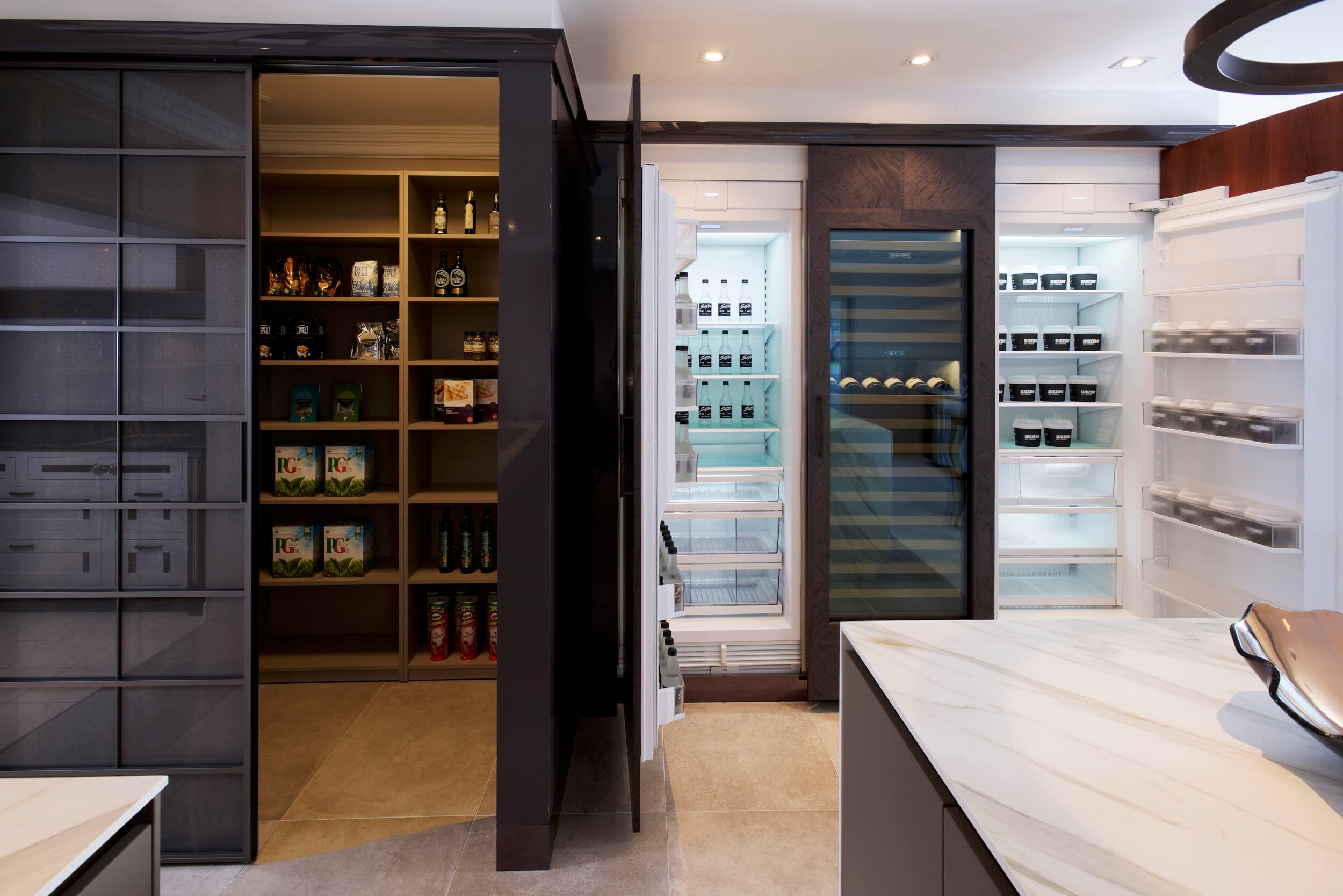
Concealed larder walls with pocket or sliding doors
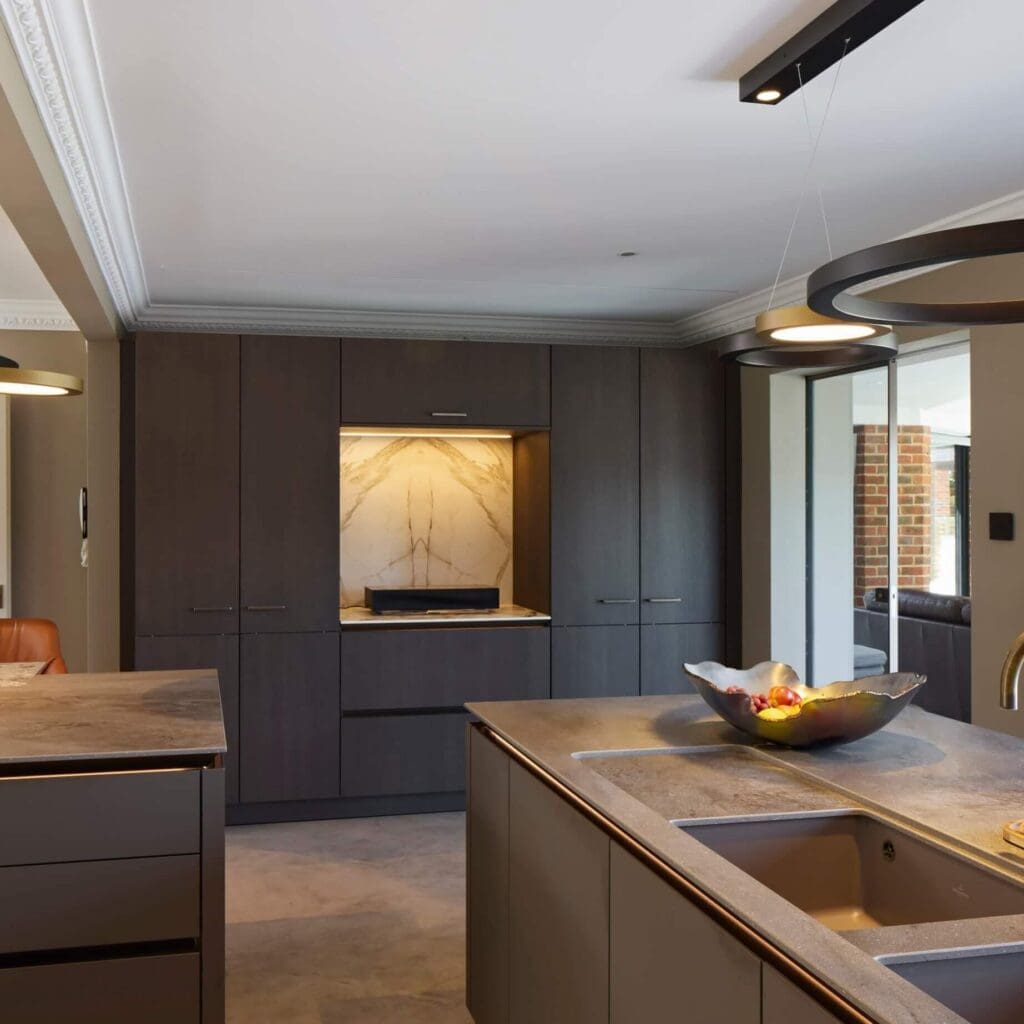
Place pantry volumes on the shortest route between fridge, prep and sink, and set internal shelf heights to the actual items stored. When doors close back into the cabinet line, the working zone returns to visual calm.
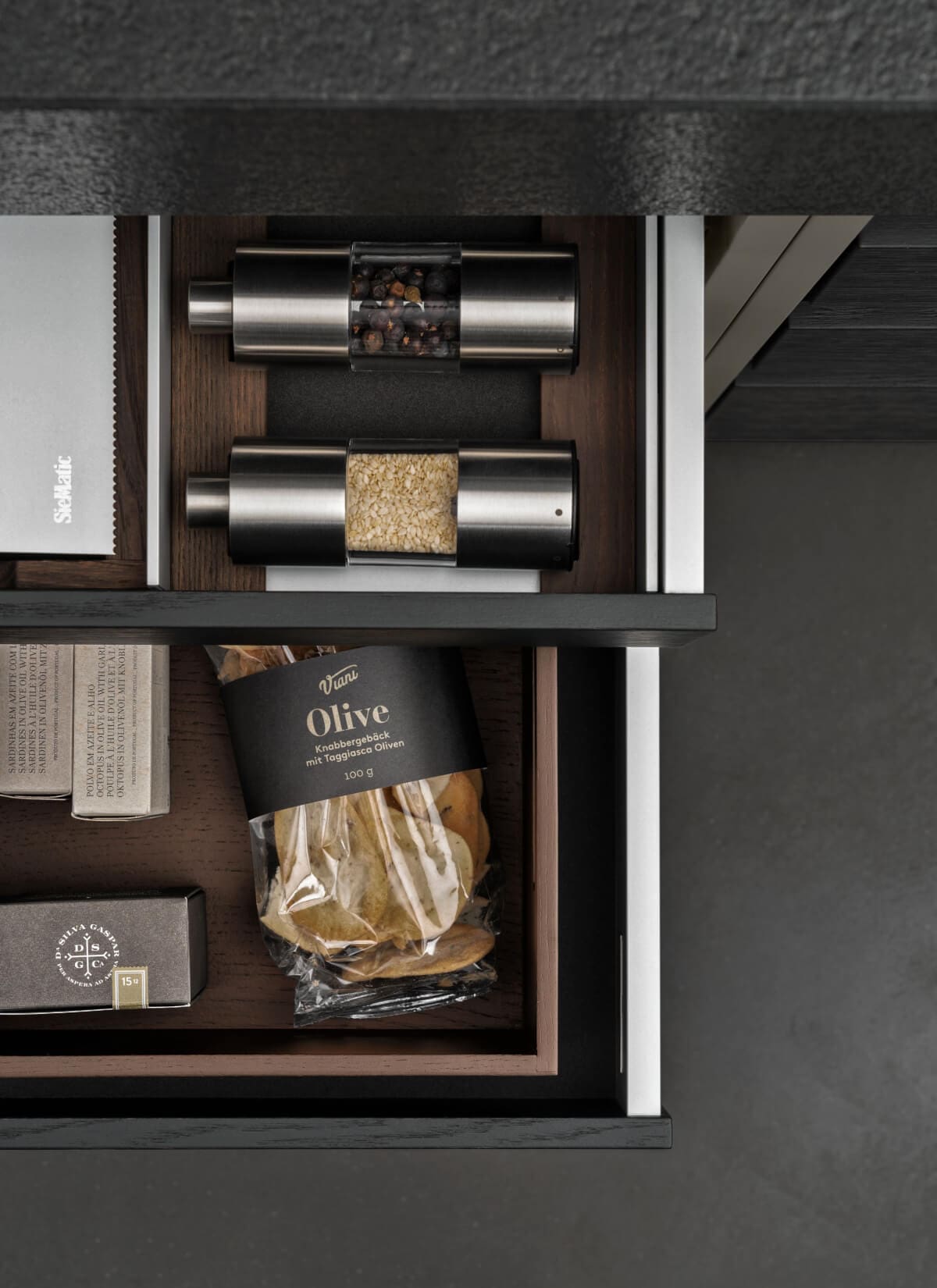
Internal drawers planned by category, not by leftover space
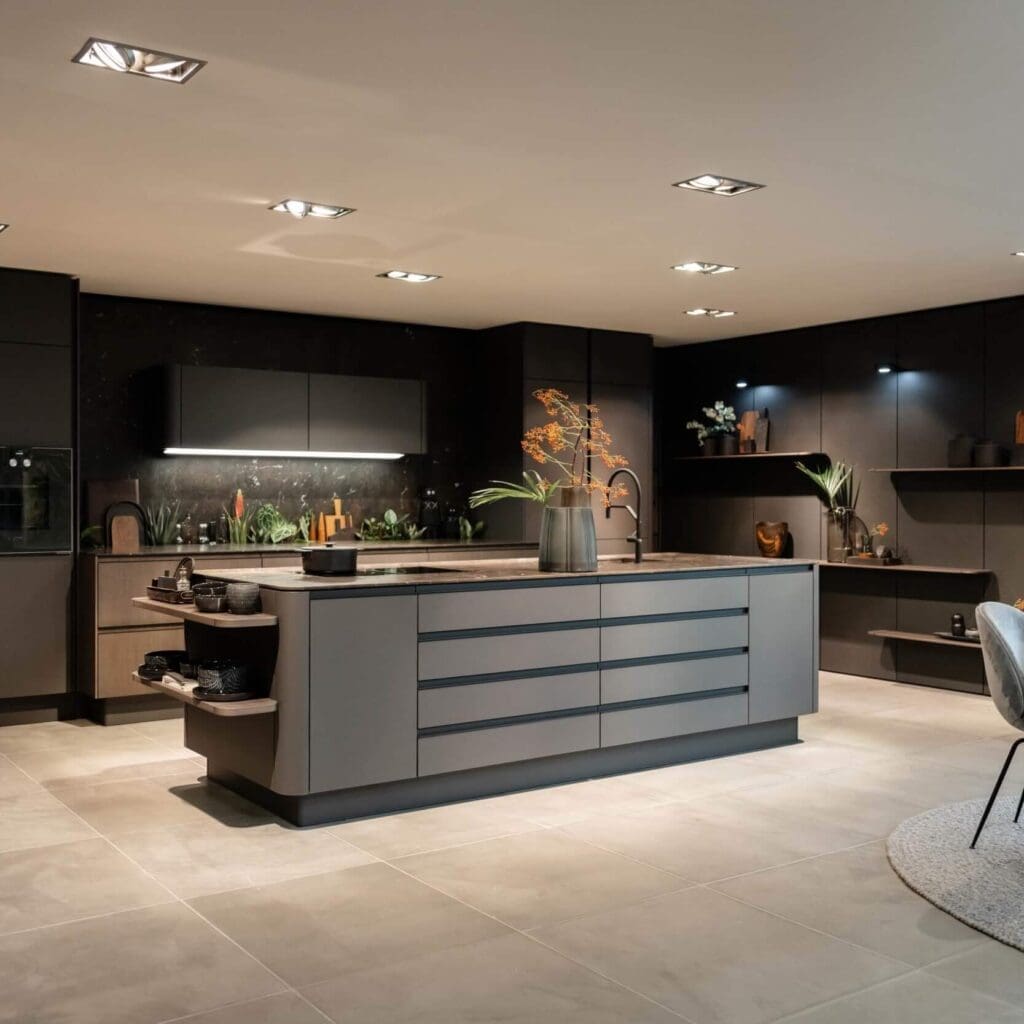
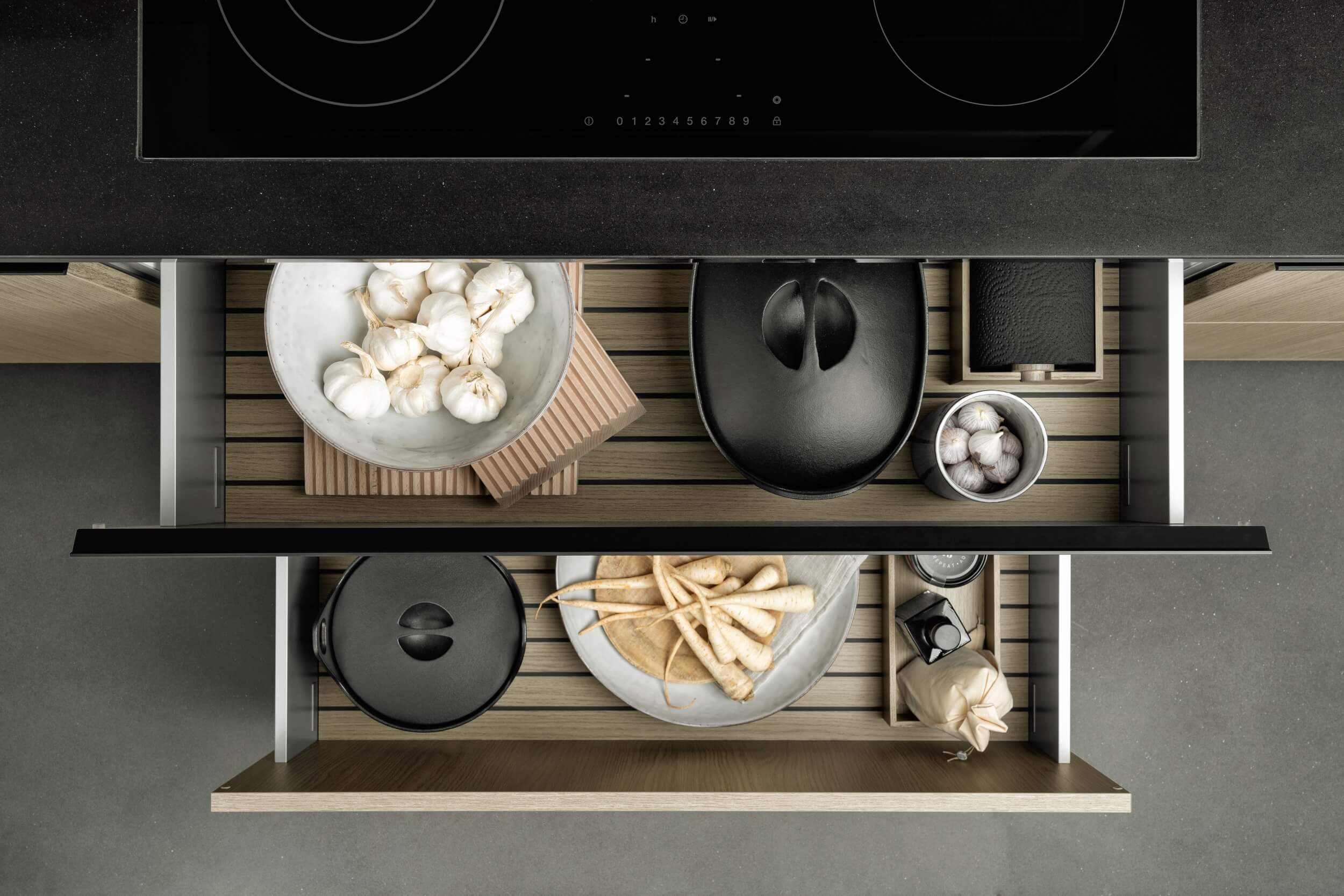
Allocate deep drawers around prep tools, pans, spices, oils and tableware, then place them exactly where the routine happens—prep height near prep, heavier items near hob and ovens.
Breakfast and coffee stations that close cleanly
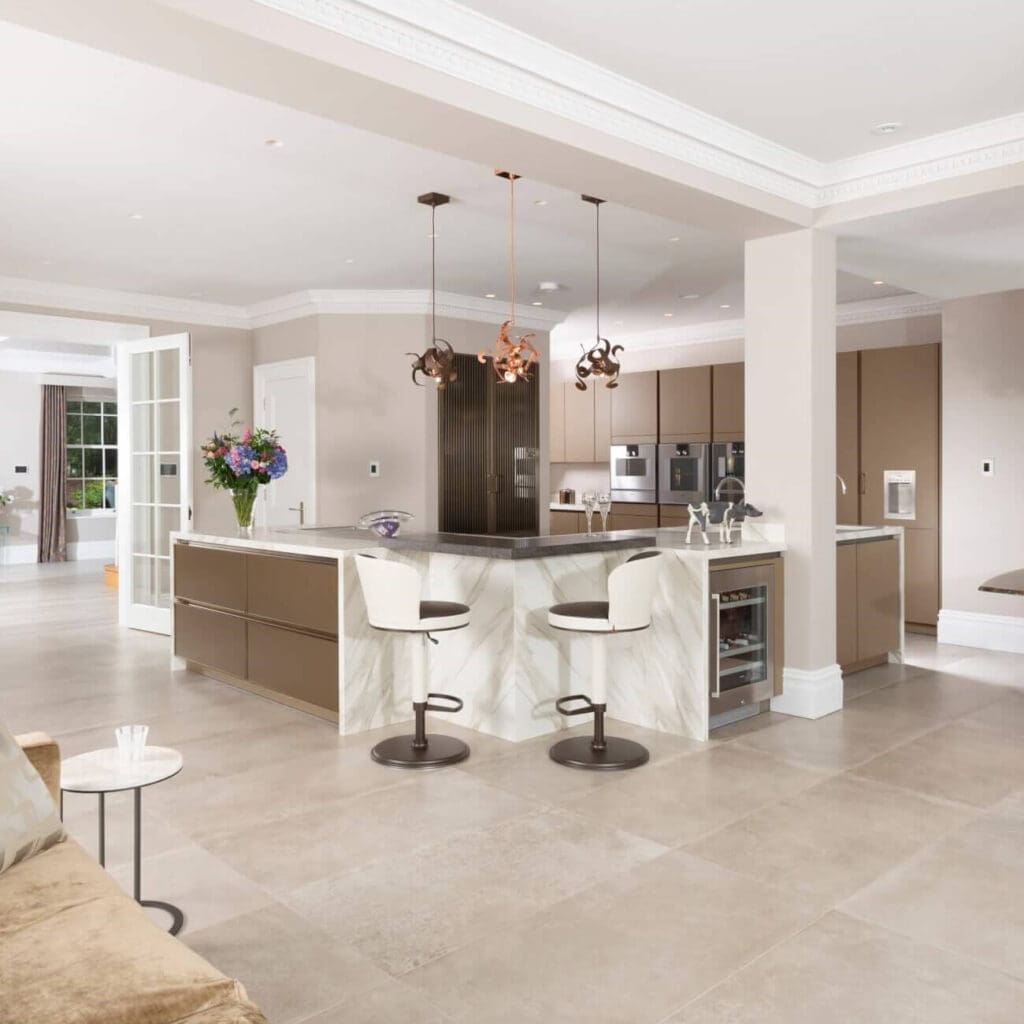
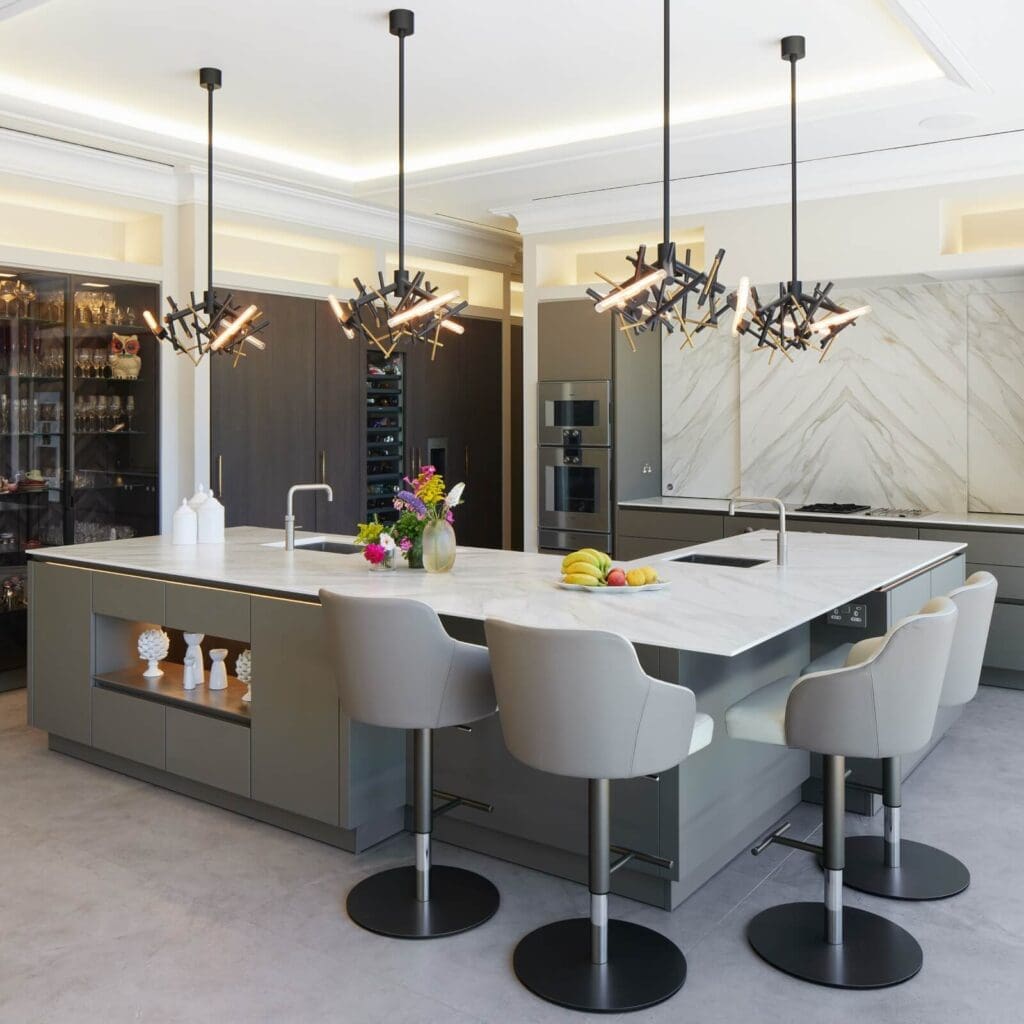
Set out dedicated stations with power and ventilation allowance, then coordinate door clearances so the sequence opens fully and closes back into the joinery line without interrupting circulation. At our Friars Cliff Home project in Dorset, storage and station planning supported a busy open-plan routine while keeping elevations composed.
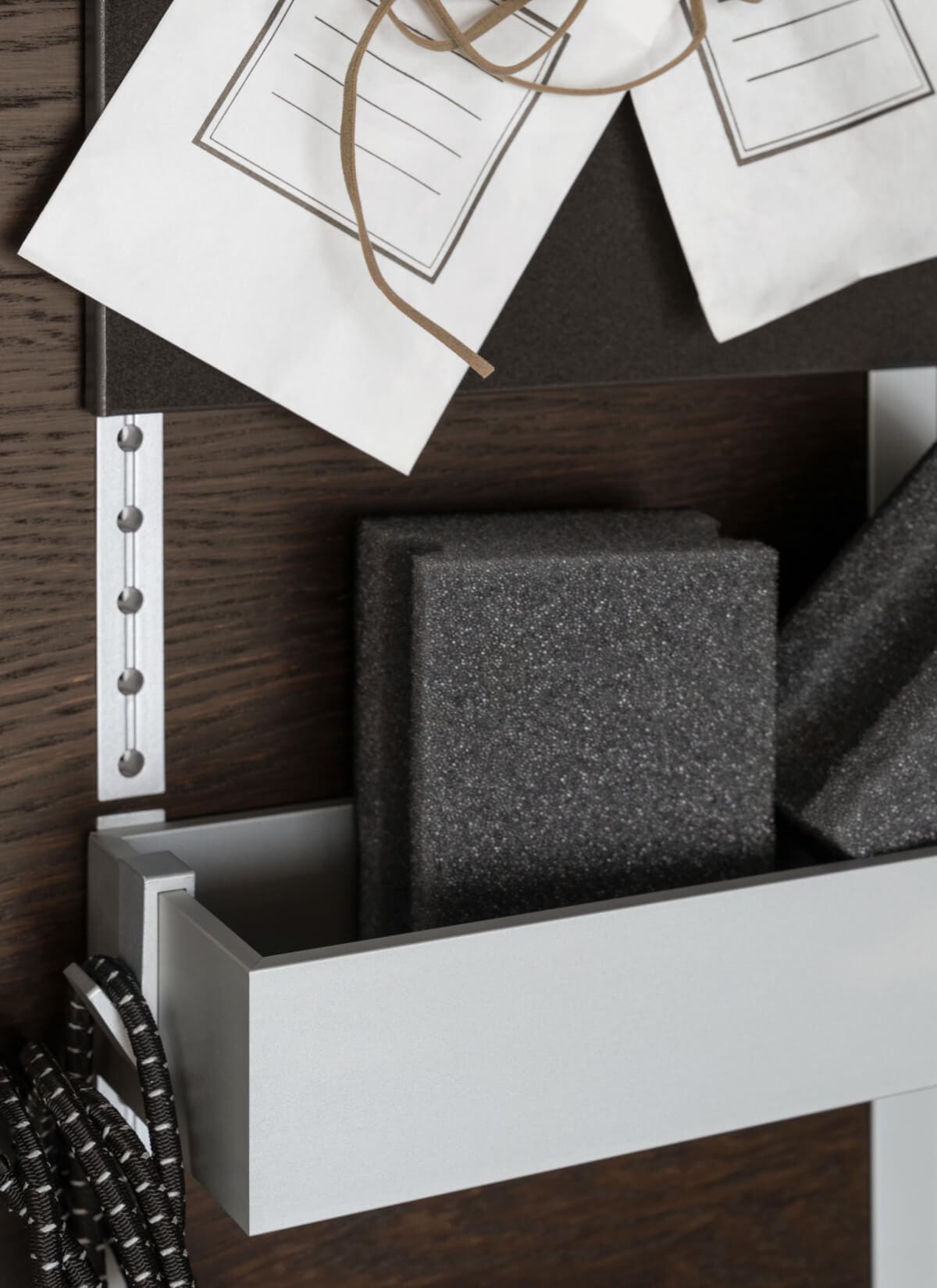
High-level access designed into tall cabinetry
Where cabinetry reaches ceiling height, access needs to be designed rather than improvised. Shelf allocation, reach ranges and (where relevant) rail positions are set so storage remains usable without compromising walkway width.
Sliding partitions to control daily rhythms
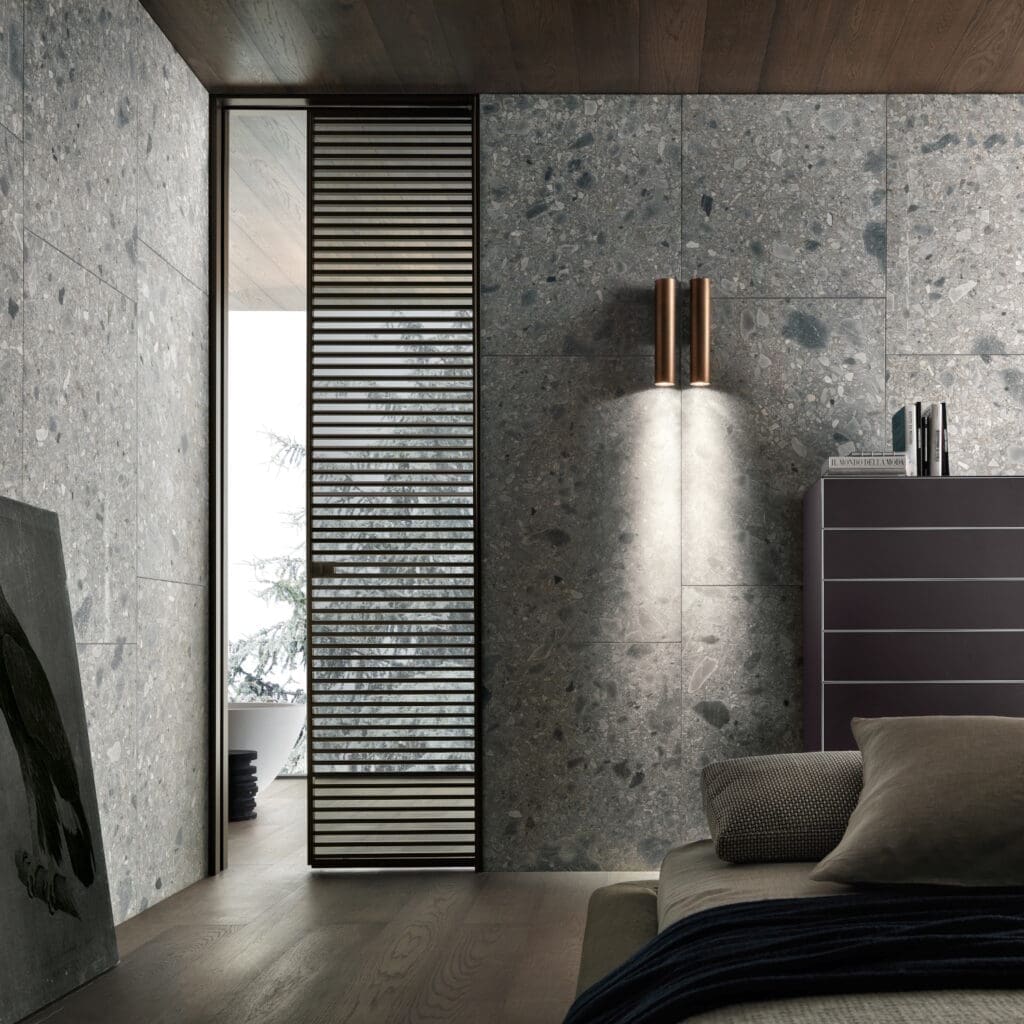
In open-plan rooms, a sliding door can manage noise, view and routine without changing the plan. Where the brief benefits from this kind of threshold control, systems such as Rimadesio can be specified so the partition reads as architectural joinery rather than an add-on.
SUMMARY: STORAGE AS SET-OUT DISCIPLINE
Storage planning is one of the simplest ways to protect calm in daily life. When volumes, access points and internal organisation are resolved alongside circulation and lighting, the kitchen stays orderly because the room has been designed to behave well under load.
Within Dream Design’s luxury bespoke kitchen design service, storage planning is resolved as part of the set-out—internal volumes mapped to routine, clearances held at the point of use, and joinery lines kept quiet so worktops remain usable day after day.